The Government of Ghana has announced that the country is set to conclude its current bailout programme with the International Monetary Fund (IMF), marking what officials describe as a historic turning point in the nation’s economic recovery.
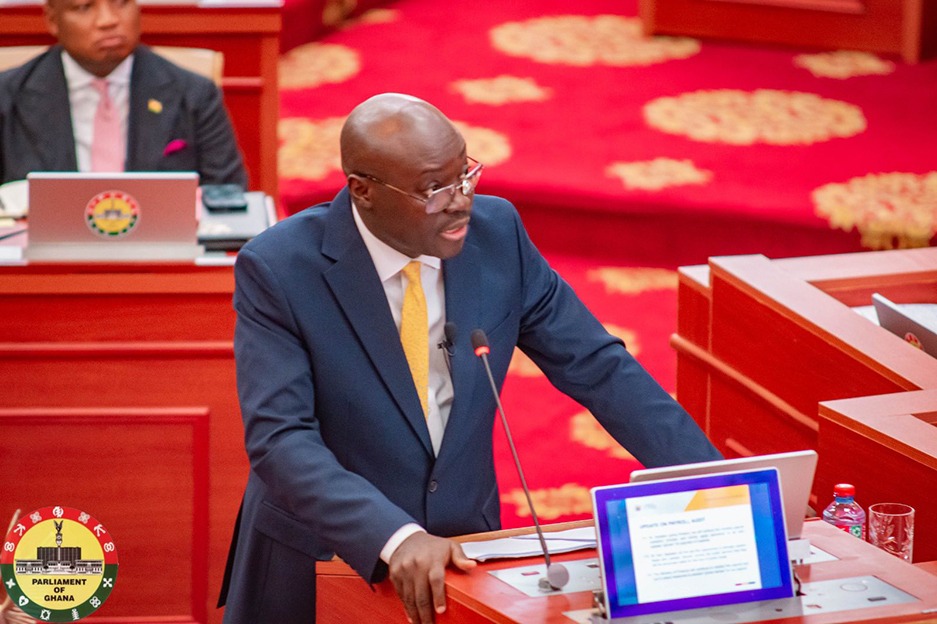
Addressing Parliament, Finance Minister Dr Cassiel Ato Forson said Ghana had made “substantial progress” in restoring macroeconomic stability and debt sustainability ahead of schedule, paving the way for a new phase of engagement with the IMF.
According to the Minister, Ghana will transition from the current Extended Credit Facility arrangement to a non-financing Policy Coordination Instrument (PCI), a framework designed for countries that no longer require IMF financial support but wish to maintain policy credibility and investor confidence through regular assessments and reforms.
“This signifies Ghana’s passage from crisis management to stability, from dependence on financial bailout to partnership in reform, and from uncertainty to renewed confidence in our economic future,” Dr Forson told lawmakers.

The Finance Minister said the move aligns with President John Dramani Mahama’s broader “Reset Agenda”, which seeks to reposition the Ghanaian economy following the severe fiscal and debt crisis that engulfed the country in 2022.
Recounting the events leading to Ghana’s IMF bailout, Dr Forson blamed what he described as the previous administration’s “gross mismanagement” of the economy for triggering a fiscal, balance of payments and debt crisis that resulted in soaring inflation, a sharply depreciating cedi, dwindling reserves and eventual loss of access to international capital markets.
He recalled that Ghana suffered a series of sovereign credit downgrades in 2022 from agencies including Moody’s, Fitch and S&P Global Ratings, while the country’s Eurobond spreads widened dramatically.
The Minister also highlighted the controversial Domestic Debt Exchange Programme (DDEP), introduced in December 2022, which imposed losses on bondholders, including pension funds, financial institutions and individual investors.
According to Dr Forson, ordinary Ghanaians endured the brunt of the crisis through runaway inflation, job losses, high interest rates, declining incomes and the introduction of what he termed “nuisance taxes” such as the E-Levy and Betting Tax.
However, he said the current administration had since implemented sweeping reforms aimed at restoring confidence and fiscal discipline.
Among the measures outlined were tighter public expenditure controls, amendments to the Public Financial Management Act, the establishment of an Independent Fiscal Council, the operationalisation of a sinking fund to manage debt obligations, renegotiation of Independent Power Producer agreements, and a reduction in the size of government.
The Minister reported that the reforms had yielded strong economic results.
He stated that Ghana’s economy expanded by 6.0 per cent in 2025, with non-oil GDP growth reaching 7.6 per cent — the highest in 14 years. He further disclosed that the country’s economy had crossed the US$100 billion mark for the first time, ranking Ghana as the eighth-largest economy in Africa.
Dr Forson also announced significant improvements in key macroeconomic indicators, including a reduction in the public debt-to-GDP ratio from 61.8 per cent in 2024 to 44.7 per cent in 2025, while inflation reportedly fell from 23.8 per cent in December 2024 to 3.4 per cent in April 2026.
The cedi, he added, appreciated by 40.7 per cent against the US dollar in 2025, while Treasury bill rates and the monetary policy rate also declined sharply.
“These results affirm a simple but enduring truth: fiscal prudence and discipline always deliver results,” the Finance Minister said.
He reiterated President Mahama’s earlier declaration that Ghana’s current IMF programme would be “the 17th and the last” financial bailout sought by the country.
“No further IMF financial bailout will be required in the foreseeable future,” Dr Forson stressed.
Under the forthcoming Policy Coordination Instrument, Ghana will continue to work with the IMF on policy reforms and economic assessments, but without borrowing funds from the institution.
The Minister said the arrangement would serve as a signal to investors and development partners that Ghana remained committed to sound economic management.
“In other words, Ghana has moved from the intensive-care unit to the wellness centre,” he remarked.
Looking ahead, Dr Forson revealed that the government would unveil a new economic strategy dubbed “The New Economy” in the 2027 Budget Statement.
The programme, he explained, would focus on job creation, productivity growth, resilience and broad-based prosperity as Ghana seeks to transition from economic stabilisation to long-term transformation.
He concluded by expressing gratitude to Ghanaians for their patience and sacrifices during the difficult adjustment period, pledging that the government would remain committed to prudent economic management.
“We will continue the hard work of building the Ghana we want,” he said.