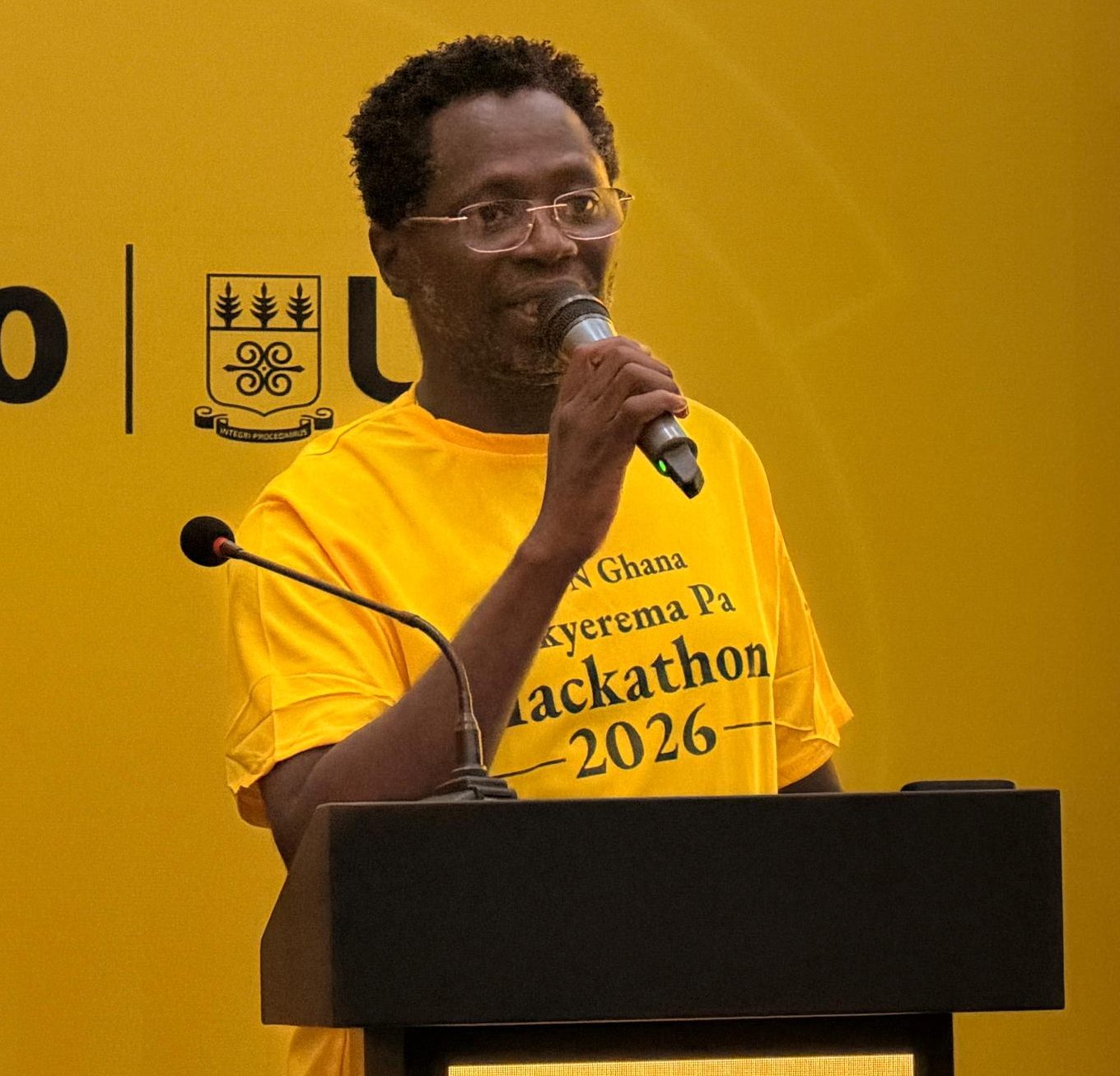
Ghana must develop the infrastructure and capabilities to create artificial intelligence (AI) products locally rather than remain a supplier of talent and data to global AI developers, Professor Isaac Wiafe, Lead Researcher at the Human-Computer Interaction Lab, Department of Computer Science, University of Ghana, has said.
He warned that without deliberate efforts to strengthen the country’s AI ecosystem, Ghana could repeat the pattern of exporting raw cocoa and importing higher-value chocolate.
Prof Wiafe said Ghana risked “exporting knowledge and then importing intelligence” if it failed to build the capacity to develop and deploy AI technologies domestically.
He was speaking at the MTN and University of Ghana Tekyerema Pa Hackathon ’26 — Memorandum of Understanding (MoU) signing ceremony in Accra.

Building a domestic AI ecosystem
According to Prof Wiafe, the growing global focus on AI adoption made it necessary for Ghana to look beyond using technologies developed elsewhere and invest in the foundations required to build its own AI solutions.
“What we’ve been doing currently is trying to enhance the AI ecosystem in the country. Everybody is targeting AI, and everyone is talking about AI adoption,” he said.
He disclosed that the Human-Computer Interaction Lab had recognised the need for Ghana to establish a stronger domestic AI ecosystem to ensure that the country benefited from the value created by AI.
Prof Wiafe used Ghana’s cocoa industry as an analogy, noting that the country produces cocoa as a raw material, exports it and subsequently imports chocolate.
He cautioned that a similar pattern could emerge in the AI sector if Ghana provided the resources and expertise used to develop AI systems elsewhere but depended on imported AI products and services.
Talent, data and compute
Prof Wiafe identified talent, data and compute as the three main elements required to drive AI development.
“Purely because if you look at currently, the three main things that actually pushes AI, the three main things are talent, data, and then the compute,” he said.
He explained that talent encompasses the skilled people needed to develop AI, while data provides the information required to build useful AI systems. Compute, meanwhile, provides the computing capacity necessary for AI development.
He stressed that Ghana’s ability to participate meaningfully in the AI economy would depend on strengthening these foundations.
Beyond AI adoption
The comments shift the focus from simply adopting AI tools to developing the capacity to produce AI solutions within Ghana.
Prof Wiafe’s warning suggests that AI adoption alone may not ensure that Ghana captures the higher-value opportunities emerging from the technology.
Instead, building local talent, data resources and computing capacity would enable the country to move towards developing AI products and services of its own.
He said the challenge was therefore not only about getting Ghanaians to use AI, but ensuring that Ghana developed the ecosystem needed to create AI technologies and retain more of the value generated from them.