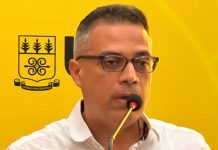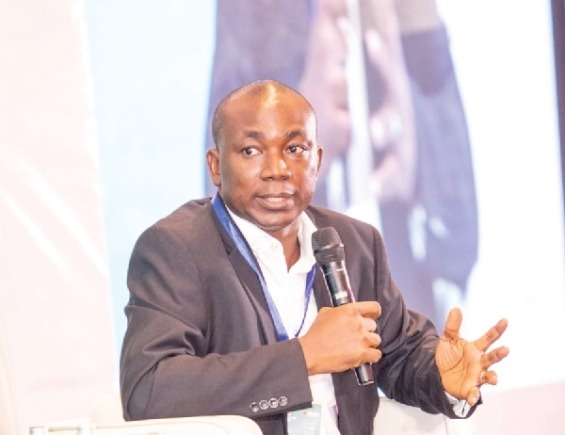
Prof Godfred Alufar Bokpin, an Economist and Professor of Finance at the University of Ghana Business School, has called on Ghana to move beyond repeated policy diagnoses and discussions and focus on implementation, measurable outcomes and the deliberate strengthening of indigenous businesses.
Speaking during a panel discussion at the Business Roundtable Extended, held under the theme “After the Corrections: Building Resilient Economic Pillars for the Next Decade”, Prof Bokpin said Ghana’s development challenge was not a lack of ideas or research, but the poor uptake and implementation of knowledge.
He said the country must begin to measure its progress against clear baselines rather than repeatedly revisiting problems that had already been identified.
PCI must be complemented by stronger resilience framework

Prof Bokpin commended the government for adopting the Policy Coordination Instrument (PCI) but argued that the policy anchor would have been more useful in 2019.
He said Ghana should now complement the PCI with a strong Resilience and Sustainability Facility (RSF) to strengthen the country’s ability to respond to structural and environmental risks.
According to him, such an approach could provide additional financing while establishing measurable structural benchmarks against which progress could be assessed.
Climate risks must form part of economic policy
Prof Bokpin said climate resilience should not be treated separately from economic policy.
He identified climate change, coastal erosion and responsible mining as areas that should be incorporated into Ghana’s economic policy framework.
He argued that linking these environmental concerns to the country’s economic policy could help Ghana build resilience while creating opportunities for financing tied to measurable reforms.
Research must translate into action
The economist said Ghana had accumulated sufficient research and policy ideas to address many of its development challenges.
The problem, he maintained, was the failure to take existing research seriously and translate it into policy and implementation.
He therefore called for decision-making to be more firmly driven by research and for the country to focus on implementing ideas that had already been developed rather than continually producing new diagnoses.
Districts should determine their own priorities
Prof Bokpin also advocated a more locally responsive approach to development planning.
He said government should avoid imposing identical interventions across districts where local needs differed.
Instead, districts should have greater scope to determine how available resources could best address their specific priorities.
Progress must be measurable
Prof Bokpin challenged stakeholders to ensure that future discussions were centred on measurable progress.
By the next annual gathering, he said, the conversation should move beyond diagnosis to reporting against an established baseline and demonstrating what had changed.
The approach, he argued, would make development discussions more focused on results and accountability.
Indigenous businesses must move up the ladder
A major part of Prof Bokpin’s argument centred on the deliberate growth of Ghanaian businesses.
He argued that micro businesses should be supported to become small businesses, small businesses should grow into medium-sized enterprises and medium-sized businesses should develop into large companies.
Large indigenous businesses, he added, should ultimately become globally competitive.
He also urged political leaders not to fear the emergence of a strong Ghanaian private sector, arguing that political leadership should support the growth of indigenous enterprise.
Ghana must act before time runs out
Prof Bokpin’s closing message was that Ghana could no longer afford to remain in a cycle of diagnosis and discussion.
He called for the country to move from discussion to action, get the fundamentals right and pursue economic development while preserving the environment.
The central challenge, he said, was to turn the knowledge and policy ideas Ghana already possessed into implementation, measurable progress and stronger economic resilience.