The European Commission (EC) plans to restrict children’s access to social media and introduce mandatory age checks across a range of online services as concerns grow over addictive digital features, harmful content and increasingly capable artificial intelligence systems.
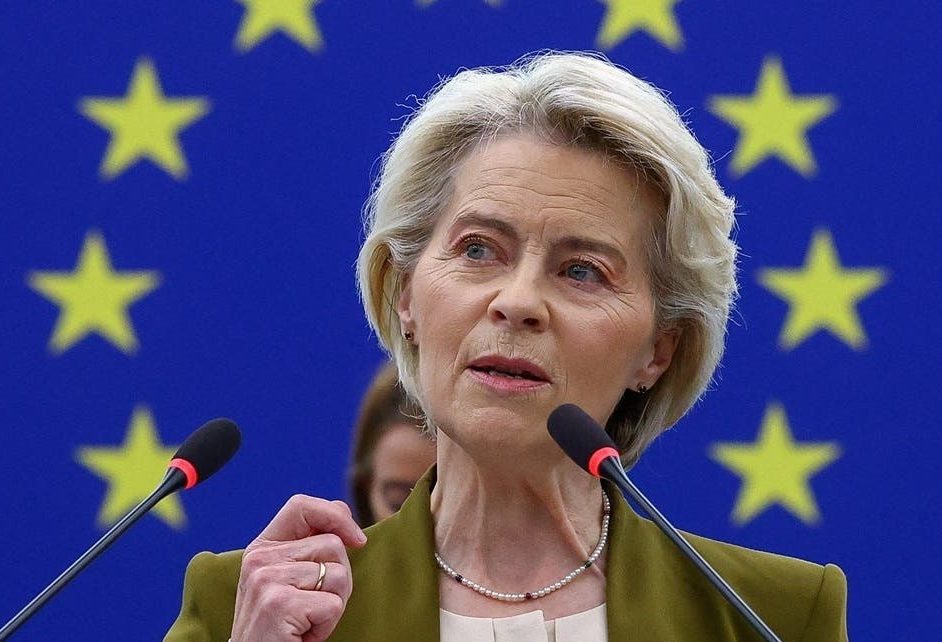
EC President Ursula von der Leyen outlined the proposed measures in her annual State of the Union address to the European Parliament, saying the EU Kids Act would ban children under 13 from social media and prevent users under 15 from having personal accounts.
Under the proposed rules, 13 to 15-year-olds would only be allowed to use “mini accounts” created and supervised by parents, with limited features and time restrictions. Platforms would also have to introduce additional safety measures for users aged 15 to 18.
“We are reversing the burden of proof,” von der Leyen said. “Platforms will have to prove that they are safe.”

The EC is due to formally propose the EU Kids Act on 17 September. The legislation would introduce age checks across social media, video-sharing platforms, app stores, online games and AI services.
Von der Leyen said young Europeans currently spend four to six hours a day on screens, raising concerns about addictive features, harmful content and online bullying, as well as reported increases in sleep issues, anxiety and suicide.
“What we are witnessing is a great capture of our children. A capture of their attention, their focus, their minds,” she told the European Parliament.
She also raised concerns about the use of AI to create sexualised images of girls, arguing that children should not be exposed to increasingly extreme content or addictive features.
Digital Fairness Act
Beyond measures targeting children, the EC is also preparing a broader Digital Fairness Act that would address addictive design features in digital services more generally.
The legislation would therefore extend the Commission’s focus on digital design beyond services specifically used by minors.
AI security concerns
AI also featured prominently in von der Leyen’s address, which she described as “the second tipping point of our times”.
She warned that increasingly capable AI models could create new security risks, including more powerful hacking capabilities and the possibility of self-improving systems causing mass harm.
The EC plans to work with partners including the UK and Canada on model evaluation, verification, early warning and AI security.
The Commission also plans to increase European computing capacity and investment in local AI companies as the region seeks to strengthen its position in the rapidly developing technology.
Von der Leyen said Europe should use AI to support sectors including healthcare, manufacturing, transport and agriculture, while maintaining human oversight.
“Our approach is clear. We want AI… But above all, we want AI with human agency,” she said.
Her comments come as concerns grow over the pace of frontier AI development, with Anthropic and OpenAI chiefs calling for a slowdown this week after researchers warned about existential risks associated with increasingly capable AI systems.