
Huawei is expanding the healthcare applications of its wearable devices through partnerships with healthcare providers, research institutions and third-party service companies, as it seeks to strengthen remote patient monitoring and improve access to continuous health data.
The company is developing telemonitoring initiatives using its Watch D3 smartwatch to track patients’ health and alert healthcare providers when intervention is necessary, according to Andreas Zimmer, head of product, Europe, at Huawei Consumer Business Group.
Zimmer disclosed the plans following Huawei’s recent device launch event in Munich, Germany, where the company showcased its latest wearables and other devices as part of its broader push into digital health.
He said Huawei would provide more concrete examples of its healthcare initiatives in the coming months, with pilot projects underway to demonstrate how wearable technology could support patient monitoring and clinical decision-making.

Huawei is also working with a specialist company in Berlin on a platform designed to make remote research using its wearables easier for universities and research institutions.
Remote monitoring delivers healthcare benefits
One of Huawei’s existing partnerships is with Portugal-based Hope Care, which uses the company’s wearables as part of a remote healthcare monitoring service.
Hope Care recently reported a 76 per cent reduction in the number of days patients with chronic obstructive pulmonary disease spent in hospital. The company estimated that the reduction in hospital visits translated into savings of €4,811 per patient.
Hope Care founder and chief executive Jose Paulo Carvalho said the company had developed a regulated platform designed to deliver measurable outcomes for patients, healthcare professionals and healthcare systems.
Zimmer described the partnership as an example of how Huawei’s wearable technology could contribute to tangible improvements in healthcare.
He said collaboration with healthcare providers also creates a feedback loop in which research and practical applications inform the development of improved devices and remote monitoring services.
“You have a wonderful kind of synergy interconnection between doing research and building up applications for remote patient monitoring,” he said.
Huawei believes data generated by its wearables could also support wider healthcare applications, including medical insurance, provided suitable business partnerships are established.
Huawei highlights continuous health monitoring
The company’s digital health strategy was also highlighted ahead of its Chase the Wild launch event, when Dr Hong Zhou, president of Huawei’s European Research Institute, addressed Fellows of the European Society of Cardiology.
Zhou emphasised the potential of wearable devices to provide a more comprehensive overview of an individual’s health through continuous monitoring.
Huawei argues that the inflatable wristband on its Watch D3 provides more accurate blood pressure measurements than devices using other methods.
Zhou said continuous monitoring, combined with artificial intelligence, could offer more useful insights than periodic health checks by providing personalised information to users and helping physicians make clinical decisions.
Huawei considers digital health a promising sector and intends to continue investing in the area.
Partnerships to strengthen wearable services
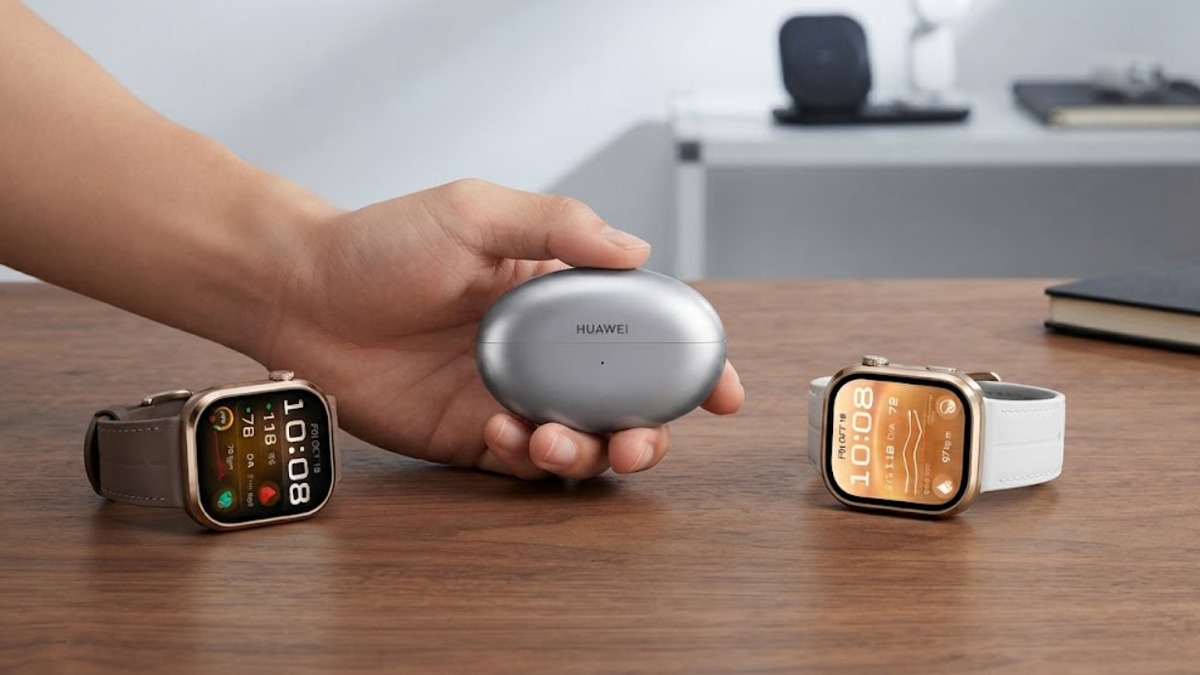
Beyond healthcare applications, Huawei is pursuing partnerships that add services and features to its consumer devices.
Zimmer said the company selects partners based on their ability to provide additional value to users, including sport-specific applications for watches aimed at physically active consumers.
He noted that some users seek specialised experiences that extend beyond the watch to their smartphones.
Huawei is also using subscription services as part of its value-added strategy, typically offering three-month trial periods for selected applications and services bundled with its devices.
Zimmer said the trials give users sufficient time to explore the services and decide whether they are worth paying for, while also providing an additional benefit with their devices.
Other features include financial services such as payments using near-field communication technology.
Data protection and research
Huawei is working with German-based company Thrive, which has experience managing health research projects, as part of its efforts to support future product development.
Zimmer said health research requires extensive scrutiny to ensure the data generated is meaningful and can contribute to effective services.
He explained that data used in the projects is anonymised and that Huawei adopts a “privacy by design” approach to its healthcare application.
The company is also working to meet German data protection standards, which Zimmer said typically set a benchmark for requirements across other European jurisdictions.
However, he identified public awareness as a major challenge, saying Huawei was working to educate consumers and healthcare research teams about the potential of its wearables.
The company is also promoting the ease of incorporating data from its devices into research studies, which Zimmer said could otherwise be a complicated process.
Huawei is collaborating with leading universities worldwide to identify research projects that could benefit from devices such as the Watch D3, with particular activity in Europe and the United Kingdom.
Wearable market performance
Huawei’s healthcare ambitions coincide with growth in its global smartwatch shipments.
Counterpoint Research figures for the first quarter showed the company increased shipments by 12 per cent year-on-year, bucking the overall downward trend in the smartwatch market.
The growth was supported by a broader ecosystem strategy that includes sleep tracking, heart-rate monitoring and analysis.
Huawei believes wearable technology can help address challenges facing healthcare systems through devices that are easy to use and wear, while enabling continuous collection of health data.
Zimmer said the company’s ongoing telemonitoring pilots and research partnerships would help demonstrate how connected health technology could support patients and healthcare providers.