Investors are preparing for a busy week as fresh US inflation data, technology earnings and developments involving major companies are expected to influence market sentiment, while proposed changes to artificial intelligence regulation in Washington add to the outlook.
The US Consumer Price Index (CPI) report, due on Tuesday, will be a major focus for investors seeking fresh indications of inflationary pressures and the Federal Reserve’s potential interest-rate direction.
As of 0342 ET, S&P 500 futures had risen 0.35%, while Dow Jones futures gained 0.6%. Nasdaq 100 futures, however, declined 0.3%.
The market outlook also comes amid developments at Nvidia, cryptocurrency exchange Binance and Berkshire Hathaway, alongside plans by Democrats to introduce tougher rules governing artificial intelligence and data-centre development.

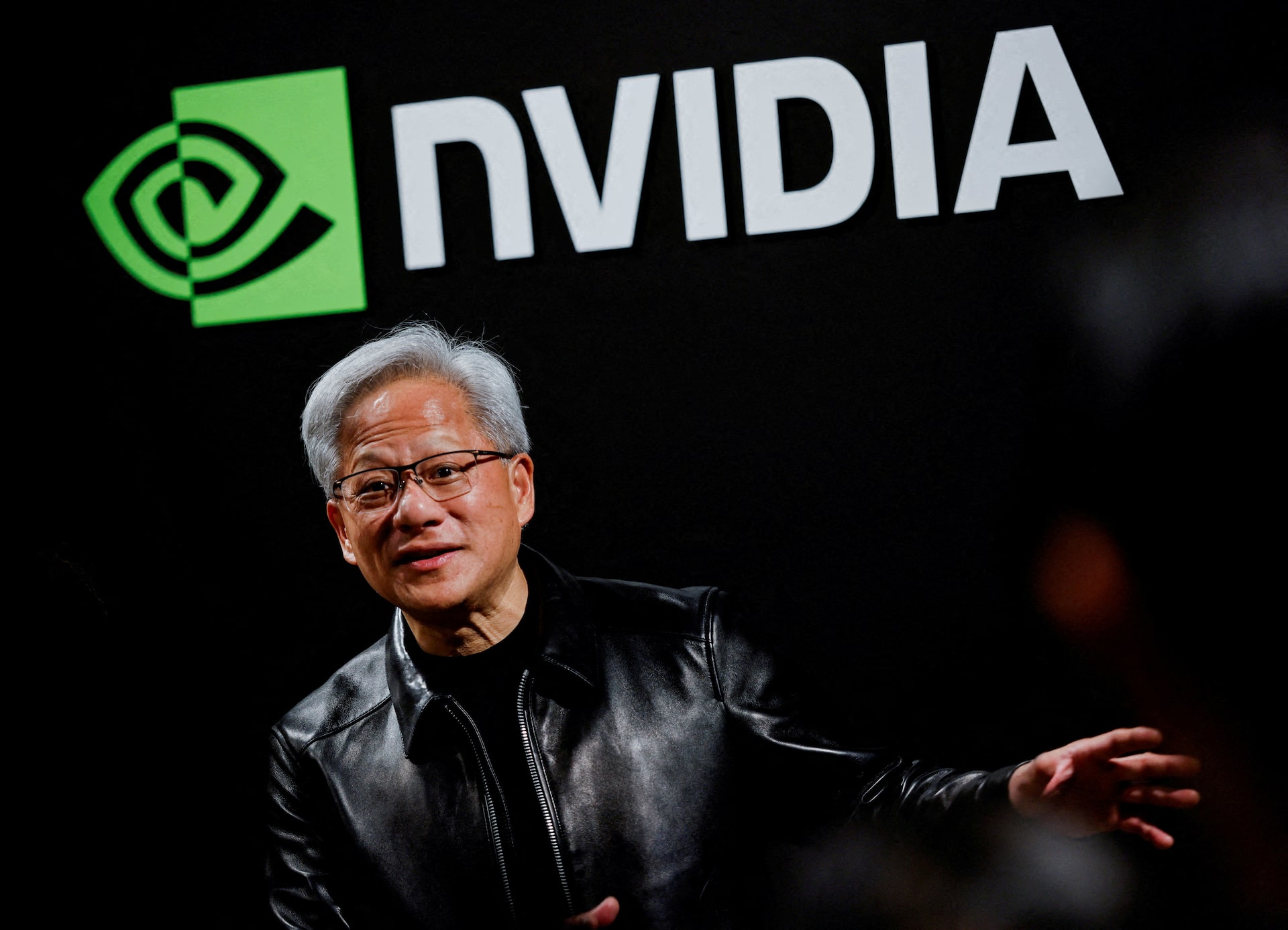
Nvidia shares listed in Frankfurt opened 6% lower following unverified allegations involving chief executive Jensen Huang. The claims, which have not been independently established, allege that Huang admitted to an affair with a businesswoman suspected by US intelligence of having links to China. They also suggest that Nvidia’s board has launched an independent investigation.
The allegations have not been confirmed by the information available and should not be treated as established facts.
Meanwhile, Binance Chief Financial Officer Kaiser Ng is leaving the cryptocurrency exchange to pursue another venture, days after the company disclosed a major security breach involving the reported theft of $6.3 billion in cryptocurrency.
Binance Co-CEO Yi He said Ng had decided to leave after more than five years with the company, adding that a transition plan had been in place for six months.
Justin Yek, a former vice-president of finance at Airwallex, will replace him.
The leadership change follows a cyberattack that Binance said began months earlier and involved malware concealed in software downloads and fraudulent recruitment activities targeting engineers. The company said the breach, which unfolded on October 29, compromised employees’ computers.
The FBI attributed the theft to a North Korean hacking group, an allegation denied by Pyongyang. Binance has pledged to fully reimburse affected customers.
Elsewhere, Berkshire Hathaway reported a 5.8% decline in third-quarter operating earnings, as weaker insurance results weighed on its performance.
Operating profit fell to $12.7 billion from $13.48 billion a year earlier, according to a regulatory filing.
Despite the decline, the conglomerate’s cash holdings reached a record $377.4 billion during the quarter. Berkshire also repurchased approximately $9.6 billion of its shares, signalling continued activity in its capital allocation strategy.
The company’s substantial cash reserves highlight its financial flexibility amid weaker operating earnings.
On the economic calendar, Tuesday’s US inflation report is expected to provide important signals about the direction of consumer prices and their implications for monetary policy.
A higher-than-expected reading could strengthen expectations that interest rates will remain elevated for longer, potentially putting pressure on equities, particularly technology and growth-oriented stocks.
Investors will also assess earnings from technology companies, including CoreWeave, Applied Materials and Cisco Systems, for indications of demand across cloud computing, semiconductors and networking.
Meanwhile, artificial intelligence regulation is emerging as another potential source of uncertainty for the technology sector.
Democrats are preparing legislative proposals targeting AI systems and data-centre development ahead of their planned takeover of Congress in January.
The proposed measures include consumer protections against higher electricity costs associated with data-centre demand, mandatory independent testing of advanced AI systems and clearer rules on when AI companies could be held liable for harm caused by their products.
The proposals would mark a shift from the Republican-led Congress, which has largely prioritised encouraging AI development over imposing restrictions.
However, the measures could face significant legislative obstacles while President Donald Trump remains in the White House, given his opposition to mandatory federal AI regulations.
If advanced, the proposals could affect the cost of developing and operating AI systems, particularly for companies investing heavily in data-centre infrastructure.