Nvidia faces mounting investor uncertainty ahead of its third-quarter earnings announcement on Tuesday, with analysts warning that leadership changes, US-China tensions and national security concerns could threaten the chipmaker’s outlook.
The company is due to release its results after the closing bell, with investors expected to scrutinise its financial performance and guidance following the departure of former chief executive Jensen Huang last week.
Analysts at Truist said risks had become more important than valuation in assessing the company’s prospects, while Wells Fargo highlighted ongoing investigations into potential national security concerns.
Yardeni Research also identified US-China tensions as a major source of uncertainty for investors, warning that Huang’s departure posed risks across three areas: artificial intelligence leadership, semiconductor export controls and national security.

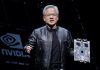
Huang, who co-founded Nvidia roughly three decades ago, was widely regarded as the central figure behind its strategy and transformation into one of the world’s most influential technology companies.
His departure followed revelations about extramarital affairs, including an alleged relationship with Alice Huang, a former executive at Singapore-based Nvidia customer Megaspeed, who has been accused of being a Chinese spy. Megaspeed and China have denied the reports.
Colette Kress, Nvidia’s long-serving finance chief, has been appointed interim chief executive and is expected to face questions about whether the company will maintain its circular financing arrangements with customers.
These arrangements have helped support demand for Nvidia’s artificial intelligence chips and contributed to the wider expansion of the AI industry.
Investors are also concerned about the implications of tighter US government restrictions designed to limit Chinese companies’ remote access to advanced AI chips.
Huang had reportedly maintained close ties with US President Donald Trump and lobbied for fewer restrictions on American semiconductor sales to China. Trump is scheduled to meet Chinese President Xi Jinping this week.
Ahead of its earnings announcement, Nvidia unveiled a new board-level committee partly responsible for overseeing national security policies and compliance with export controls.
The company’s leadership transition has also generated calls from some insiders and technology industry figures for Huang to be reinstated. However, media reports suggest the board is unlikely to respond to those demands immediately.
Nvidia shares have lost significant value in recent days, wiping hundreds of billions of dollars from its market capitalisation and contributing to a broader decline in technology stocks as investors assess the company’s future without its high-profile co-founder.
Truist analysts warned that the departure could affect Nvidia’s corporate culture, which Huang had shaped around a relatively flat organisational structure and a large number of direct reports.
They also raised concerns that the company might have shipped graphics processing units (GPUs) that subsequently became accessible to Chinese companies and government entities, potentially creating further challenges for future revenue.
Investors will also be looking for indications of whether Nvidia can maintain its growth trajectory under Kress’s interim leadership.
The company had previously projected 70 per cent sales growth for its next financial year, making any revision to that outlook particularly significant for the wider artificial intelligence industry.
Analysts at Needham described Huang’s departure as a near-term overhang for Nvidia shares and said they expected management to provide conservative guidance.
Several brokerages have reduced their price targets for the chipmaker following the leadership upheaval.
However, Needham analysts said Nvidia retained the foundations needed to navigate the challenges, pointing to its established product roadmap and continued demand for AI infrastructure.
They said they did not expect the leadership transition to change customers’ purchasing patterns, adding that spending on AI infrastructure remained robust.