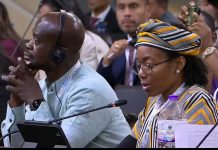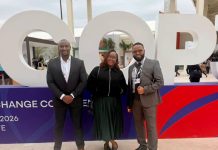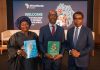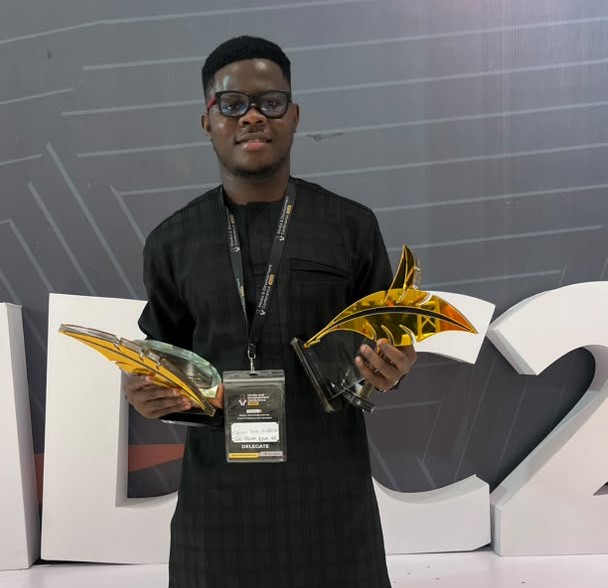
Investigative journalist with The Fourth Estate, Philip Teye Agbove, has won a regional journalism award for the second consecutive year following his investigation into the financial activities of Ghana’s National Lottery Authority (NLA).
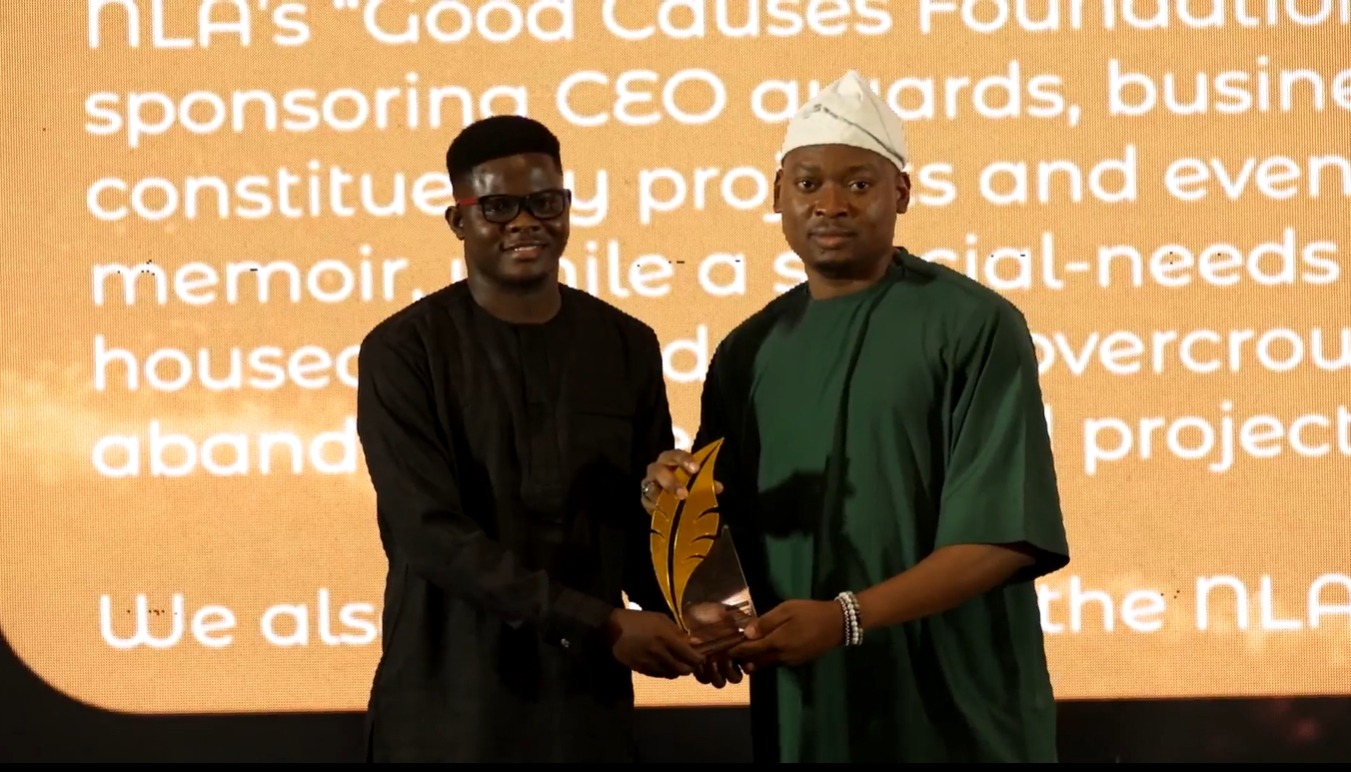
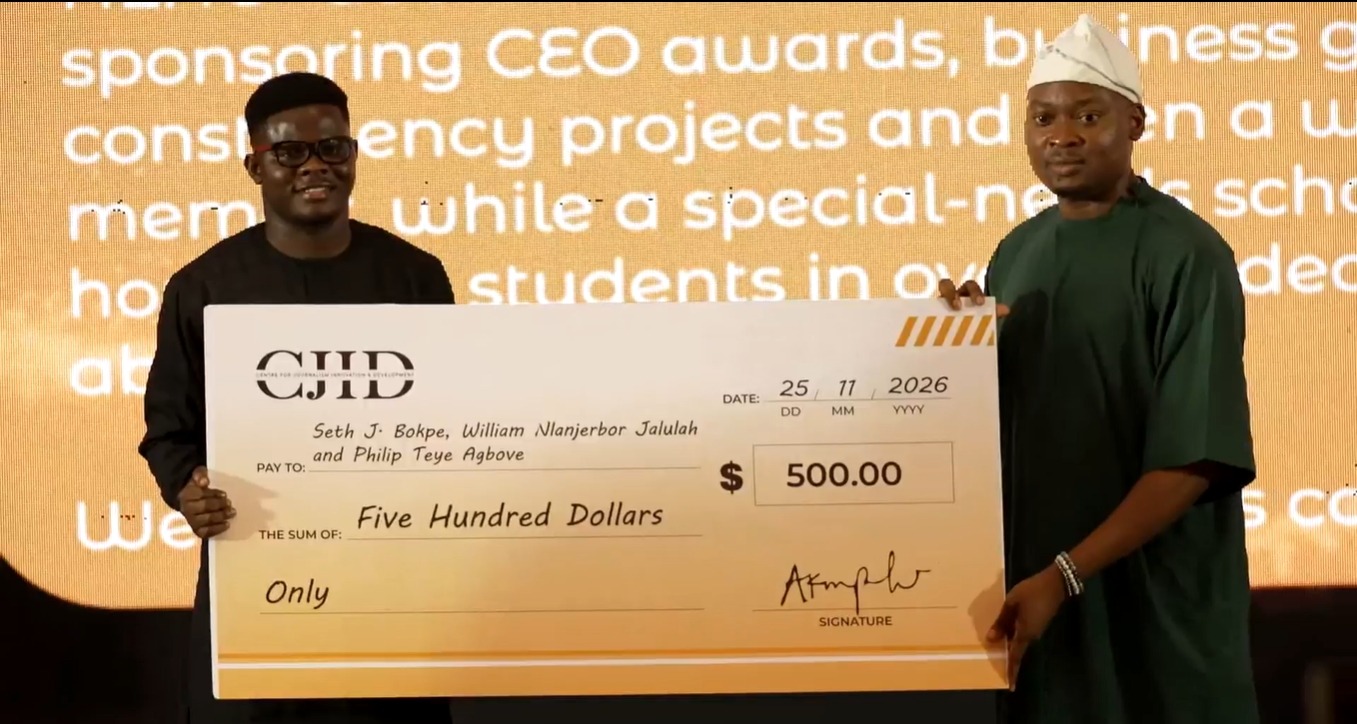
His investigation was adjudged second best in Social Accountability Reporting at the 2026 Excellence in Journalism Awards organised by the Centre for Journalism Innovation and Development (CJID).
The award was announced at a ceremony in Abuja, Nigeria, on Wednesday, November 25, 2026.
Mr Agbove’s investigation, co-authored with The Fourth Estate’s Associate Editors, Seth J Bokpe and William Nlanjerbor Jalulah, exposed how funds intended to support orphans, persons with disabilities and other vulnerable groups were used to finance corporate awards, galas and self-honouring events.

The investigation also revealed that the NLA’s former Director-General, Samuel Awuku, and his deputy received awards at events sponsored by the Authority.
It further uncovered the circumstances surrounding the NLA’s decision to grant KGL Technology Limited exclusive rights to its 5/90 online lottery product under a 15-year agreement extending to 2039, with revenue-sharing arrangements considered unfavourable to the state.
The findings prompted government action, including a technical review of the NLA-KGL agreement by the Attorney-General’s Department and the Ministry of Finance in December 2025.
Following the review, which found that the contractual arrangements were not financially advantageous to the Republic, President John Dramani Mahama directed a renegotiation of the agreement in April 2026.
The Ministry of Finance also removed the NLA’s Good Causes Fund from the Authority’s control and transferred it to the Ministry of Gender, Children and Social Protection to support the Livelihood Empowerment Against Poverty (LEAP) programme.
The intervention redirected resources intended for vulnerable groups towards a social protection programme.
Mr Agbove’s latest recognition makes him a two-time recipient of the CJID journalism awards. In 2025, he won the Best Community Reporter award for his investigation into the Songor Lagoon in Ghana’s Greater Accra Region.
The investigation, undertaken with journalist Justice Baidoo, examined tensions between local salt miners and fishing communities and plans for large-scale industrial salt mining involving Electrochem Ghana Limited.
The reporting exposed concerns over the allocation of portions of the lagoon for industrial salt production, the exclusion of affected communities from decisions concerning their livelihoods, and allegations of violence and abuse involving security personnel.
It also brought national attention to the challenges facing communities whose livelihoods and access to natural resources were threatened by developments around the lagoon.
Beyond the CJID recognition, Mr Agbove and Mr Baidoo received the 2025 Konrad-Adenauer-Stiftung Africa Media Award for Local Journalism for their reporting on the Songor Lagoon.
424 entries submitted for 2026 awards
The 2026 Excellence in Journalism Awards attracted 424 entries from 277 journalists across West Africa, representing a 54.2 per cent increase over the 275 submissions received in 2025.
Following an initial screening, the five highest-ranked entries in each of the eight categories were shortlisted for further assessment.
The categories were Health Reporting, Community Reporting, Human Rights Reporting, Social Accountability, Climate Change Reporting, Solutions Journalism, Fact-Checking, and Sexual and Gender-Based Violence Reporting.
An independent six-member jury, chaired by Hannah Ajakaiye, founding editor of FactsMatter NG, assessed the shortlisted entries.
The panel included Ghanaian investigative journalist Manasseh Azure Awuni; Maxime Domegni, Francophone Africa Editor at the Global Investigative Journalism Network; Ajibola Amzat, Africa Editor at the Centre for Collaborative Investigative Journalism; Kent Mensah, Chief Ghana Correspondent for The Africa Report; and Amaka Okoye, Bureau Chief for Deutsche Welle’s Studio Lagos.
Speaking at the ceremony, Ms Ajakaiye said the submissions demonstrated particular strength in social accountability, environmental and human rights reporting.
She noted an improved understanding of solutions journalism among entrants but said there was room for improvement in fact-checking and coverage of sexual and gender-based violence.
CJID Chief Executive Officer Dapo Olorunyomi said the recognised stories reflected the courage, persistence and public service required to sustain journalism in West Africa, often under difficult circumstances and with limited resources.
The chairman of the awards committee, Kemi Busari, also congratulated Mr Agbove, commending his contribution to journalism and his role in advancing development and democracy in Africa.
Calls for protection of investigative journalists
Reacting to the award, Mr Agbove expressed gratitude to God, CJID and the management of the Media Foundation for West Africa (MFWA), which publishes The Fourth Estate, for supporting public-interest journalism.
He said the investigation raised fundamental questions about whether public resources intended to support vulnerable people were being used for their intended purpose.
“This investigation was not just about the financial activities of the National Lottery Authority. It was about protecting public resources and ensuring that funds established to support the most vulnerable in society actually serve that purpose,” he said.
He expressed hope that the investigation would contribute to improved revenue mobilisation, reforms in Ghana’s lottery industry and better management of the Good Causes Fund.
Mr Agbove also highlighted the challenges facing investigative journalists across West Africa, including legal actions he described as attempts to intimidate and frustrate legitimate accountability reporting.
“For asking questions and demanding accountability, we have had to contend with legal action that we consider an attempt to intimidate and frustrate our work. Unfortunately, this is the reality for many journalists across our region,” he said.
He called on governments across the region to abandon repressive laws used to harass journalists and urged authorities to protect media practitioners investigating the use of public resources.
“Critical journalism is the oxygen of democracy and a pillar of accountable governance. Journalists must be protected, not punished, for doing their work,” he added.
He also called for the freedom and protection of Nigerian journalist Daniel Ojukwu, Nigerien journalist Moussa Kaka and Burkinabè journalist Serge Oulon.
Mr Agbove reserved special appreciation for his co-authors, Seth J. Bokpe and William Nlanjerbor Jalulah, describing their collaboration as instrumental to the investigation’s success.
“We will continue to ask difficult questions, follow the money and hold power to account,” he said.
Mr Agbove is an investigative journalist with The Fourth Estate, the public-interest and accountability journalism project of the Media Foundation for West Africa. His reporting focuses on corruption, abuse of power, public accountability, environmental justice and the rights of marginalised communities.