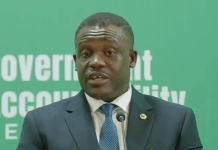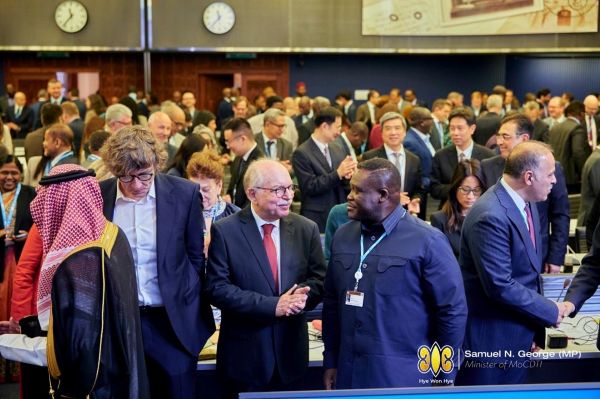
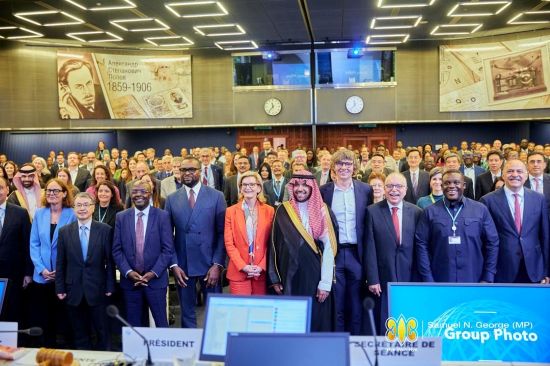
Ghana’s Minister for Communication, Digital Technology and Innovations, Sam Nartey George, has called for a more inclusive and technically strengthened regional presence within the International Telecommunication Union (ITU), urging the global body to ensure all its sectors are fully represented at the regional level.
Delivering Ghana’s submission at an ongoing ITU meeting in Geneva, the Minister acknowledged the extensive work captured in reports on the activities of regional and area offices, describing them as impactful across the six global regions.
Sam George commended the ITU for initiatives that directly benefit member states, particularly in Africa. He noted with appreciation Ghana’s participation in the Digital Financial Services Security Clinics, organised through the African Regional Office in collaboration with the Telecommunications Standardization Bureau (TSB).
He said such engagements provide practical, hands-on training for regulators and are critical in strengthening Ghana’s digital financial ecosystem.

“These are the kinds of capacity-building interventions our membership needs,” he noted, urging the ITU to sustain and expand such programmes.
Despite the progress, the Minister raised concerns about what he described as an imbalance in the ITU’s regional structure.
According to him, regional activities have largely been driven by the Telecommunication Development Bureau (BDT). While acknowledging the importance of development work, he stressed that the current model does not fully reflect the evolving needs of member states.
He explained that although regional offices were initially designed to deliver development-focused support, global technological advancements now require a more integrated and technically driven approach.
To address this gap, Sam George called for increased participation from the Radiocommunication Sector (ITU-R) and the Telecommunication Standardization Sector (ITU-T) in regional operations.
Sam George proposed:
* Deployment of dedicated technical experts within regional offices
* Regular sector-specific missions to member regions
* Stronger coordination between ITU bureau directors and regional leadership
While acknowledging the assignment of some TSB staff to regional offices, he questioned when similar arrangements would be extended to ITU-R in Africa.
The minister highlighted key areas requiring urgent attention, including:
* Spectrum management
* Satellite coordination
* Preparations towards the World Radiocommunication Conference 2027 (WRC-27)
The Minister also urged that the ongoing review of ITU’s regional presence should go beyond development-focused metrics.
He called for a more comprehensive assessment that considers how effectively regional offices address the technical needs of member states across all three ITU sectors.
He further recommended that the 27 Key Performance Indicators (KPIs) adopted by Council 2025 be applied with this broader perspective.
Mr. Nartey George concluded by stressing the need for a unified and inclusive ITU structure at regional offices level
A stronger regional presence is one that brings the whole of the ITU to the membership, not just one bureau, he emphasised.
He reaffirmed Ghana’s readiness to engage constructively in shaping reforms that will strengthen the ITU’s impact across all member states.