The latest round of the Old Mutual Financial Wellness Monitor (OMFWM) reveals that working Ghanaians are emerging from a period of deep financial strain with increasing optimism, improved financial discipline, and reduced stress levels, supported by a stabilising macroeconomic environment.
However, the research cautions that long‑term financial vulnerability remains widespread, driven by short‑term savings behaviour, low retirement preparedness, and limited access to professional financial advice.
The survey, which focuses on urban and peri‑urban working Ghanaians aged 20 to 59 earning GH¢1,200 or more, provides insight into financial attitudes, behaviours, and resilience across both the formal and informal sectors.
Confidence in Ghana’s economy has more than doubled, rising from 22 per cent to 48 per cent, with seven in ten working Ghanaians believing the economy will improve over the next year. Positive sentiment extends to personal finances, with nearly 80 per cent expecting their own financial situation to improve in the next six months.

As economic pressures ease, financial stress levels have halved, dropping from 60 percent to 30 per cent, the lowest level recorded in three years of tracking. This improvement is largely driven by better debt management, improved income, and growing emergency savings.
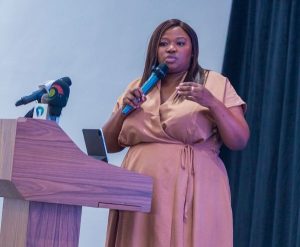
“After several years of sustained financial pressure, working Ghanaians are finally beginning to experience some much-needed financial breathing room,” said Roy Punungwe, CEO of Old Mutual Group Ghana.
“In a more stable macroeconomic environment, people are becoming more intentional — managing debt prudently, exercising greater control over spending, and actively rebuilding their savings.”
More than a third (37 per cent) of respondents report earning more than they did a year ago. Despite this, vulnerability remains pronounced: 39 per cent fear losing their income, and nearly half would run out of money within three months if that income stopped.
To mitigate risk, many Ghanaians are diversifying income streams. More than one in four (27 per cent) are ‘poly‑jobbing’, combining formal employment with side hustles, freelancing, or after‑hours work. Younger Ghanaians are especially affected, reflecting limited job security and employment opportunities.
“What the data shows very clearly is that resilience is being built, but it is fragile,” Punungwe added. “Income may be improving, yet too many households remain just one shock away from financial distress.”
Expense control has become a major priority in 2025, second only to income security. While worries about debt have eased and 67 per cent report having less debt than a year ago, more than half still overspend frequently, highlighting ongoing behavioural pressures.
Savings behaviour is strengthening, with 24 per cent of household income allocated to savings and 80 per cent of respondents reporting having a savings goal. However, savings remain largely short‑term and informal: bank accounts, mobile money, and Susu savings schemes dominate, while just over one in five still keep cash savings outside formal channels.
Emergency funds, children’s education, and business continuity are the leading savings goals – reflecting a focus on immediate stability rather than long-term wealth creation.
Despite 92 per cent acknowledging the importance of retirement savings, retirement ranks only seventh among savings priorities, with just one in three actively saving for retirement. Confidence is also declining, with only 14 per cent feeling very confident in their savings and investment decisions, down from 21 per cent last year.
Lower risk appetite and limited access to advice compound the issue. Only 13 per cent of working Ghanaians use a financial adviser, even though those who do are significantly more confident in their financial decisions.
“There is a clear gap between intention and action when it comes to long‑term financial planning,” said Punungwe. “Ghanaians want to secure their future, but short‑term pressures, limited trust, and lack of guidance are holding them back.”
The Old Mutual Financial Wellness Monitor concludes that Ghana is transitioning from survival to recovery – but that sustainable financial wellness will require greater engagement with formal financial solutions, improved financial literacy, and stronger trust in the financial system.
“This research reinforces why Old Mutual exists,” Punungwe said. “Our role is not just to provide financial products but to build trust, offer guidance, and help working Ghanaians move from short‑term resilience to long‑term financial security. The optimism is there – with the right support, it can be transformed into lasting wellbeing.”