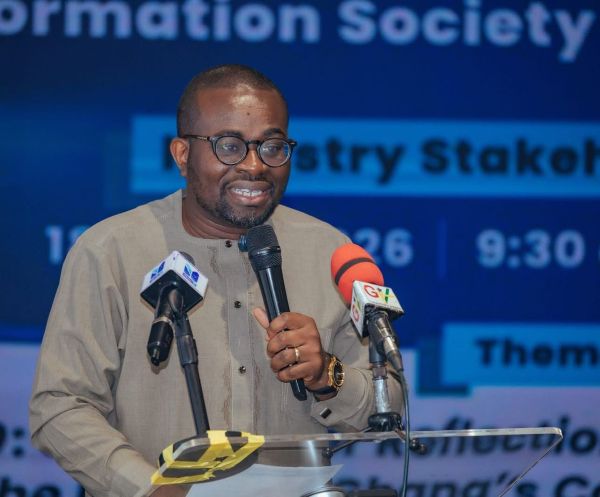
The Director-General of the National Communications Authority (NCA), Edmund Yirenkyi Fianko, has clarified that the Authority has no legal mandate to regulate or sanction media content, urging the public to channel complaints about abusive or unprofessional broadcasts to the National Media Commission (NMC).
Speaking in an interview, Mr Fianko emphasised that the NCA operates strictly as a technical regulator and is bound by law to avoid interference in content-related matters, even when public concerns arise over what is said on radio or television.
“We are not a content regulator. We cannot make decisions based on what somebody says on radio or TV,” he stated.
He explained that once the NCA grants frequency authorisation to a media house, its role is limited to technical oversight, such as ensuring compliance with signal standards, preventing interference, and enforcing payment of regulatory fees.

“If they are causing interference, we can act. If they don’t pay their fees, we will go after them. But if they say something, we do not have the mandate to act,” he clarified.
According to him, Ghana’s constitutional framework and rulings by the Supreme Court clearly separate technical regulation from content oversight, placing responsibility for maintaining journalistic standards squarely on the NMC.
Mr Fianko noted that while there have been growing calls for stricter control of broadcast content, any such changes would require constitutional and legal reforms to expand the NCA’s mandate.
“For those who believe something must be done about content, this is the opportunity to look at the laws and make the necessary changes,” he said.
Beyond the regulatory clarification, the NCA boss highlighted ongoing efforts to empower consumers through education, announcing an intensified public awareness campaign to help users better understand telecom services, their rights, and how to seek redress.
He said the initiative would also demystify technical issues affecting connectivity, including how environmental factors such as terrain and vegetation can impact signal quality.
Mr Fianko further disclosed that the authority continues to monitor infrastructure safety through routine inspections of telecom towers and is working with operators to expand coverage in underserved areas.
He, however, stressed that community resistance to infrastructure development, often driven by misconceptions, remains a challenge, urging the public to support efforts aimed at improving nationwide connectivity.
The NCA’s position, he reiterated, is clear: while it remains committed to ensuring quality service and technical compliance, issues relating to media content must be directed to the appropriate body, the National Media Commission.