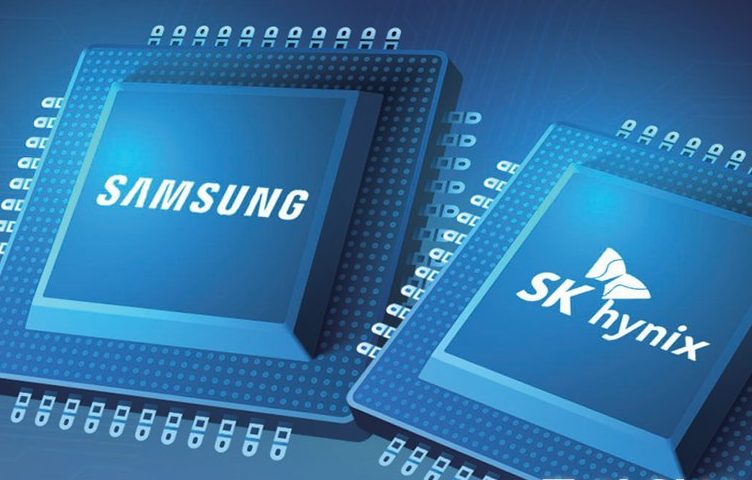
South Korea’s semiconductor giants, Samsung Electronics and SK Hynix, are expected to announce combined investment plans worth approximately $1.3 trillion this week as the country accelerates efforts to strengthen its semiconductor and artificial intelligence (AI) capabilities.
The investment commitments are expected to be unveiled at a government-led event on Monday attended by South Korean President Lee Jae Myung, Samsung ChairmanLee Jae-yong and SK Group Chairman Chey Tae-won, according to a report by the Korea Economic Daily.
The newspaper reported that Samsung intends to invest around $650 billion over the next decade, while SK Hynix is expected to announce a similar commitment of about $650 billion, bringing the combined total to roughly $1.3 trillion.
The proposed investment strategy includes the establishment of a new semiconductor manufacturing cluster in South Korea’s Honam region. Meanwhile, data centre investments will be focused in the Chungcheong region, with projects related to physical AI infrastructure planned for the Yeongnam region.

South Korea’s presidential office confirmed on Sunday that Samsung and SK Hynix would unveil major investment plans this week as part of the government’s broader regional development initiative. However, it did not disclose the value of the planned investments.
The announcements come as semiconductor manufacturers worldwide accelerate capacity expansion to meet rapidly growing demand for AI hardware, including advanced memory chips and processors that power next-generation AI systems.
The investment plans also follow a significant shift in South Korea’s corporate landscape, with SK Hynix recently surpassing Samsung Electronics as the country’s most valuable listed company.
The milestone has been driven largely by SK Hynix’s leadership in the production of high-bandwidth memory (HBM) chips, which have become essential components in AI computing infrastructure.
The planned spending is expected to reinforce South Korea’s position as one of the world’s leading semiconductor manufacturing hubs while supporting the country’s ambitions to remain competitive in the rapidly evolving AI industry.