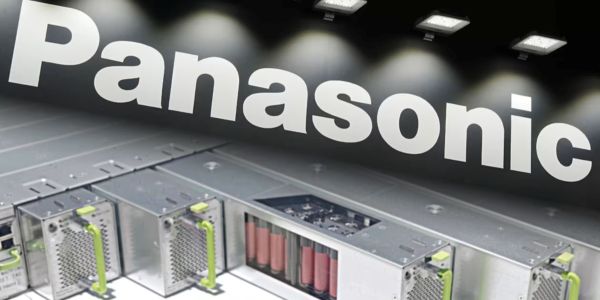
Panasonic is seeking to localise its U.S. supply chain for energy storage systems as it prepares to produce battery cells at a plant in Kansas as part of a shift towards supplying data centres, the Japanese group’s CEO said on Tuesday.
“Since most of our customers are in the U.S. for these energy storage systems, we think it makes sense to complete the supply chain as much as possible within the U.S.,” Yuki Kusumi said during a roundtable interview in Tokyo.
Panasonic said this month it plans to begin mass production of battery cells for data centres at the Kansas plant of its energy unit, which also makes batteries for Tesla, in the financial year ending March 2029.
Automakers and battery companies, which now face a weak market for electric vehicles in the U.S., are scrambling to repurpose battery factories to make energy-storage systems to fuel AI’s demand for power instead.

Panasonic does not plan to make lithium iron phosphate (LFP) batteries, Kusumi said, adding they are less suited to the company’s focus on distributed systems that help smooth peak power demand at individual servers and are better suited to large, centralised backup applications.
LFP batteries are widely used in energy storage systems because they are cheaper than the nickel-heavy chemistry that is commonly used for EV batteries in North America.
Kusumi said Panasonic was not struggling to secure supplies from China, even as ties between Beijing and Tokyo remain strained. China added 20 Japanese firms to a dual-use export control list this week, though Panasonic was not among those targeted.