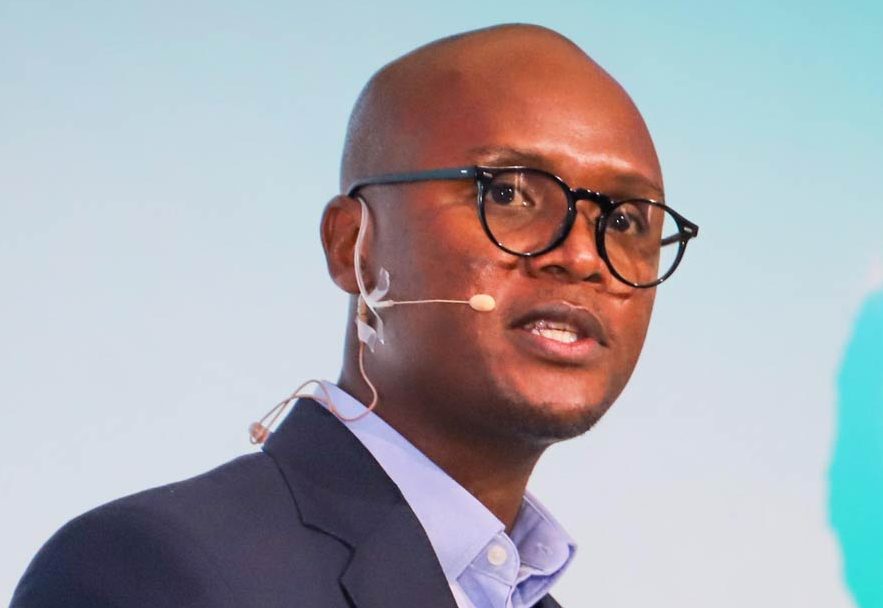
South Africa’s Communications Minister Solly Malatsi has argued that the controversy surrounding Starlink’s licensing has moved beyond a debate over satellite broadband and evolved into a politically charged dispute over his telecommunications reform agenda.
In a strongly worded letter dated Sunday and addressed to Parliament’s communications committee chairperson, Khusela Sangoni, Malatsi dismissed claims that he was influenced into pursuing policy reforms that could favour Starlink. He maintained that the proposed changes had been part of his agenda long before any engagement with the satellite internet provider.
”It is impossible to be unduly influenced to do something one is already doing,” the minister wrote, pointing out that recognising Equity Equivalent Investment Programmes (EEIPs) within the ICT sector was already included in both the Democratic Alliance (DA) party’s 2024 election manifesto and the Government of National Unity’s Medium-Term Development Plan.
The letter marks a significant development in a dispute that has expanded from questions over Starlink’s entry into the South African market to one of the most politically sensitive technology issues facing the Government of National Unity.

Rather than simply responding to Parliament’s request for clarification, Malatsi sought to reject suggestions that private lobbying had shaped government policy. His response followed concerns raised by Sangoni after allegations by former agriculture minister John Steenhuisen that public affairs firm Resolve Communications had facilitated meetings between government ministers and private clients, including Starlink. Resolve Communications, owned by Tony Leon, has denied the allegations.
In her earlier correspondence, Sangoni said the claims, although unproven, raised important questions about the relationship between public officials and private interests in shaping government policy. She warned that the allegations echoed concerns associated with South Africa’s State Capture era.
At the heart of the dispute is South Africa’s effort to modernise its telecommunications framework to accommodate low-Earth orbit satellite operators while maintaining the country’s black economic empowerment requirements. Starlink, the SpaceX-owned satellite broadband service, has been unable to secure a licence because existing legislation requires telecommunications network operators to have at least 30 per cent ownership by historically disadvantaged South Africans.
Malatsi has proposed allowing EEIPs as an alternative means of meeting these requirements, a move widely viewed as creating a pathway for multinational satellite providers that cannot satisfy the local ownership threshold.
The minister also rejected suggestions that his dealings with Starlink were unusual, revealing that he has held discussions with several satellite operators, including Amazon LEO, China Satellite Network Company, Space24, Spacesail and Starlink.
He stressed that none of the meetings involved discussions about specific licence applications but instead focused on understanding the companies’ capabilities and explaining South Africa’s regulatory framework.
Addressing allegations involving Resolve Communications, Malatsi said the firm had approached his office only twice, once regarding concerns over SIM card registration compliance and another concerning a radio station licence amendment application.
He also disclosed two telephone conversations with Resolve’s chief executive, Paul Boughey, describing one as a routine request for assistance in accessing a government gazette.
The minister further revealed that his only meeting with a SpaceX representative, Ryan Goodnight, in September 2024 was arranged by lawyer Robert Appelbaum rather than Resolve Communications. He argued that the media reports cited by Parliament did not allege that Resolve had arranged any meeting between himself and Starlink.
Malatsi defended regular engagement between ministers and industry stakeholders, saying such interactions are an essential part of policymaking. While consultations may broaden his understanding of policy issues, he insisted they do not determine government decisions.
He also pointed to President Cyril Ramaphosa’s own meeting with SpaceX chief executive Elon Musk, noting that the Presidency had publicly acknowledged Starlink would feature in their discussions.
According to Malatsi, such engagements with international technology firms are a routine aspect of government rather than evidence of improper influence.
Parliament’s communications committee will now assess Malatsi’s response before deciding its next course of action.
As the ANC calls for closer scrutiny and the Democratic Alliance argues that the controversy is politically motivated, the Starlink licensing dispute has become a broader test of how South Africa’s Government of National Unity balances technology policy, foreign investment and political accountability.