Ghana is on course to record nearly 9,000 fibre cuts in 2026, with the damage expected to cost more than US$20 million to repair, the Minister of Communication, Digital Technology and Innovations, Samuel Nartey George, has disclosed.
The minister said the persistent destruction of fibre infrastructure had become one of the major threats to network stability and was diverting significant resources that could otherwise be used to expand telecommunications infrastructure and improve connectivity.
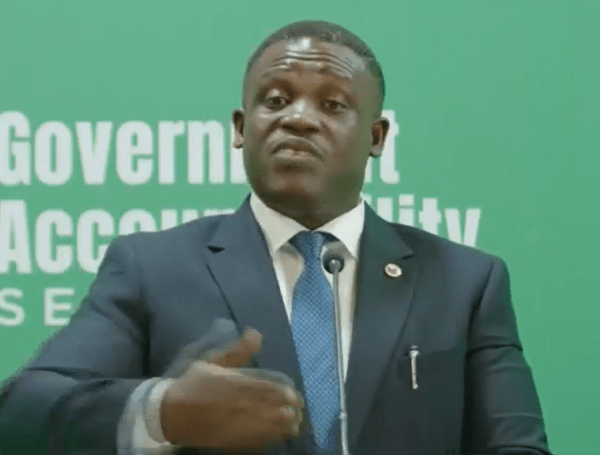
Speaking during the Government Accountability Series, Mr George said the country had already recorded almost 4,300 fibre cuts by the end of June 2026, putting Ghana on track to exceed the 8,000 cuts recorded in 2025.
He said the scale of the problem was particularly worrying because every fibre cut could result in service degradation or complete outages in affected areas.

“That’s money that, without the fibre cuts, we could have used to build new sites,” the minister said, referring to the more than $20 million expected to be spent on repairs this year.
Mr George provided figures showing a significant and persistent fibre-cut problem over the past six years.
Ghana recorded about 3,900 fibre cuts in 2021, before the figure rose to more than 10,000 in 2022.
The country subsequently recorded more than 6,000 cuts in 2023, over 5,600 in 2024 and about 8,000 in 2025.
With nearly 4,300 cuts already recorded by June 2026, Mr George said the country could reach close to 9,000 by the end of the year if the current trend continued.
According to the minister, road construction accounts for about 49 per cent of fibre cuts, making it the single largest source of damage to the country’s fibre infrastructure.
He said the government’s major road construction programme had inadvertently increased the risk to underground fibre networks, particularly when contractors excavate areas without adequately identifying the location of fibre infrastructure.
Sam George cited road construction between Winneba and Cape Coast as an example, where a single fibre cut resulted in a 17-hour service outage.
He explained that excavation works during road expansion damaged the fibre, significantly degrading data and telecommunications services across the affected areas.
The minister said customers in locations such as Winneba, Mankessim and Cape Coast could experience poor calls and internet connectivity without necessarily knowing that the problem had been caused by a damaged fibre line.
Sam George identified illegal mining, popularly known as galamsey, as another major contributor to fibre damage, accounting for approximately 25 per cent of fibre cuts.
He said illegal miners frequently excavate areas where fibre infrastructure has been installed, damaging cables in the process.
Unlike road contractors who may report damage after an incident, he said illegal miners often provide no notification, making repairs and restoration more difficult.
Private developers and other construction activities account for the remaining 26 per cent, according to the minister.
Sam George said the impact of fibre damage could become severe when multiple transmission routes are affected at the same time.
He cited an incident in which three different fibre routes carrying telecommunications capacity to northern Ghana were reportedly cut within a period of about two hours.
The simultaneous damage resulted in widespread service degradation and contributed to complaints from residents in areas including Tamale.
He explained that customers might interpret such disruptions as a failure by telecommunications operators to provide adequate service when the underlying problem could be physical damage to the national fibre backbone.
To address the problem, Sam George said the NCA was developing a coordination framework requiring road agencies and contractors to engage telecommunications operators before excavation works begin.
He said contractors would be required to identify existing fibre infrastructure and coordinate with the relevant authorities before commencing construction.
The minister also disclosed that the Ministry of Communication and the Ministry of Roads and Highways had jointly submitted a ‘dig once’ policy for Cabinet consideration.
Under the proposed policy, road construction projects would include dedicated fibre chambers alongside roads, allowing telecommunications infrastructure to be properly housed and protected.
This, he said, would reduce the need for repeated excavation and make it easier for road authorities and contractors to identify the location of fibre infrastructure.
The government is also considering enforceable penalties for contractors and other parties who damage fibre infrastructure after the new coordination framework comes into effect.
Mr George rejected calls for the government to publish the precise national fibre layout to help contractors identify underground cables.
He explained that fibre infrastructure should be treated as a national security asset and that its detailed location should not simply be made publicly available.
Instead, he said the proposed coordination system would provide contractors with the information they need through the relevant authorities without exposing the entire national fibre network.
The minister also called on the public to help protect fibre infrastructure, citing an incident in which refuse was reportedly dumped and burnt inside a fibre chamber, resulting in service degradation across parts of Accra.
He urged citizens to take responsibility for protecting telecommunications infrastructure, stressing that fibre cuts affect businesses, households and essential digital services.
Mr George said the government’s efforts to expand network coverage must therefore be accompanied by measures to protect existing infrastructure.
He maintained that the more than $20 million being spent on repairing damaged fibre could instead be redirected towards building new sites and improving network capacity.
He said the government would continue to work with the NCA, road agencies, telecommunications operators and other stakeholders to build a more resilient telecommunications network capable of supporting Ghana’s increasingly data-driven economy.