Ghana’s national smartphone penetration has increased dramatically over the past decade, rising from 27.5 per cent to 71.8 per cent as of June 2026.
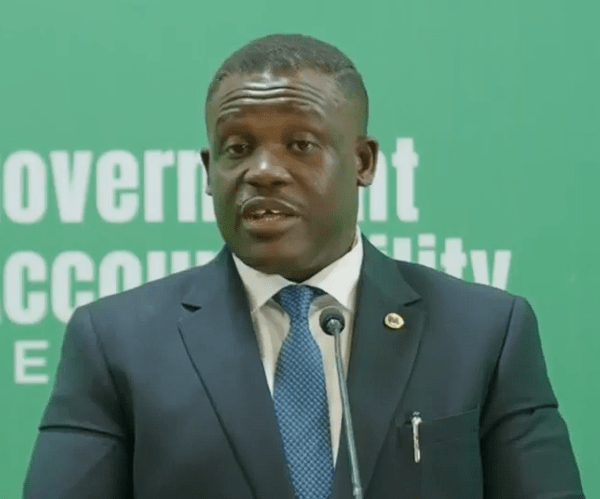
The Minister for Communication, Digital Technology and Innovations, Samuel Nartey George, disclosed the figure during the Government’s Accountability Series.
He said the sharp increase demonstrated how deeply digital technology had become embedded in the daily lives and economic activities of Ghanaians.
“More Ghanaians are ever relying on the network for work, business, and daily life,” he said.

However, the minister warned that the rapid growth in smartphone adoption had not been matched by a corresponding expansion in telecommunications infrastructure.
He said the mismatch between growing demand and infrastructure investment was one of the major reasons behind network congestion and service-quality challenges currently experienced across the country.
Sam George said Ghana had spent years moving from a voice-based telecommunications market to a data-driven economy, but infrastructure development had failed to keep pace with that transition.
He cited historical network investment figures to illustrate the challenge.
According to him, only 30 new sites were built in 2024, while the work plan inherited in 2025 provided for only 50 new sites.
The government subsequently engaged MTN to increase its 2026 target to 800 new sites.
The minister said the figure was significant when compared with the average annual addition of about 209 sites over the previous decade.
He said Telecel had also increased its investment and was undertaking a major programme to upgrade existing sites to 4G compliance.
Sam George said the government’s objective was not simply to increase the number of network sites but to ensure that the infrastructure could support the digital services increasingly required by citizens.