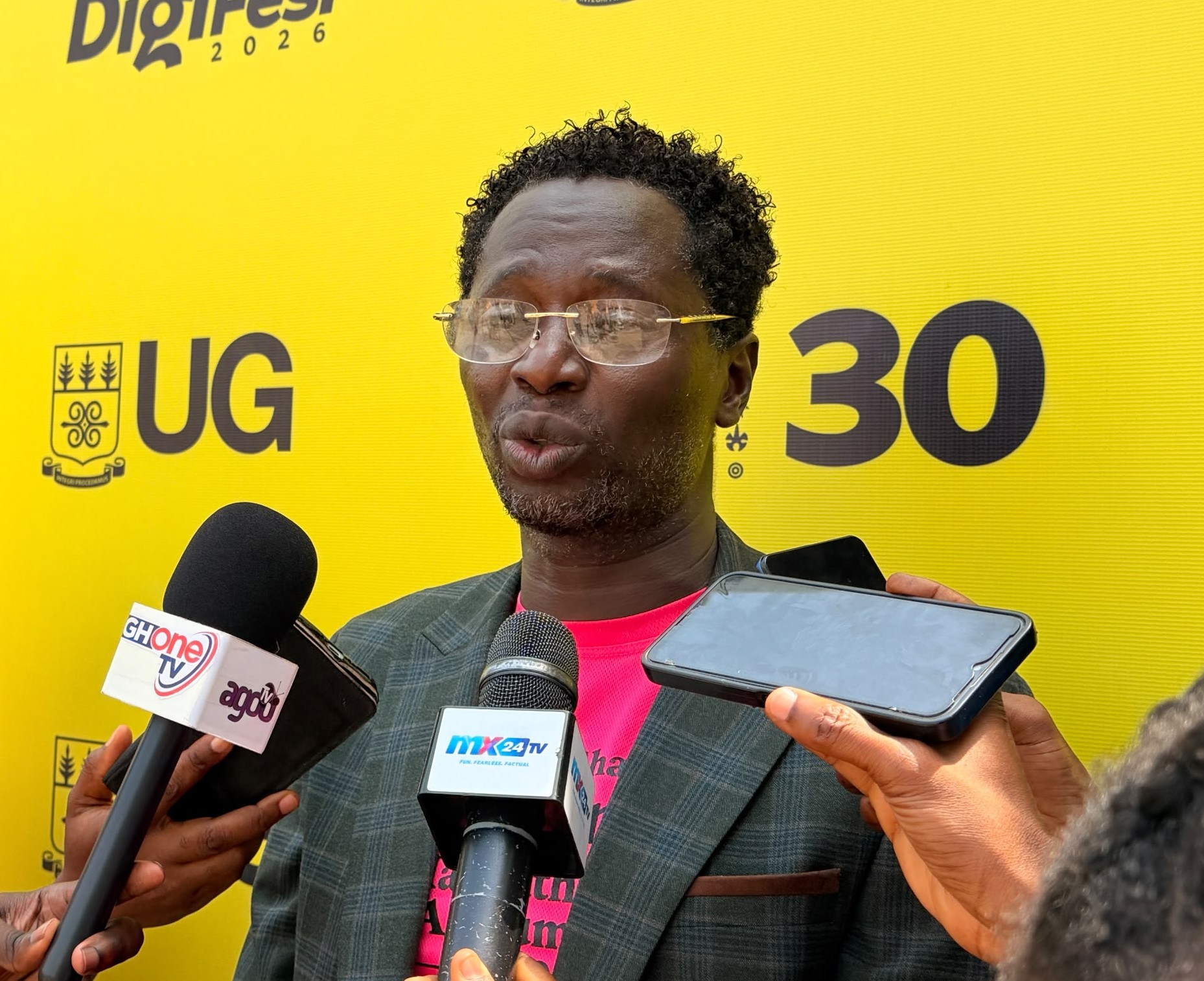
Artificial intelligence (AI) is creating opportunities to improve accessibility and the lives of persons with disabilities, particularly those with visual impairments, through innovations in navigation, voice-based financial transactions and assistive robotics, Professor Isaac Wiafe, Lead Researcher at the Human-Computer Interaction (HCI) Lab of the University of Ghana’s Department of Computer Science, has said.
He said AI could help bridge the gap between persons with disabilities and the wider population by providing technological solutions that support independence and access to essential services.
Speaking in an interview, Prof Wiafe said the HCI Lab had developed an application to help persons with visual impairments navigate their homes, university campuses and public spaces, including markets.
The application uses a mobile phone’s camera to identify obstacles and hazards, providing users with information about their surroundings, including the distance to objects in their path.

He said the technology was designed to support independent movement without requiring users to rely constantly on other people.
Prof Wiafe said researchers were also exploring the use of AI in developing artificial limbs and arms, as well as artificial eye implants that could potentially restore sight to people with visual impairments.
He, however, identified inadequate financial support as a major obstacle preventing researchers in Ghana and across Africa from advancing such innovations.
”We have the knowledge, we have the know-how. Our lab has been investigating things like that. It is just that we need support,” he said, adding that the financial demands of developing the technologies remained a significant limitation.
Beyond assistive navigation, the HCI Lab is also supporting the development of voice-based applications that allow users to conduct mobile money transactions without physically touching their phones.
According to Prof Wiafe, the applications are designed to recognise local languages, including Twi, Ewe and Dagbani, allowing users to issue voice commands to send mobile money and perform other transactions.
He said the innovation could significantly improve financial accessibility for persons with visual impairments, who may struggle to identify characters and navigate conventional mobile phone interfaces.
The applications are designed to operate independently on mobile phones without requiring an internet connection, making them accessible without continuous internet connectivity.
Prof Wiafe made the remarks while discussing the innovations developed by students participating in a competition organised around AI-powered solutions.
He said the competition had attracted 131 teams, which were subsequently screened down to 50 and then 25, before five finalists were selected to present their innovations.
The first-place team will receive GH¢70,000 to support the development of its innovation into a start-up, while the second- and third-place teams will receive GH¢20,000 and GH¢10,000, respectively.
He said the HCI Lab would provide additional technical support to the winning teams, including free access to foundational models used in developing their applications.
Prof Wiafe explained that the models would otherwise require substantial financial investment, but the laboratory had decided to make them available to the students at no cost to support the development of their innovations.
He expressed the laboratory’s commitment to helping the teams advance their projects beyond the competition, particularly by supporting their transition into viable start-ups.