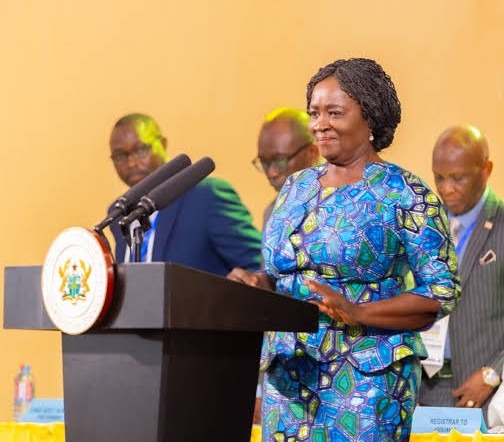
Vice President Prof. Jane Naana Opoku-Agyemang has called on African governments and digital technology stakeholders to prioritise children’s online safety, privacy and access to digital opportunities as the continent accelerates its digital transformation agenda.
She said children and young people must remain central to discussions on digital policy, particularly as technology increasingly influences education, communication, economic participation and access to information.
Addressing delegates at the opening of the 15th Africa Internet Governance Forum in Ghana, the vice president stressed that protecting children in the digital environment must go hand in hand with expanding access to technology.
“Children and young people deserve particular attention in these discussions. Their safety, privacy and right to learn must remain central to digital policy,” she stated.

Professor Jane Opoku-Agyemang further emphasised the need to ensure that young people, particularly young women, rural youth and persons with disabilities, were given equal opportunities to participate in the digital economy.
She said their involvement should extend beyond accessing digital services to contributing to decisions that affect their lives and technological future.
The vice president welcomed the African Youth Ideas initiative, describing it as an important opportunity for young people to contribute their perspectives to discussions on internet governance.
She urged stakeholders to take youth participation seriously, insisting that the continent’s digital future must reflect the interests and aspirations of the younger generation.
On the broader issue of digital inclusion, Professor Opoku-Agyemang said closing the digital divide required more than expanding telecommunications network coverage.
According to her, affordability, accessibility and the digital skills needed to use technology effectively must also receive attention.
“Closing the digital divide involves more than extending network coverage. It also requires attention to affordability, accessibility and the skills people need to use digital technologies,” she said.
She noted that millions of people across underserved communities could remain excluded from the benefits of digital transformation if internet services were unaffordable or if users lacked the skills to navigate digital platforms.
The Vice President also called for greater attention to small businesses, farmers, traders and informal sector workers, whose participation in the digital economy would depend largely on whether available technologies responded to their everyday needs.
She maintained that digital inclusion must create practical economic opportunities for people across different social and economic backgrounds.
Naana Opoku-Agyemang further linked the country’s digital inclusion efforts to the One Million Coders Programme, which seeks to equip young Ghanaians with skills relevant to the changing economy.
She, however, cautioned that skills development must translate into employment, entrepreneurship and opportunities for beneficiaries to develop products and services.