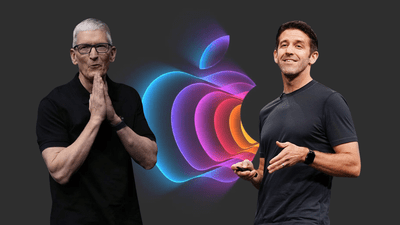
Tim Cook, who has been Apple’s CEO since 2011 after succeeding the late Steve Jobs, is stepping down as Senior Vice President of Hardware, John Termus prepares to assume the role on September 1 of this year.
Ternus will become a member of Apple’s board of directors, while Cook continues to serve as executive chairman.
Again, from September 1, Arthur Levinson, who has been Apple’s non-executive chairman for the previous fifteen years, will also take on the role of lead independent director.
One of the longest and most influential CEO tenures at any corporation comes to an end with this shift, which has been anticipated for a while.

Cook took over at a time of genuine uncertainty—Jobs passed away from pancreatic cancer just six weeks after officially leaving the position—and took over a business that many industry observers and devotees found difficult to distance themselves from its renowned founder. He leaves behind a $4 trillion company whose yearly revenue has more than doubled during his tenure.
”Being the CEO of Apple has been the greatest privilege of my life,” Cook said in a statement on Monday. “I adore Apple with all of my heart, and I am incredibly appreciative to have had the chance to work with a group of incredibly clever, inventive, imaginative and compassionate individuals who have been steadfast in their commitment to improving our customers’ lives.”
Cook was not brought to Cupertino in 1998 as a visionary. Rather, Jobs, who had just returned to Apple after a long absence, needed someone to address a supply chain that was, by most accounts, a complete mess. Cook, a native of Mobile, Alabama, did all was required and more. He worked for IBM for 12 years before taking jobs at Intelligent Electronics and Compaq. He swiftly consolidated suppliers and closed warehouses, and he is widely recognised for having transformed Apple’s manufacturing system from a liability to a competitive advantage over time.
It was never a certain that he would be promoted to CEO.
For many years, the belief in Silicon Valley was that Jobs was unfollowable. Cook was a meticulous supply-chain and operations specialist, and it was difficult to imagine someone less like the ostentatious product genius. However, Cook managed the business well enough that by the time Jobs formally gave him the position, he was the clear choice when Jobs’ health forced him to step back multiple times, in 2004, 2009 and 2011.
Famously, there were further stumbles. Apple Vision Pro, a mixed-reality headset that Cook promoted as the company’s next big platform, was one of the most well-known. However, it was mainly disregarded by customers who were unwilling to spend several thousand dollars strapping a computer that weighed more than a pound to their faces.
By other criteria, his term has been incredibly successful. Cook transformed Apple Services into a firm worth more than $100 billion a year, as the company noted in its own statement regarding the management change on Monday. He is also credited by Apple with starting the company’s thriving wearables division. (The Apple Watch made up about 25% of all smartwatch sales worldwide last year.)
In a board statement, Levinson described Cook’s leadership as “unprecedented and outstanding,” adding that Cook’s “integrity and values are infused into everything Apple does.” The board is “thrilled” that Cook will remain executive chairman, Levinson continued.
Ternus has worked at Apple for virtually his whole career. At 51, he is almost the same age as Cook when he was appointed CEO. Born in California, he attended the University of Pennsylvania to study mechanical engineering, participated in the varsity swim team, and earned his degree in 1997. In 2001, he joined Apple’s product design team after working briefly for a small company named Virtual Research Systems, where he designed virtual reality headgear. He served as vice president of hardware engineering by 2013. Ternus became the youngest member of Apple’s executive team when he was elevated to senior vice president in 2021 after his predecessor Dan Riccio left to supervise what would eventually become the (fatal) Vision Pro.
It should come as no surprise that Ternus has contributed to a large portion of what Apple has shipped in the last ten years. According to Apple, he oversaw multiple iterations of the iPhone, Mac, and Apple Watch and had a significant role in the launch of the iPad and AirPods. With the release of a new iPhone lineup this past fall that includes the iPhone 17 Pro and Pro Max, the iPhone Air, and the iPhone 17 itself, his team’s efforts became even more apparent.
Ternus has contributed to the growth of the Mac market, particularly with the recent release of the more reasonably priced MacBook Neo. Additionally, Apple credits his team for advancing AirPods to the point where they may now be used as an over-the-counter hearing health system in addition to being headphones.
Ternus has placed a strong emphasis on durability and repairability in addition to the products themselves. He is credited by Apple with developing new materials and manufacturing processes that have lowered the carbon footprint of the company’s products, such as a new recycled aluminium compound used in several product lines. Additionally, he is credited with improving the fixability of a number of Apple devices, extending their lifespans.
”Having spent almost my entire career at Apple, I have been lucky to have worked under Steve Jobs and to have had Tim Cook as my mentor,” Ternus said in a statement released on Monday. “I promise to lead with the values and vision that have come to define this special place for fifty years. I am humbled to step into this role.”
”John Ternus has the mind of an engineer, the soul of an innovator, and the heart to lead with integrity and with honour,” Cook remarked in response to Ternus. “He is unquestionably the best candidate to guide Apple into the future.”