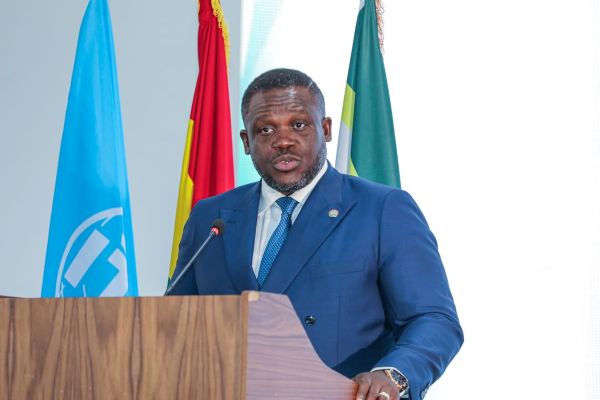
Minister of Communications, Digital Technology and Innovations, Samuel Nartey George has underscored Africa’s pivotal role in formulating in global ICT standards saying that over the years Africa held critical leadership positions across the structures of the International Telecommunications Union (ITU), and also gotten majority of its proposed standards adopted globally.
He was delivering the keynote address at the opening of the First African Preparatory Meeting for the World Telecommunication Standardisation Assembly 2028 (WTSA-28), which is being hosted by the National Communications Authority (NCA) under the auspices of the ministry.
The five-day meeting, being held in collaboration with the ITU and the African Telecommunications Union (ATU) from 13th to 17th April 2026 in Accra, is taking place alongside the Joint ITU-ATU Workshops on Over-the-Top (OTT) services and the implementation of a Common Emergency Number in Africa, as well as the Meetings of ITU-T Study Groups 2 and 3 Regional Groups for Africa.
Sam George underscored the importance of unity and coordinated action as the continent prepares for WTSA-28, recalling that, by working together during WTSA-24, Africa submitted thirty-seven (37) Common Proposals, of which thirty-four (34) were adopted, including new resolutions on Artificial Intelligence, the Metaverse, and ITU Strategic Planning.

The Minister further noted that Africa secured twenty-nine (29) leadership positions across ITU structures, with experts from thirteen (13) countries serving as Chairs, Vice Chairs, and TSAG Vice Chairs, marking a significant milestone in the continent’s participation in global standard-setting.
He emphasised that the current preparatory meeting presents a critical opportunity for Africa to align positions, strengthen regional cooperation, and build consensus.
“Our main technical priorities are bridging the digital divide through rural broadband, enhancing cybersecurity via robust frameworks, promoting affordable connectivity with infrastructure sharing, and fostering safe, inclusive advancement of AI and IoT. We must ensure standardisation supports innovation and remains flexible. It should be guided by technology neutrality, inclusivity, and sustainability”, he said.
Sam George also used the platform to appeal to all ATU member countries to support Ghana’s bid for the re-election of the NCA Director-General, Rev. Ing. Edmund Yirenkyi Fiankoto to the ITU Radio Regulations Board (RRB) at the the next ITU Plenipotentiary meeting in Doha, Qatar in November this year.
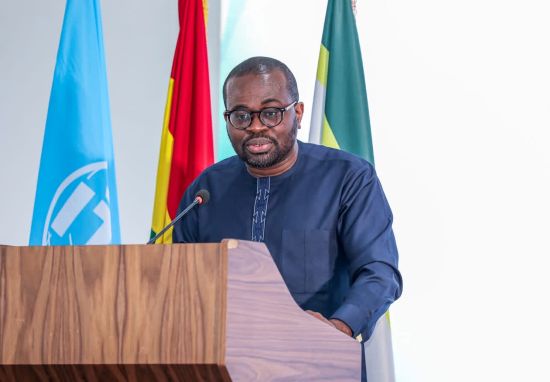
In his welcome address, the Director-General of the NCA, Rev. Ing. Edmund Y. Fianko, welcomed delegates from across Africa and beyond, noting that the gathering is particularly significant as it coincides with the Authority’s 30th anniversary. He stated that the milestone reflects three decades of regulatory leadership and deepening collaboration within the continent and with global partners.
He went on to say that the NCA remains committed to advancing standardisation as a key pillar for driving interoperability, innovation, and trust in the digital ecosystem. Highlighting Ghana’s growing role, Rev. Ing. Fianko noted the establishment of the Type Approval and Conformance Laboratories and the Authority’s continued partnership with the ITU in building capacity across Africa. He reaffirmed Ghana’s readiness to support regional cooperation and contribute meaningfully to global standard-setting efforts.
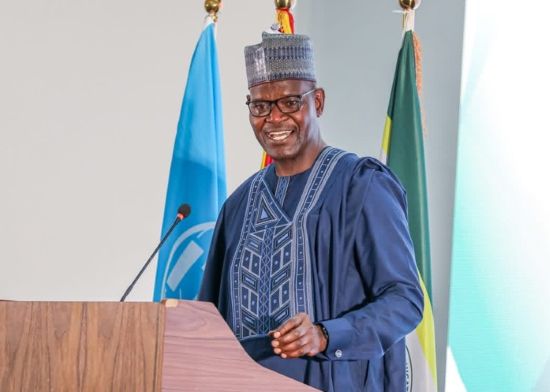
The Secretary-General of the African Telecommunications Union, Mr. John Omo, in his remarks, emphasised that while mobile ownership in Africa continues to grow, it has not yet translated into meaningful connectivity for many citizens. He noted that although 66% of individuals aged 10 and above owned mobile phones in 2024, active mobile broadband usage remains significantly lower, highlighting persistent gaps in affordability, quality of service, and digital inclusion.
Citing data from the GSMA and the ITU, he pointed out that while the coverage gap has narrowed, a substantial usage gap remains, with hundreds of millions still offline. He further stressed that affordability continues to be a major barrier, with mobile broadband costs in many African countries exceeding global targets.
Mr. Omo underscored that the discussions in Accra, particularly on Over-the-Top (OTT) services, are timely and critical, as they directly impact the economics of network investment and the continent’s ability to deliver more accessible, reliable, and affordable digital services.
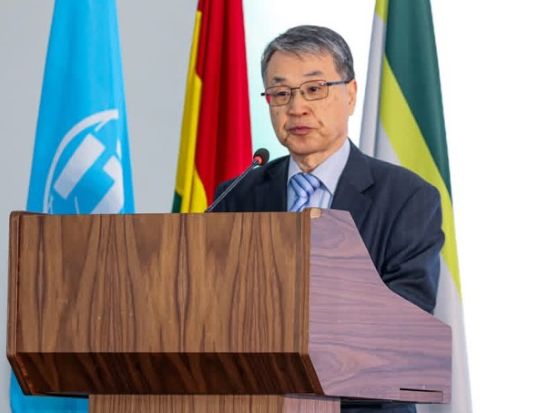
In a solidarity statement, the Director of the Telecommunication Standardization Bureau of the International Telecommunication Union, Mr. Seizo Onoe, emphasised the importance of ensuring that global standards and capacity-building efforts lay a solid foundation for the digital future.
He noted that the outcomes of the last World Telecommunication Standardization Assembly (WTSA-24) demonstrated the ITU community’s strong commitment to developing impactful and widely adopted standards, supported by active industry participation and sustained support for developing countries.
Emphasizing the ITU’s long-standing culture of collaboration and consensus, he urged stakeholders to ensure that the outcomes of WTSA-28 reflect the priorities and needs of all member states.