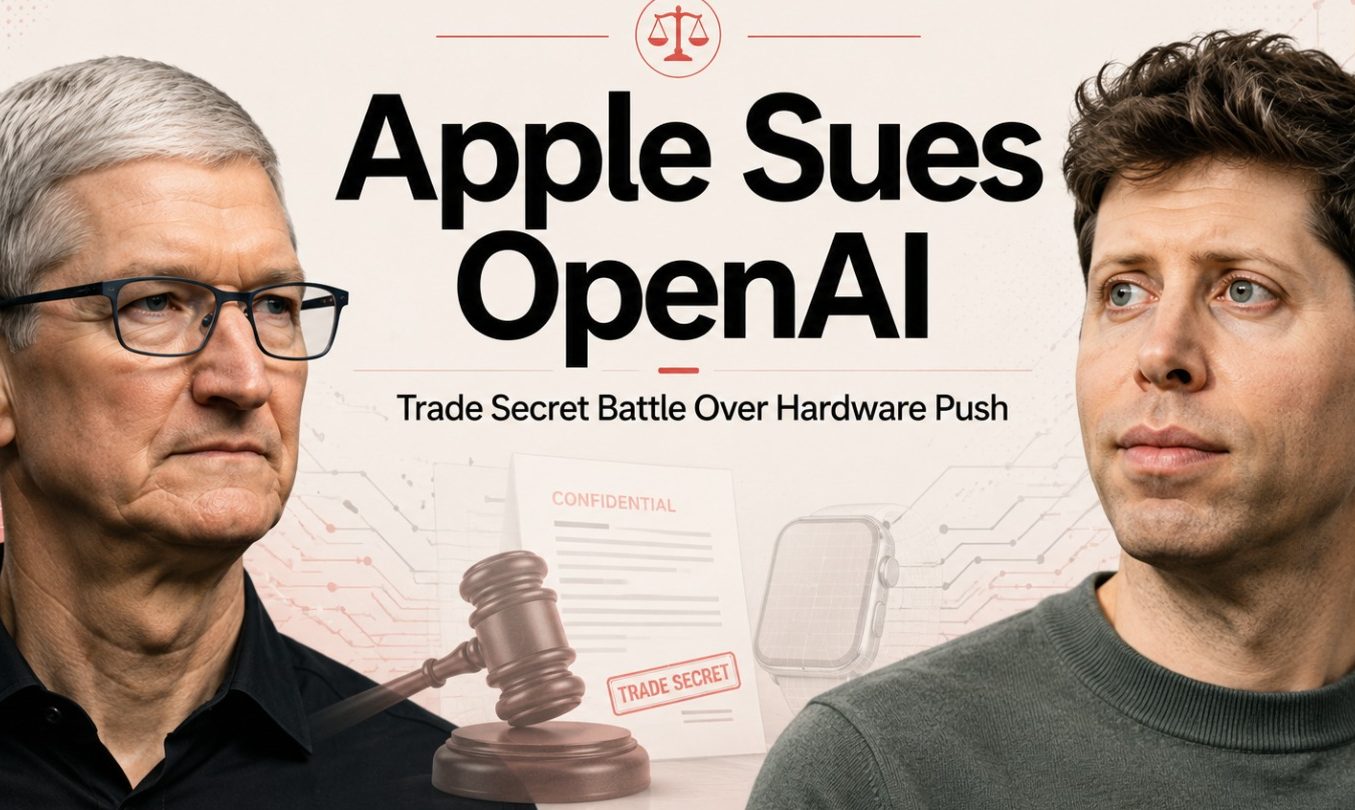
Apple has filed a lawsuit against OpenAI and two former Apple employees, alleging the theft and misuse of its confidential trade secrets in a legal battle that signals a significant escalation in tensions between the two technology companies.
The complaint was lodged in the U.S. District Court for the Northern District of California and names Chang Liu and Tang Yew Tan, both former Apple employees who have since joined OpenAI, as defendants.
According to the court filing, Apple alleges that Tang Yew Tan, who now serves as OpenAI’s Chief Hardware Officer, is using Apple trade secrets in his current role. The company further claims that Chang Liu copied dozens of confidential hardware files after accepting employment with OpenAI.
Apple also accuses OpenAI of encouraging prospective employees to bring Apple prototypes and design artefacts to job interviews. The lawsuit alleges that the artificial intelligence company instructed candidates to present confidential materials that could provide insights into Apple’s hardware development.

In addition, Apple claims that OpenAI approached suppliers with highly specific questions regarding Apple’s manufacturing processes and hardware components—queries the company argues could only have come from individuals with insider knowledge.
The iPhone maker further alleges that OpenAI persuaded one of Apple’s manufacturing partners to carry out the company’s proprietary metal-finishing techniques as part of OpenAI’s hardware development programme. According to the lawsuit, such work would have breached contractual restrictions governing the supplier’s relationship with Apple.
The legal action represents a major escalation in the increasingly strained relationship between Apple and the maker of ChatGPT. The dispute comes amid intensifying competition in artificial intelligence and growing industry focus on the development of AI-powered hardware.
Neither Apple nor OpenAI had publicly responded to the allegations at the time of writing. The claims made in the lawsuit have not yet been tested in court.