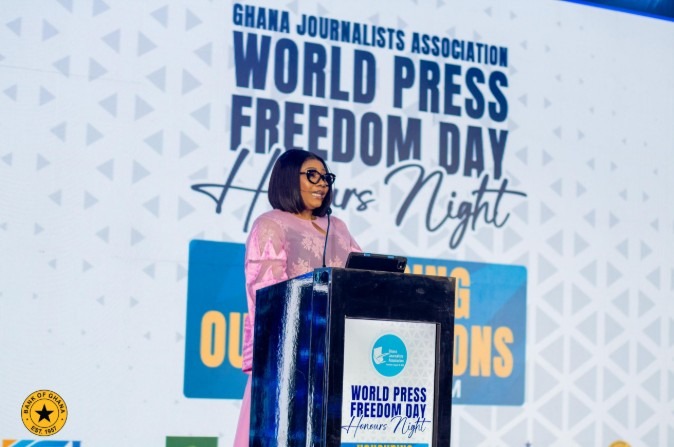
The Second Deputy Governor of the Bank of Ghana (BoG), Matilda Asante-Asiedu, has underscored the critical role of a free, responsible and credible media in promoting national development, economic stability and public confidence.
Speaking at the World Press Freedom Honours Night 2026 organised by the Ghana Journalists Association (GJA) in Accra, Mrs Asante-Asiedu said trust remains the most valuable asset of both the media and financial institutions, warning that the erosion of public confidence could have serious consequences for society and the economy.
Addressing journalists, media practitioners and stakeholders, she noted that this year’s global theme, “Shaping a Future at Peace: Promoting Press Freedom for Human Rights, Development and Security,” highlights the immense responsibility that accompanies press freedom.
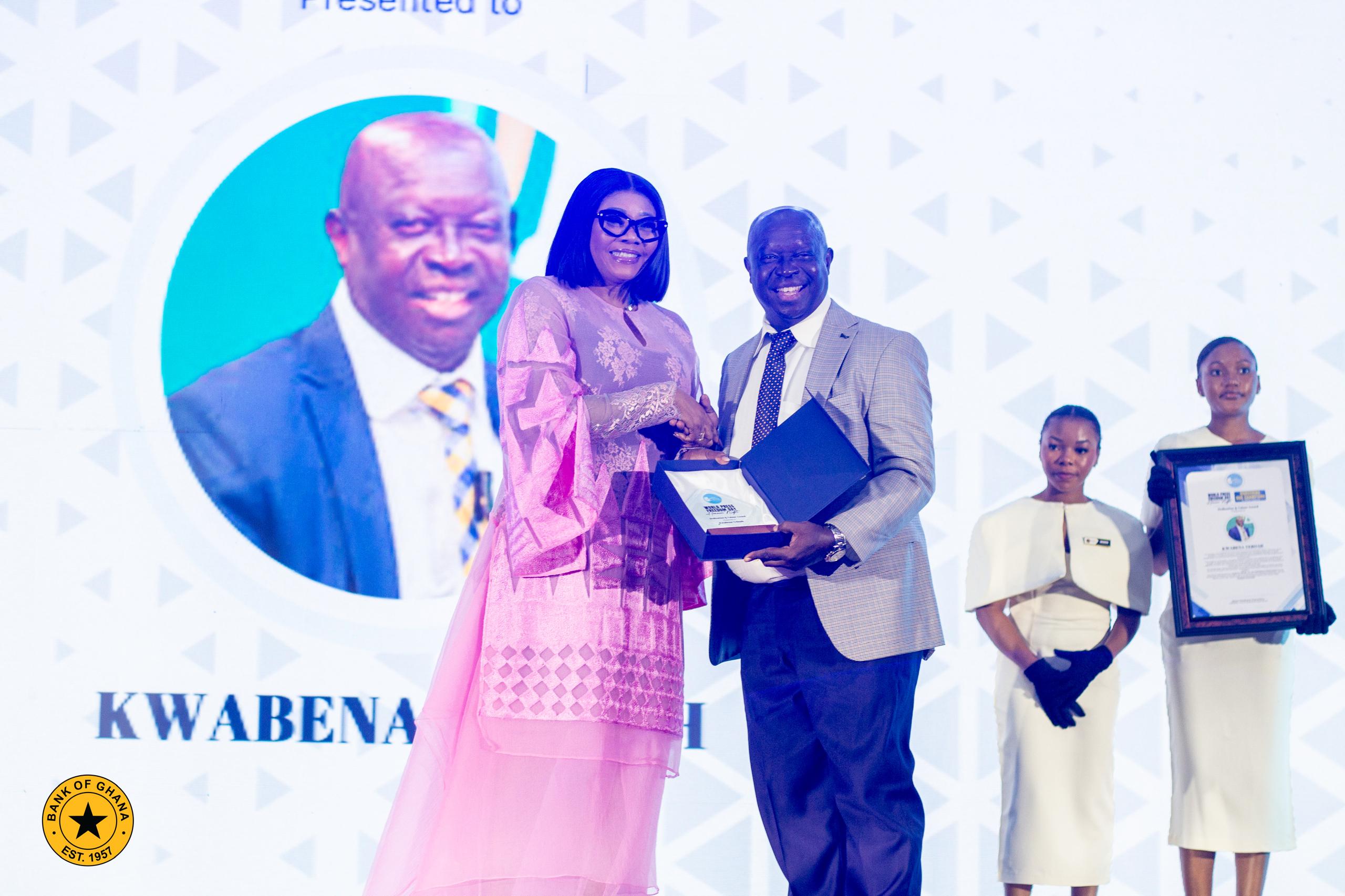
Mrs Asante-Asiedu, herself a former journalist, described the occasion as nostalgic, recalling her years in the media profession before assuming her current role at the central bank.

She praised Ghana’s media for its contribution to the country’s democratic development, noting that the nation had made significant progress in press freedom. Citing the latest World Press Freedom Index by Reporters Without Borders, she said Ghana had climbed to 39th place out of 180 countries, improving from 52nd position in 2025 and recording its strongest performance in five years.
Despite the gains, she warned that the media industry continues to face challenges, including misinformation, disinformation, declining public trust and the economic sustainability of media organisations.
”Misinformation and disinformation are no longer peripheral concerns,” she said, adding that the World Economic Forum’s Global Risks Report ranks them among the most severe global threats.
Mrs Asante-Asiedu stressed that credibility is not only a professional virtue but also an economic asset for media organisations, influencing audience confidence, ratings and advertising revenue.
”Trust has become journalism’s most valuable asset,” she stated. “Any erosion of that trust creates a double jeopardy: loss of credibility and loss of revenue.”
Drawing parallels between the media and the financial sector, she explained that just as confidence is essential for financial system stability, public trust is indispensable for the sustainability of the media.
She emphasised that the Bank of Ghana relies heavily on the media to communicate complex monetary policy decisions, shape public expectations and support economic development through informed reporting.
According to her, the central bank has intensified efforts to strengthen economic and financial journalism through knowledge-sharing initiatives, training programmes and regular engagements with journalists.
She outlined several measures undertaken by the Bank, including enhanced media training, regular post-Monetary Policy Committee briefings, the publication of individual MPC members’ policy submissions to improve transparency, the establishment of a Regional Press Corps and the creation of dedicated WhatsApp communication platforms to facilitate two-way engagement with journalists.
Mrs Asante-Asiedu also highlighted the recently launched Economic and Financial Journalist of the Year Award, introduced in partnership with the GJA to encourage excellence in economic and financial reporting.
Touching on developments in the foreign exchange market, she cautioned against reporting currency fluctuations without adequate context, noting that Ghana’s managed floating exchange rate regime naturally allows both appreciation and depreciation of the cedi.
She explained that inaccurate or sensational reporting could trigger unnecessary panic, speculative demand for foreign currency and increased market volatility.
”In such situations, sentiment—not fundamentals—can temporarily drive market behaviour,” she said.
The Deputy Governor noted that currency stability benefits households and businesses by making import prices more predictable, moderating transport costs and helping to stabilise the prices of essential goods.
She therefore called on the media to play a constructive role in supporting economic stability through accurate and balanced reporting.
Mrs Asante-Asiedu observed that Ghana’s economy had recorded encouraging macroeconomic progress, with improved growth prospects and monetary policies aimed at containing inflation and sustaining stability.
She assured stakeholders that the Bank of Ghana would continue to pursue prudent policies to safeguard the gains made in restoring confidence in the financial sector.
”The media has a critical role in sustaining this stability. The Bank of Ghana counts on your continued partnership in this national effort,” she said.
Concluding her remarks, Mrs Asante-Asiedu urged journalists to uphold the highest standards of professionalism, accuracy and fairness in their work.
”A responsible press informs without inflaming, questions without prejudging, and reports without distorting,” she said, calling for stronger collaboration between the media and public institutions in advancing Ghana’s development agenda.