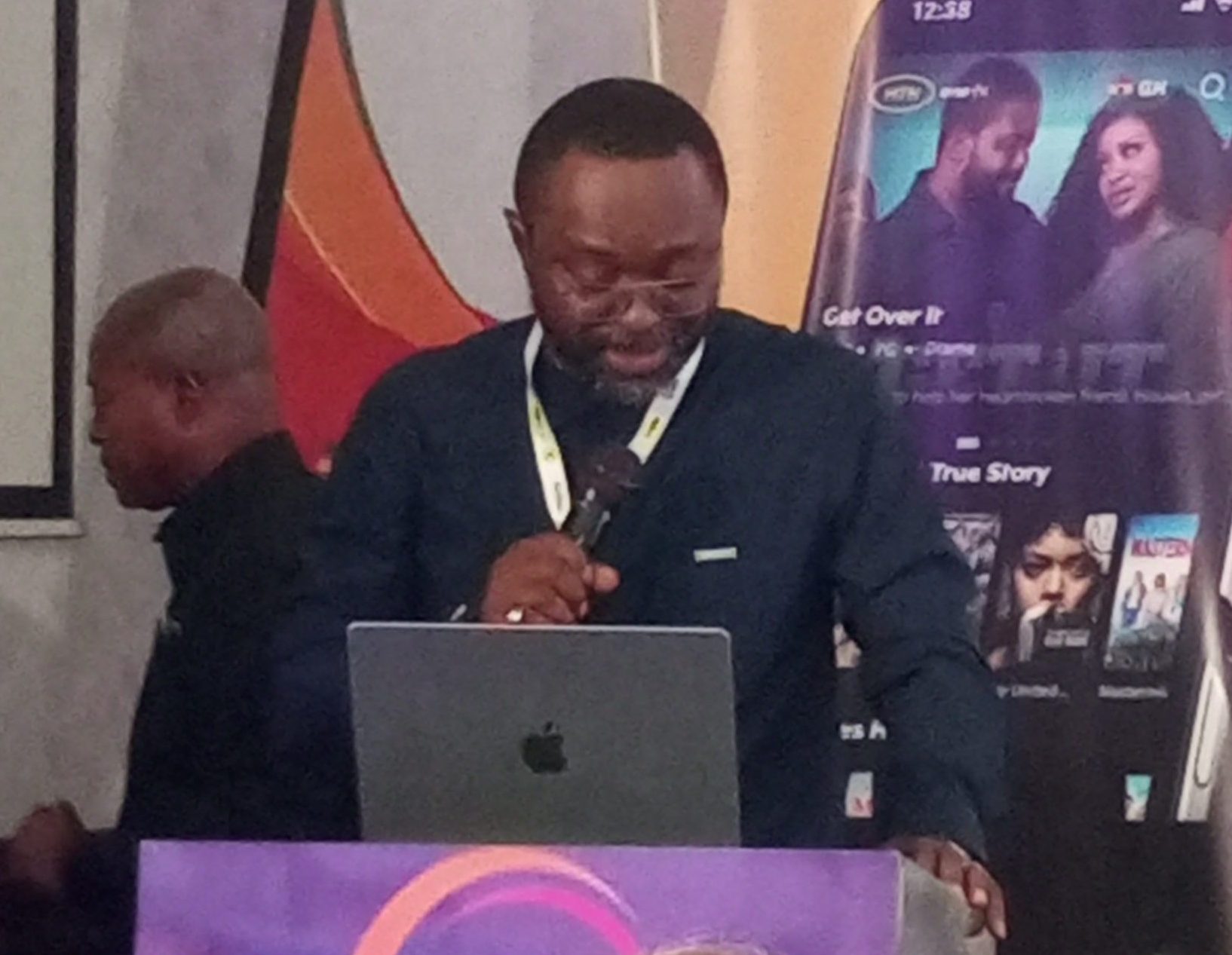
Broadcasters should adopt a cloud-smart approach to modernising their operations rather than moving all broadcast infrastructure to the cloud by default, Theodore Asampong, CEO of West Africa Platform Services, has said.
Speaking at the Broadcasters Convention 2026 in Accra, Mr Asampong said cloud technology was enabling broadcasters to build channels as software, allowing production, playout and distribution to be managed with less dependence on traditional hardware infrastructure.
He said cloud broadcasting could allow content to be stored on the cloud and accessed for production, while software-based services could support mixing, scheduling, branding and payouts.
Content could then be distributed through satellite as well as digitally through the cloud to applications, streaming platforms and other services.

“One can send up a channel without working infrastructure. That is where cloud comes in,” he said.
Mr Asampong said 84% of broadcasters already use cloud-based production technology, although only 4% use cloud exclusively, with the remainder operating hybrid systems.
He said the continued use of hybrid models demonstrated why a “cloud-first” approach was not necessarily appropriate for every broadcaster.
“The organisers wanted me to have a topic called Cloud First Broadcasting. And I said, no. Cloud First is more like a vendor pitch,” he said.
According to Mr Asampong, a cloud-smart strategy allows broadcasters to determine where cloud services make operational and economic sense instead of automatically transferring every function from on-premises infrastructure to the cloud.
He said the approach involved re-architecting broadcasting operations by building channels as software rather than hardware.
This, he explained, could enable broadcasters to launch channels at greater scale and speed, while providing capacity for content retention and reducing the dependence on physical infrastructure.
“A browser replaces the master control room,” he said, describing the shift towards software-based broadcasting operations.
Mr Asampong identified production, playout and distribution as the three main pillars of the re-architected broadcast business.
On production, he said the cloud model could change how broadcasters covered events by allowing cameras and microphones to connect to production infrastructure while production resources were accessed through the cloud rather than requiring extensive physical infrastructure at the event location.
He described cloud playout as the most mature cloud-based broadcast workflow, noting that many broadcasters had already adopted remote or cloud-based playout operations.
Cloud playout, he said, could replace elements of the traditional master control room, including playout hardware, controllers, scheduling and branding systems.
Under the model, a broadcaster seeking to launch a new channel could upload its content to a playout service without having to acquire the infrastructure required to operate its own service.
Instead, the broadcaster could subscribe to a playout service hosted elsewhere and access it as required.
Mr Asampong cited examples of migration to cloud-based broadcast operations, including 425 channels moved into global data centres, as well as a case involving Telecom Malaysia, which he said had moved its hybrid operations fully to the cloud.
He also cited Korea as having migrated approximately 300 channels, including data centres, while another example involved 40 global linear channels moving to cloud playout.
The examples, he said, demonstrated the growing shift towards cloud-based broadcast infrastructure and the potential for broadcasters to rethink how channels are produced, operated and distributed.