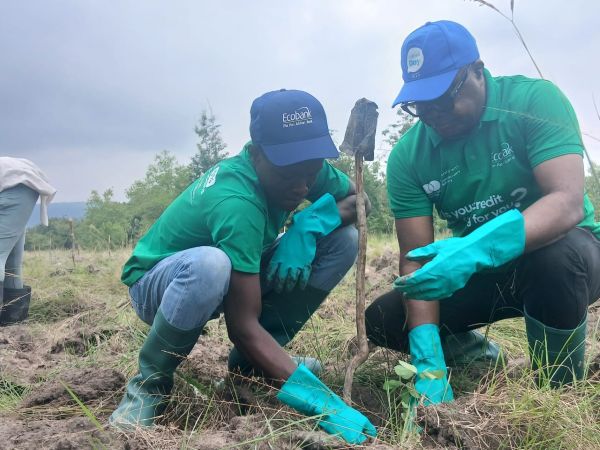
As part of its commitment to climate action and environmental sustainability, Ecobank Ghana has commenced the planting of 2,000 trees on a newly adopted two-hectare site, reinforcing its long-standing support for Ghana’s afforestation agenda and the national Tree for Life initiative.
The latest exercise, which exceeds the 1,800 trees planted on a similar two-hectare site last year, forms part of the bank’s nationwide environmental campaign being rolled out throughout June across five regions.
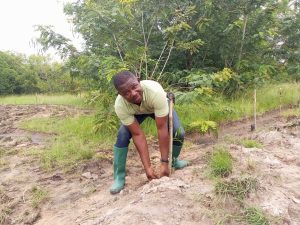
Speaking to journalists during the exercise, Ecobank Ghana’s Head of Marketing and Corporate Affairs, Kasser Tee, said the bank remains committed not only to planting trees but also to ensuring they survive and contribute meaningfully to environmental restoration.

“This year, we are going to plant about 2,000 trees here after adopting another two-hectare site. At the same time, we are revisiting last year’s site to assess how the trees are doing and replace those that did not survive,” he said.

According to Mr Tee, the initiative is a continuation of Ecobank’s environmental stewardship programme, which began in 2012 with the planting of 1,200 trees at Prampram Secondary School.
Fourteen years later, the bank returned to the school to plant an additional 1,400 trees, having found that the vast majority of the original trees were still thriving.
Beyond the flagship 2,000-tree project, Ecobank has simultaneously undertaken tree-planting activities in Takoradi, Sunyani, Tamale and Kumasi, where 250 trees are being planted in each city to support greener communities across the country.
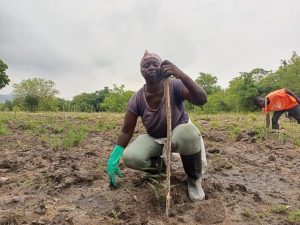
Mr Tee said the bank deliberately expanded its sustainability campaign after joining the government’s Tree for Life initiative last year, broadening its outreach from a single event to month-long activities across multiple regions.
He explained that environmental sustainability remains embedded in Ecobank’s business operations, with the bank reducing paper usage through digital banking services while investing in initiatives that help restore Ghana’s forest cover.
“Tree planting and sustainability cover every sphere of life, including banking. We have reduced paperwork through our digital transformation because paper comes from trees, and we want to discourage environmental degradation,” he noted.
Mr Tee stressed that planting trees alone is not enough, adding that Ecobank regularly monitors previous planting sites and works with beneficiary institutions to ensure the seedlings mature successfully.
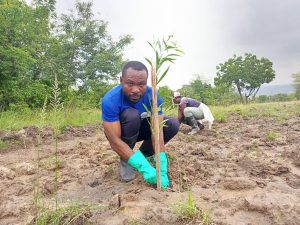
“The more trees we plant and nurture, the healthier the environment becomes for everyone. That is why we remain committed to maintaining every tree we plant,” he said.
The 2,000-tree exercise further strengthens Ecobank Ghana’s position as one of the country’s leading corporate advocates for environmental sustainability, with the bank continuing to invest in practical initiatives that support climate resilience, biodiversity conservation and a greener future.