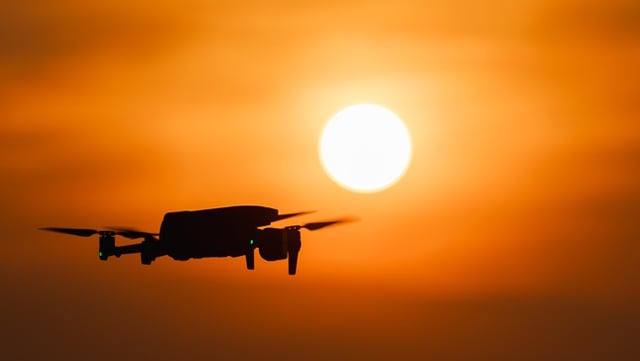
Ericsson has demonstrated the potential of military-grade 5G technology to improve communication and coordination between air defence systems during the Spanish Armed Forces’ Atlas 26 military exercise in Huelva.
The demonstration involved connecting counter-drone and air defence systems through a tactical 5G network designed to facilitate rapid data exchange between military equipment.
According to Ericsson, the network operated using an ultra-compact, defence-grade core and spectrum reserved exclusively for military use.
The technology is designed to enable armed forces to deploy mobile connectivity rapidly and adapt network operations to changing conditions on the ground.

Ericsson said the demonstration showed how tactical 5G could facilitate real-time data exchange between sensors, radars, command posts and effectors, enabling faster coordination across connected defence systems.
The company hopes the exercise will provide a practical foundation for the wider adoption of tactical 5G networks in military operations.
Ericsson Spain Country Manager, Juan Olivera, said the exercise demonstrated how commercial 5G innovations adapted for defence purposes could give armed forces an operational advantage.
He said a sovereign and deployable 5G network could provide resilient, high-capacity connectivity without relying on fixed infrastructure.
“By linking sensors to effectors in real time, we help defence forces coordinate their systems more effectively and operate with greater flexibility on the ground,” he said.
The demonstration adds to growing efforts by major telecommunications companies to extend 5G technology into the defence sector.
Other industry players, including Telefónica, Nokia and Telia, are also testing and promoting the use of 5G networks for military applications.