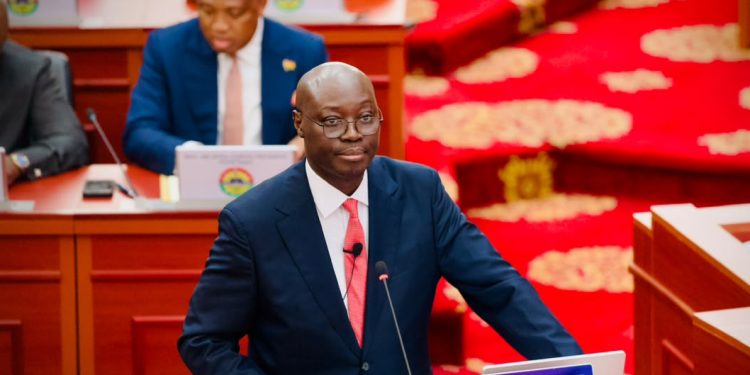
The Government has announced a series of measures aimed at expanding access to quality education and easing the financial burden on Ghanaian families, as part of its 2026 Mid-Year Fiscal Policy Review.
Presenting the review in Parliament on behalf of President John Dramani Mahama, Finance Minister Dr Cassiel Ato Forson said the Government remained committed to ensuring equitable access to education at all levels.
He disclosed that the Government had fully paid Capitation Grants for the first and second terms of the 2025/2026 academic year to support basic schools across the country.
To reduce the cost of examinations for families, Dr Forson said the Government absorbed the registration fees of 478,699 candidates sitting the Basic Education Certificate Examination (BECE) in public schools and 407,271 candidates writing the West African Senior School Certificate Examination (WASSCE).

The Minister also announced an increase in the daily feeding grant for students in special schools, which has been raised from GH¢8 to GH¢15. He said the increase is intended to improve the welfare and nutritional needs of learners with special educational requirements.
According to Dr Forson, the Government is also strengthening food supply to senior high schools through improved funding and more efficient supply-chain management under the Free Secondary Education Programme (FSEP).
On tertiary education, he said the Government has implemented the No Fees Stress Policy by paying the first-year academic fees of 165,143 students enrolled in public tertiary institutions for the 2025/2026 academic year.
He further announced that under the Free Tertiary Education for Persons with Disabilities Initiative, the Government provided full tuition and residential support to 1,554 students with disabilities in public tertiary institutions.
The Finance Minister said the interventions form part of the Government’s broader agenda to eliminate financial barriers to education, promote inclusion and improve learning outcomes across the country.