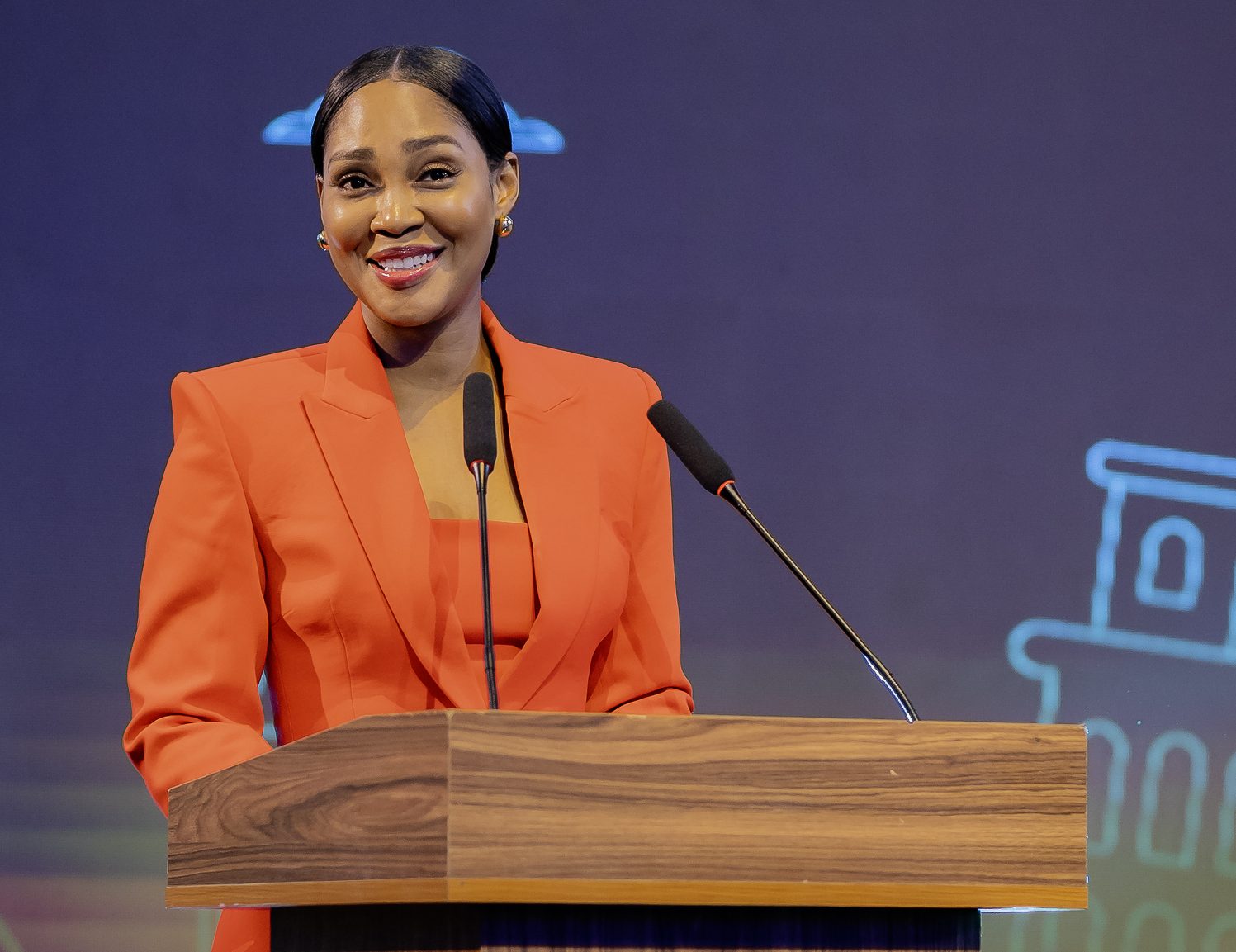
Minister of Commerce at Loveworld Kingdom and Convener, Loveworld Trade and Investment Forum (LTIF), HE Sister Stephanie Oforka, has urged African businesses to shift from a consumption-driven economy towards production, innovation and investment to accelerate economic transformation.
Speaking at the LTIF in Accra on the topic, ‘Building the Future Through Production, Trade, Trust and Innovation’, Sister Oforka said Africa could achieve industrialisation within a generation if businesses and entrepreneurs moved beyond ideas and actively built industries, products and institutions.
She said Africa’s natural resources, population and other assets could not by themselves create prosperity, stressing that value creation through production was essential to building wealth.
“Potential itself does not create prosperity. Production actually creates prosperity,” Ms Oforka said. “Resources do not automatically create wealth. The value that you create is what creates wealth.”

According to her, population alone did not constitute economic power unless it was productive, skilled, innovative, trusted and energised.
Sister Oforka said trade should also be understood beyond the movement of goods, describing it as the movement of value, influence, relationships and prosperity between nations.
She said the LTIF was therefore not approaching commerce and trade merely as business activities but as instruments for building nations, creating opportunities and expanding economic influence.
“We must increasingly think, build and begin to operate as a nation because this has profound implications for commerce,” she said, adding that African businesses must become stronger and globally competitive.
Sister Oforka called for African entrepreneurs to move beyond subsistence-level operations, while innovations must progress from ideas into industries and capital must be directed towards productive enterprises.
She said relationships between African countries should increasingly translate into trade, investment and economic partnerships.
Explaining the decision to hold the forum in Ghana, Ms Oforka said the presence of LTIF in the country was deliberate and aimed at expanding its economic influence and strengthening connections between African businesses.
“Africa cannot achieve meaningful economic transformation while its businesses remain isolated within national boundaries,” she said.
She called for greater intra-African trade, saying businesses should seek customers, suppliers, investors and partners beyond their national borders.
“Our borders must not become boundaries for prosperity,” Ms Oforka added.
She said the forum should help participants move from connections to transactions, introductions to partnerships, conversations to commerce and a consuming economy to a producing economy.
Sister Oforka identified production as one of the most important issues for Africa’s economic future, arguing that the continent must produce more of what it consumes and also manufacture products that the global market wants.
“We must manufacture, we must process, build, design, innovate, expand, finance production,” she said.
She also challenged participants to consider whether Africa could industrialise within a generation, expressing confidence that it was possible if supported by sustained action.
Sister Oforka said industrialisation would require people willing to establish factories, create industries, develop technology, build safe supply chains, finance enterprises, train people and create products and value.
She called for the emergence of a “production generation” that would focus less on what it could buy and more on what it could build, manufacture and create.
“We need a new production generation,” she said, urging Africans to ask what they could build, what they could produce and what industries they could create to transform the economy.
Sister Oforka also described participants as nation builders, solution providers, producers, innovators, financiers and entrepreneurs with the capacity to create systems and institutions that could contribute to the development of their societies.
She thanked the leadership of the Loveworld Kingdom, and the team at the Ministry of Commerce for their work in organising and executing the forum.