The Media Foundation for West Africa (MFWA) has recorded 77 violations against journalists in West Africa during the first half of 2026, warning that the failure to punish perpetrators of attacks on journalists encourages further violations.
The Executive Director of the MFWA, Sulemana Braimah, said the organisation documented 33 violations in the first quarter and 44 in the second quarter, with only about five cases resulting in some form of redress for victims.
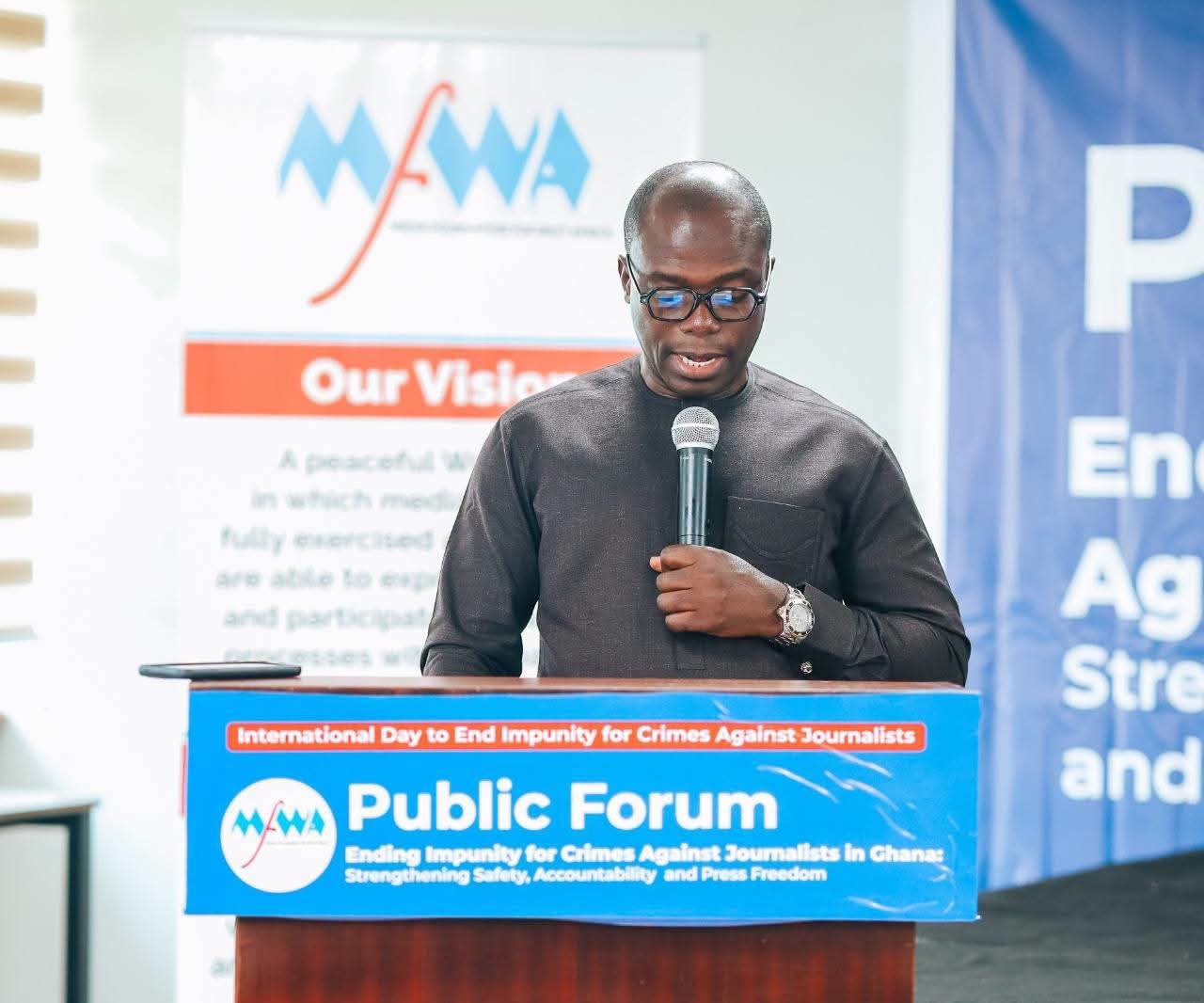
Speaking at an event to launch a journalists’ safety information framework in Ghana, Mr Braimah described the situation in West Africa as critical and called for stronger accountability for crimes committed against journalists.
He said impunity for attacks on journalists went beyond the absence of punishment, as it created an environment in which further attacks could occur.

”Impunity for crimes against journalists is not simply the absence of punishment for the perpetrators. It is, as I indicated earlier, a permission for the next attack,” he said.
Mr Braimah also cited reports indicating that 85 per cent of journalists killed around the world had not received justice, warning that unresolved cases undermined investigations and deprived the public of critical information.
He said Ghana’s democratic tradition and constitutional protections for media freedom must be protected, but attacks on journalists continued to undermine the country’s reputation.
Among the unresolved cases he cited were the killing of investigative journalist Ahmed Suale, incidents involving Mathew Gries and an attack on Sadiq Karim during a live broadcast in Tamale.
He called on the Attorney-General and the Ghana Police Service to provide credible updates on the cases and pursue all lawful means to bring those responsible to justice.
Mr Braimah stressed that neither security uniforms nor political affiliations should shield perpetrators of attacks on journalists from accountability.
He further argued that media organisations and editors had a responsibility to support journalists who faced threats arising from their investigative work.
He said journalists who were threatened needed legal assistance and other forms of institutional support to continue working without fear.
As part of efforts to strengthen protection for journalists, the MFWA launched a journalists’ safety information framework for Ghana, developed through research and stakeholder consultations.
The framework provides guidance on physical, digital, legal and psychological protection and is intended to help media organisations establish effective safety systems.
Mr Braimah urged media organisations to adopt the framework, appoint officers responsible for its implementation, train staff and monitor compliance.
He cautioned that safety policies would have little impact if they were merely documented without being implemented.
The MFWA Executive Director also highlighted the organisation’s $550,000 three-year legal support fund and the West African Network of Activists and Media Defence Lawyers, established two years ago to provide pro bono services and legal assistance to journalists.
He said protecting journalists should not be regarded as a favour to media practitioners but as an obligation to citizens who depend on independent information to sustain democracy.
Mr Braimah noted that journalists increasingly faced attacks on social media for carrying out their professional duties, particularly when their reports or investigations were unfavourable to particular political or other interests.
He called for stronger institutional support for journalists, insisting that the ability to pursue the truth without fear was essential to democratic accountability.