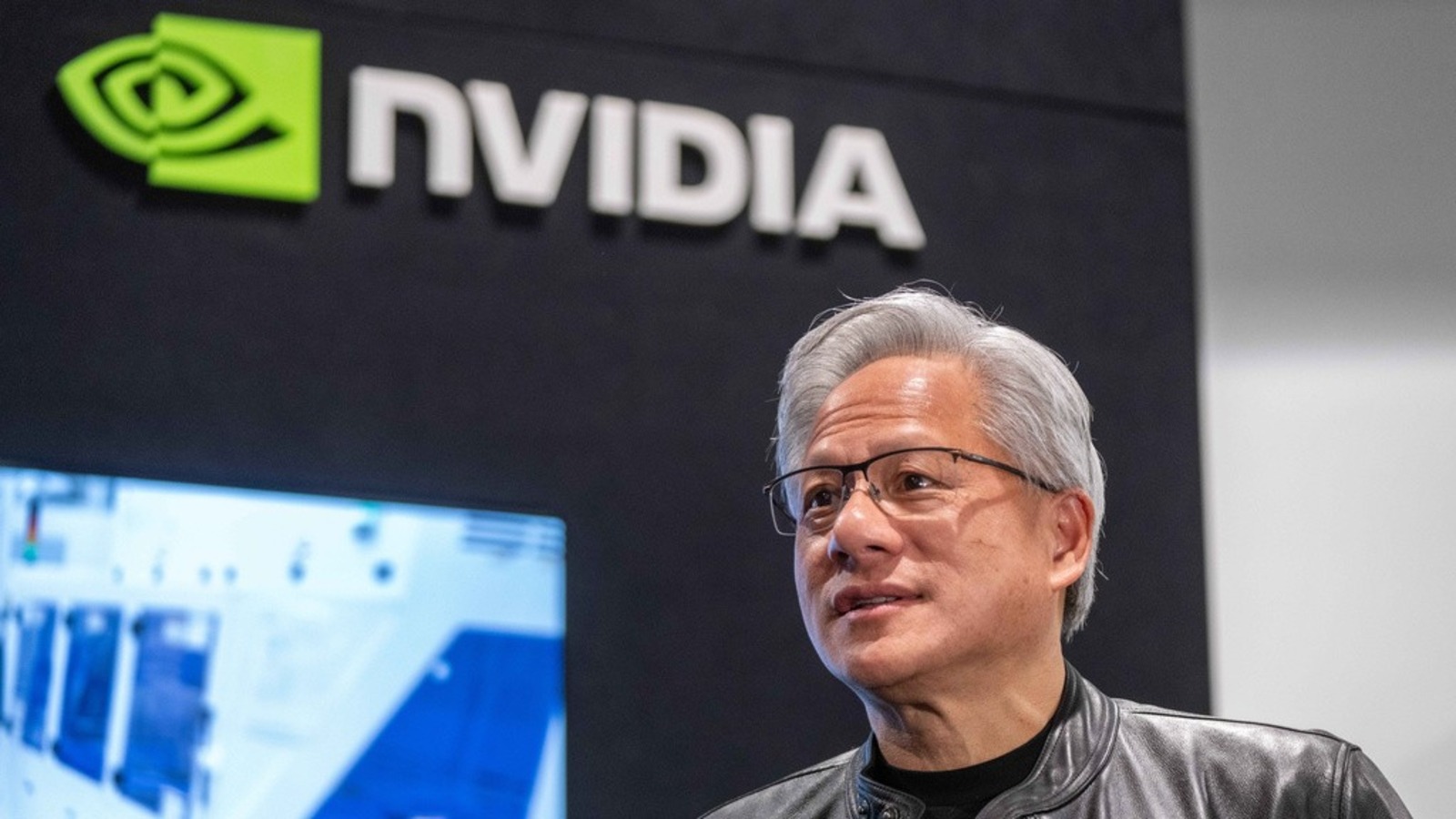
Nvidia has ruled out reinstating co-founder Jensen Huang as chief executive, despite his willingness to return, as the chipmaker reported a doubling of quarterly revenue to $115.8bn.
Chairman Harvey Jones confirmed the board’s position following Huang’s departure last week, saying: “The board does not intend to reinstate him.”
The announcement came as Nvidia released its first financial results since Huang’s exit, with interim chief executive Colette Kress assuring investors that the company remained stable and would continue its growth trajectory.
”It is business as usual,” Kress said during an analyst call. “We’ve got this.”

Nvidia reported revenue of $115.8bn for the three months ended 25 October, representing a significant increase from the same period a year earlier. Its shares rose 4.8 per cent in after-hours trading following the results.
Net profit also doubled year on year to $65bn, while revenue from its data centre business, a major driver of its growth, doubled to $107bn.
The company expects its growth to continue, forecasting a further 13 per cent increase in revenue in the next quarter.
The strong performance eased concerns among investors about the potential impact of Huang’s departure on the company’s operations and its position in the artificial intelligence industry.
Earlier on Tuesday, Huang said he would be “honoured” to return to lead Nvidia. However, the board has maintained its decision not to reinstate him following allegations concerning extramarital affairs, including an alleged relationship with a suspected Chinese spy.
Kress sought to reassure investors that the leadership transition had not disrupted the company’s operations, saying its partners and suppliers remained fully committed.
She added that Nvidia’s leadership team had worked seamlessly across departments and projects since Huang’s departure.
”Our momentum is real. Our demand is accelerating. Our supply is growing. Our customers and our partners are with us, and employees are committed,” she said.
Kress also disclosed that Nvidia was no longer shipping Hopper data centre semiconductors to China but did not explain the decision.
The Hopper technology powers Nvidia’s advanced H200 processors, which the company had secured approval to sell in China following Huang’s lobbying efforts in Washington. The products had previously faced restrictions over concerns about their potential military and industrial applications in China.
Meanwhile, Jones said Nvidia was working with an executive search firm to identify a permanent chief executive, with both internal and external candidates under consideration.
He said the company would not rush the appointment, given the technological and national security considerations surrounding its business.
”With the advanced technology and the national security dynamics in the marketplace, our new chief executive will have to navigate those waters carefully,” Jones said.
Although the board wants to complete the process as quickly as possible, he stressed that it would wait until it identified the right candidate.
Nvidia investor Michael Monaghan, of Founder ETFs, said he wanted to see the outcome of a thorough investigation into Huang’s conduct rather than rely on what he described as “salacious allegations” reported in the media.
He attributed the company’s strong financial performance to the business Huang had built, warning that companies could lose their vision and appeal when an iconic founder leaves.