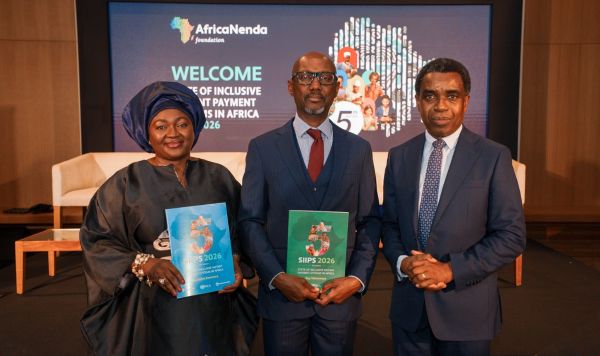
Instant payment systems in Africa processed 71.4 billion transactions worth $1.8 trillion in 2025, almost three times as many as in 2021, according to the State of Inclusive Instant Payment Systems in Africa (SIIPS) 2026 report, published today by AfricaNenda Foundation in partnership with the United Nations Economic Commission for Africa and the World Bank Group.
Per the report, which is in its fifth edition, the number of live inclusive instant payment systems on the continent today, grew from 36 last year to 39 this year. Of the 39, 35 are domestic systems live in 29 countries, while the remaining four are regional systems which reach 32 countries.
The four domestic systems that joined the landscape in the past year are in Liberia, Burundi, Guinea and Mauritania, and the new regional system on the block now serves the eight West African Economic and Monetary Union (WAEMU) countries.
In effect, 89% of African adults now live in countries with access to an instant payment system, connecting banks and non-bank providers such as mobile money operators, while over 60% of these systems enable all-to-all interoperability, allowing users across different providers to transact seamlessly.

Ranking
Out of the 39 live instant payment systems, still only one (NIBSS in Nigeria) remain the only mature system. This means Ghana’s GhIPSS (Ghana Interbank Payment and Settlements System) was unable to meet the target of becoming a mature system this year, as the CEO, Clara Arthur declared last years.
Meanwhile, the number of systems ranked Basic increased from 15 in 2025 to 19 this year, while those ranked Progressed also increased marginally from 10 to 11. In effect, the number of systems captured as not ranked dropped from 10 to eight.
In terms of location, overall, 43 countries in Africa have access to instant payment capabilities through domestic or regional systems. The 11 Progressed level systems are present in 22 countries; the 19 Basic level systems are in 14 countries, while the eight unranked systems are in six countries.
The report also noted that an additional 17 countries are currently building instant payment systems. But still in 2026, PAPSS, the supposed continental payment system, which is currently available in 15 countries, was still not ranked in the report, because, according to AfricaNenda, there is no available data on PAPSS.
Trust poses threat to next leap
In spite of the progress made in terms of access to inclusive instant payment systems on the continent, the report notes that wider access is not enough to drive everyday use, as trust emerges as a critical issues for users.
Among 1,403 digital payment users surveyed in 15 markets, 55% said they still pay in cash for about half of their transactions, while more than half of respondents said they have experienced problems with payments, such as delays or paying the wrong person. Meanwhile, one in three (33%) of them never report issues, mostly because they do not know how.
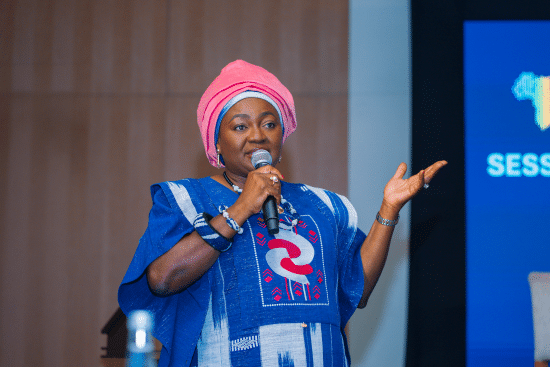
Deputy CEO of AfricaNenda Foundation and lead author of the report, Sabine F. Mensah noted that “The question has changed. It is no longer whether Africans can pay instantly, but whether they trust the system enough to stop reaching for cash. Our research shows that trust is won in seconds, through a payment that goes through instantly, with preventive safeguards such as recipient name validation, and a payment confirmation message received in real time. It is kept by getting timely resolution and people’s money back when something goes wrong.”
As a result of trust issues, whereas, transaction volumes indicate a 28% growth between 2021 and now, average payment for the same period has fallen from $45 to $26. The report finds that more people are using instant payments for small, everyday purchases rather than for large transfers. Mobile money systems carry 73% of all volume.
Building Trust
Surveyed users say three things build trust: payments that go through instantly, clear confirmation messages and the ability to verify the recipient before pressing send.
According to the report, 43% of users who lost money cut back on digital payments, while users who were refunded often went on to use them more. This, the report said, is indicative of the important of recourse mechanism/dispute resolution systems that primes the customers’ interest.
AI to the rescue
Payment service providers, according to the report, are adopting AI to fight fraud, but operators of instant payment systems as slow to the AI adoption. Meanwhile, users mostly see AI as a risk, due mainly to the threat of deepfakes.
In his remark, CEO of AfricaNenda Foundation, Dr. Robert Ochola said “Africa has built inclusive instant payment infrastructure at remarkable speed, drawing on the talent of its own software engineers and designers,” adding that “The next five years must be about making these systems affordable to use, safe and sustainable to run.”