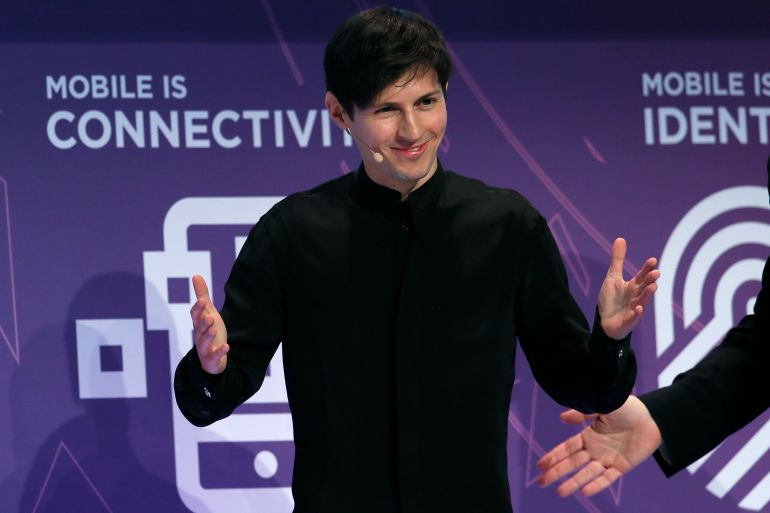
Pavel Durov, the Russian-born founder of the Telegram messaging platform, has accused France’s top intelligence official of pressuring him to censor conservative political voices in Romania ahead of the country’s presidential elections — a request he claims to have rejected.
In a statement posted on social media platform X late Sunday, Durov alleged that Nicolas Lerner, head of France’s General Directorate for External Security (DGSE), personally approached him at the Hôtel de Crillon in Paris during the spring.
“This spring at the Salon des Batailles in the Hôtel de Crillon, Nicolas Lerner, head of French intelligence, asked me to ban conservative voices in Romania ahead of elections. I refused,” Durov wrote.
He emphasised Telegram’s commitment to neutrality and user freedoms:

“We didn’t block protesters in Russia, Belarus, or Iran. We won’t start doing it in Europe.”
The allegations come as Durov remains under formal judicial investigation in France for alleged organised criminal activity on Telegram and is under judicial supervision at the luxury Parisian hotel.
Durov’s post appears to allude to Romania’s presidential election, held on Sunday, in which centrist mayor of Bucharest, Nicușor Dan, pulled off a surprise victory over far-right candidate George Simion, a populist figure who styled his campaign after former U.S. President Donald Trump.
The DGSE responded swiftly, confirming that it had engaged with Durov on several occasions in recent years. However, it “vigorously refutes the allegations that requests to ban accounts related to any electoral process were made on these occasions”, stating that its discussions with Durov focused on Telegram’s responsibilities regarding terrorism and child pornography prevention.
France’s foreign ministry also denied any interference, urging respect for Romania’s democratic processes.
Durov had earlier hinted at a Western effort to influence the Romanian run-off vote, writing on X, “Telegram will not restrict the freedoms of Romanian users or block their political channels,” and ending the post with a baguette emoji — a not-so-subtle jab implying France’s involvement.
U.S. billionaire Elon Musk, owner of X and a prominent supporter of conservative movements, reposted Durov’s claims with a succinct “Wow”, amplifying the controversy. Musk has himself faced scrutiny from French authorities over alleged algorithmic bias on his platform and concerns about his growing influence in European political discourse.
The fallout adds fuel to ongoing debates about digital free speech, foreign interference, and the role of tech platforms in democratic elections — especially as European governments grow increasingly wary of populist surges and online radicalisation.
While 18 million Romanians voted in what was widely seen as a pivotal election, the tech world is now focused on whether the controversy surrounding Durov’s claims will deepen mistrust between European institutions and global social media platforms.