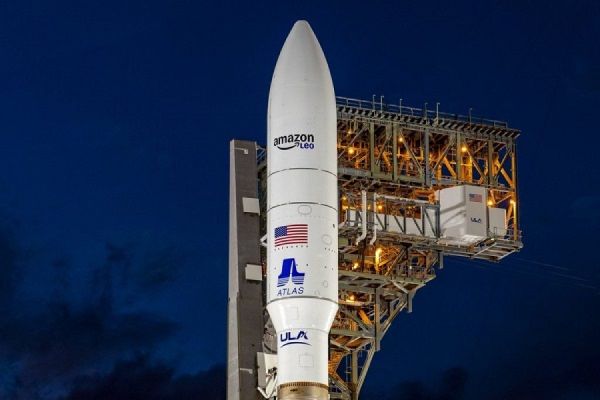
Amazon’s satellite internet project, Kuiper, which rebranded in November 2025 as Amazon LEO, is seeking regulatory approval to operate in Kenya as part of a broader push to expand across Africa.
The company applied to the Communications Authority of Kenya (CAK) for a Network Facilities Provider (NFP) Tier 2 licence that would allow it to build and operate telecommunications infrastructure nationwide, according to a regulatory notice dated April 17, 2026, seen by TechCabal. It would operate under the subsidiary Amazon Kuiper Kenya Limited.
The move follows its recent regulatory breakthrough in Nigeria. In January 2026, the Nigerian Communications Commission (NCC) granted Project Kuiper a seven-year licence covering satellite transmission, internet service provision, and international data gateway operations, clearing the company to begin operations from February.
While commercial services have yet to launch there, Kenya could become another key test market as Amazon looks to establish a foothold in Africa’s evolving broadband landscape.

Under Kenya’s telco licencing regime, a Tier 2 permit is meant for companies that build the behind-the-scenes infrastructure, like fibre cables, telecom towers, and data networks.
Unlike the top-tier licences used by big mobile operators such as Safaricom, it still allows a company to operate across the country, but it must apply for radio frequencies in specific areas instead of getting one nationwide allocation.
For Amazon, this means it can deploy ground infrastructure across Kenya’s 47 counties using a mix of technologies, including fibre backhaul and satellite-linked stations, but would still need to apply for spectrum in specific locations. The licence runs for 15 years and carries an upfront fee of KES 15 million ($115,000), alongside an annual levy of 0.4% of gross turnover.
The regulatory requirements also introduce local ownership constraints. Kenya mandates that at least 30% of the licensee’s equity be held by citizens, although foreign firms are typically granted a three-year window to comply. Applicants must also incorporate a local entity, submit a detailed rollout plan, and meet tax compliance standards.
Amazon’s entry would come at a time when satellite internet is already reshaping segments of Kenya’s broadband market. Starlink, operated by SpaceX, has emerged as the eighth-largest internet service provider in the country, with just over 22,000 subscribers as of December 2025.
Starlink currently holds three primary types of authorisations in Kenya, including an international Gateway Systems and Services (IGSS) licence, Landing Rights Authorisation (LRA), and Application Service Provider (ASP) Licence
While Starlink’s overall market share remains below 0.9%, it dominates the high-speed segment, accounting for more than half of all connections exceeding 100 Mbps.
That growth has been driven in part by aggressive pricing strategies tailored to local conditions. Starlink offers installment payment plans and hardware rentals to lower the barrier to entry in a price-sensitive market, allowing households and small businesses to spread equipment costs over several months.
If approved, Kuiper’s entry into Kenya would intensify competition not only among satellite providers but also with established local players such as Safaricom and Jamii Telecommunications, which dominate the fixed and mobile broadband markets.
“The grant of these licences may affect the public and local authorities, companies, persons or bodies of persons within the country,” the CAK notice noted.