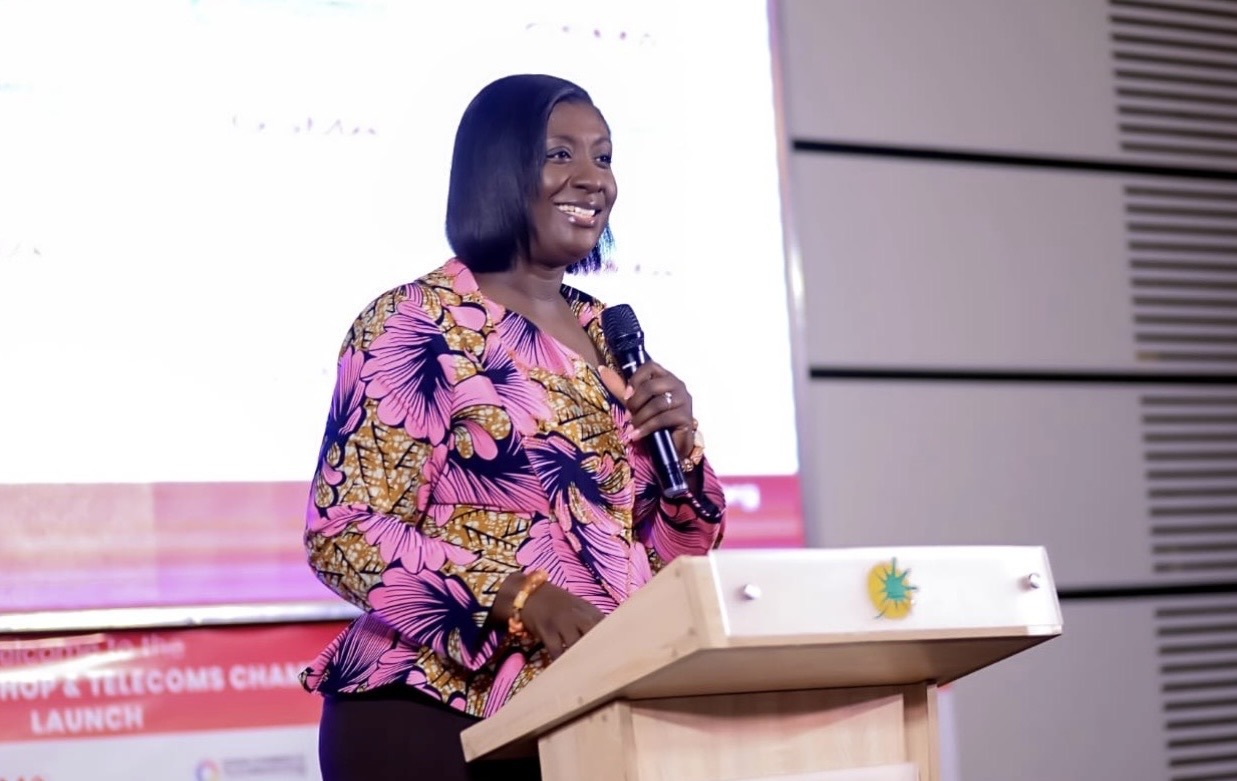
The Chief Executive Officer of the Ghana Chamber of Telecommunications, Sylvia Owusu-Ankomah, has raised alarm over the sharp rise in fibre cuts across Ghana, revealing that incidents have surged from about 400 annually in earlier years to more than 8,000 per year, placing significant strain on telecom operators and threatening network stability.
Speaking on the evolution of Ghana’s telecommunications sector, she noted that while the industry has recorded remarkable growth over the past 15 years, infrastructure damage, particularly fibre cuts, has emerged as a major operational and financial challenge.
According to her, the industry has transitioned from a period of limited infrastructure to a highly integrated and expansive network ecosystem, driven by aggressive investments from mobile network operators, tower companies, and fibre infrastructure providers.
“We came from an era where fibre cuts were about 400 per annum. Today, we are experiencing over 8,000 cuts annually, which is increasingly a strain on operators’ resources,” she stated.

She explained that the growing frequency of fibre cuts diverts critical investment away from network expansion and quality improvements, as operators are forced to channel resources into constant repairs instead of new rollouts.
Despite these challenges, the sector has made significant strides in expanding access and connectivity. Internet penetration has increased dramatically from just 4 per cent to over 70 per cent, while network access coverage now stands at approximately 98 per cent nationwide.
The CEO highlighted that every district capital in Ghana now enjoys minimum network coverage, reflecting the impact of regulatory oversight by the National Communications Authority and increased compliance with quality-of-service standards.
She also pointed to the evolution of infrastructure sharing, noting that operators now collocate on towers and share fibre networks rather than building isolated systems, a shift that has improved efficiency and reduced duplication across the industry.
To address the growing menace of fibre damage, Sylvia Owusu-Ankomah emphasised the urgent need to implement the industry-backed “Big One” policy.
The policy proposes that all new road construction projects include the installation of fibre ducts along road reserves, creating a protected underground pathway for telecom infrastructure.
She explained that the absence of such ducts leaves fibre cables exposed to damage from road works, construction activities, and environmental factors, leading to frequent service disruptions.
“In mature markets, roads are built with fibre ducts underneath them. These ducts protect the cables and make maintenance easier. Without them, any construction activity can result in fibre cuts,” she said.
She stressed that beyond policy approval, effective on-the-ground implementation would be key to resolving the issue and safeguarding the country’s digital infrastructure.
The CEO noted that while Ghana’s telecom sector has become one of the most progressive in Africa, earning recognition from global industry bodies such as the GSMA, sustaining this progress will depend on addressing infrastructure vulnerabilities.
She warned that fibre instability remains a major factor behind network outages, stressing that reliable connectivity is directly linked to the integrity of underlying fibre networks.
While touching briefly on future technologies, she indicated that Ghana remains several years behind in the 5G rollout compared to more advanced markets. However, she expressed optimism that ongoing regulatory reforms and planned spectrum auctions would position the country for faster deployment.
She concluded by urging stakeholders to prioritise long-term infrastructure planning, noting that reducing fibre cuts is essential to maintaining network reliability, improving service quality, and supporting Ghana’s broader digital transformation agenda.
“We want to move beyond the conversation around fibre cuts and become more progressive as a country. But that will only happen if we take deliberate steps to protect the infrastructure that powers our digital economy,” she added.