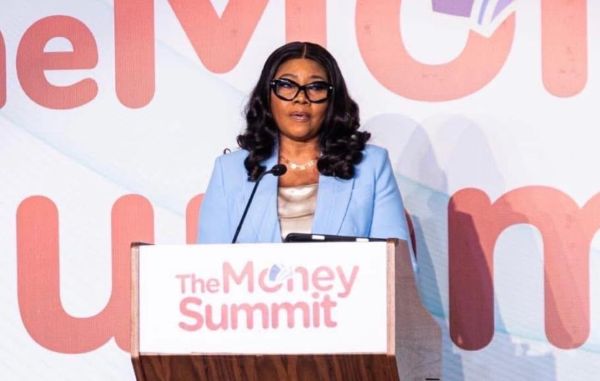
Second Deputy Governor of the Bank of Ghana, Matilda Asante-Asiedu, has declared that trust, capital and stability form the backbone of Ghana’s economic future, urging stakeholders to strengthen all three pillars to sustain growth.
Speaking at The Money Summit, she described the trio as a single interconnected system that determines the direction of the economy.
“Trust comes first because everything in finance is a promise. A deposit is a promise, a loan is a promise, and a currency is a promise,” she explained.
According to her, when trust is strong, the cost of capital falls, risks are reduced and investors are more willing to commit long-term resources to the economy.

“Capital follows trust,” she noted, adding that a credible financial system allows businesses from banks to small farms to access the funding needed for expansion and job creation.
However, she pointed out that private sector credit in Ghana remains low, at under 10 per cent of GDP, stressing that a stable economy must also translate into accessible financing for businesses.
“A stable economy that does not lend to its farmers and firms has only done half the job,” she said.
Mrs Asante-Asiedu further explained that stability is what sustains both trust and capital, highlighting the importance of low inflation, a stable currency and strong foreign reserves.
She revealed that Ghana’s gross international reserves have increased from about $9 billion to over $14 billion, while ongoing reforms are helping to maintain exchange rate stability and investor confidence.
She also outlined key commitments by the Bank of Ghana, including safeguarding price stability, strengthening the banking sector, reducing non-performing loans, and mobilising domestic capital for long-term investments.
In a direct message to market players, she warned against speculative behaviour that undermines the cedi, urging businesses and investors to act based on real demand rather than fear.
“The fundamentals of this economy do not reward speculation,” she stated.
She concluded by emphasising that Ghana’s economic future depends on shared responsibility, calling on all stakeholders to work together to deepen trust, expand capital access and maintain stability.
“In the end, our most important product is a confident tomorrow,” she said.