Ghana has called on African countries to take greater control of their digital future, urging the continent to move beyond being consumers of technology and become active creators, innovators and regulators within the global digital ecosystem.
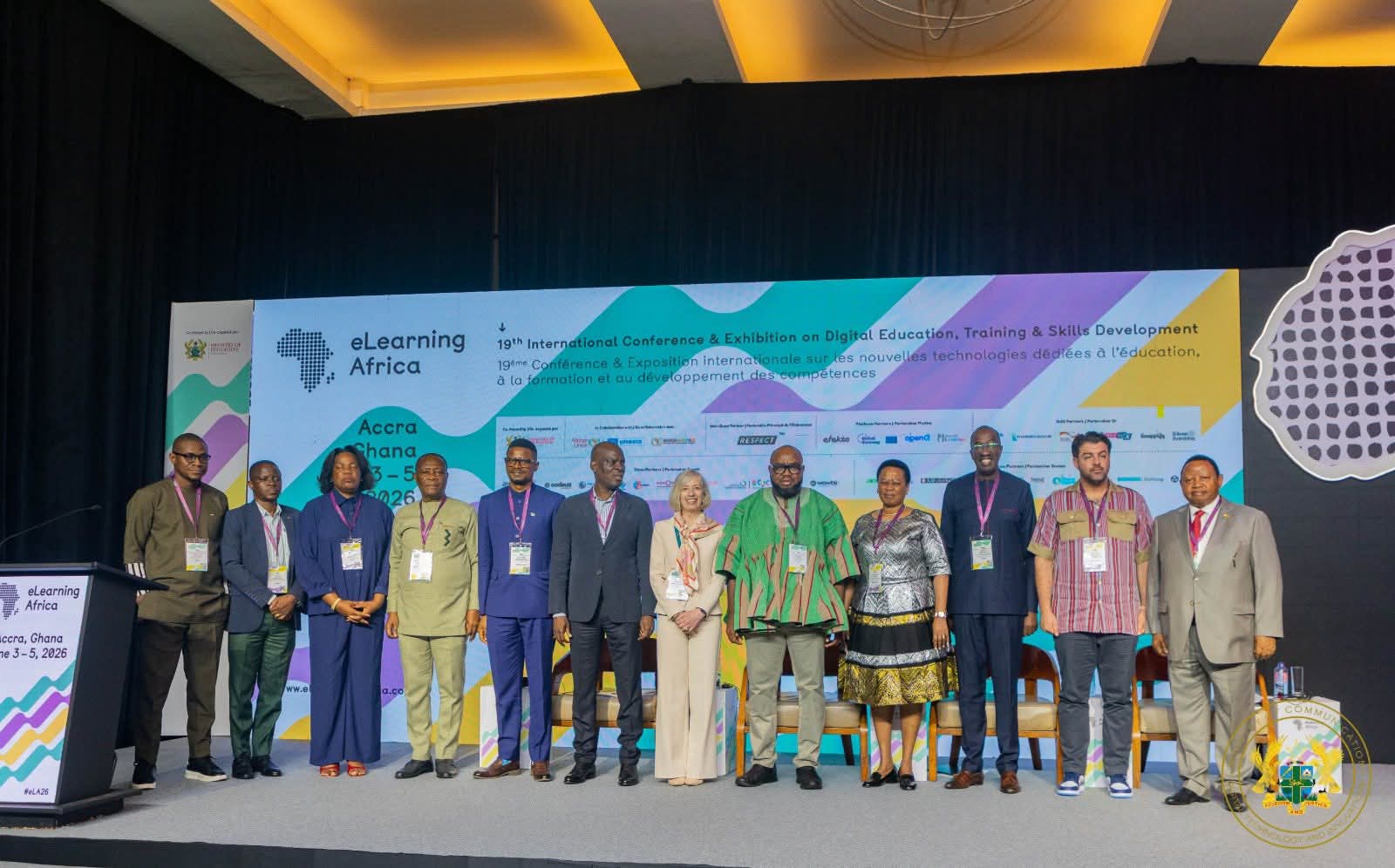
The call was made by the Deputy Minister for Communication, Digital Technology and Innovations, Mohammed Adam Sukparu, who delivered a keynote address on behalf of the sector Minister, Samuel Nartey George, at the 19th edition of the eLearning Africa Conference in Accra.
Addressing participants at the conference hosted at the Labadi Beach Hotel, the Deputy Minister said Africa must assert ownership over its data, digital infrastructure and emerging technologies, particularly artificial intelligence (AI), to ensure they align with the continent’s unique realities and development priorities.
He described Ghana’s hosting of the high-profile gathering as more than a ceremonial event, stating that it represented a declaration that Africa is prepared to shape and lead global conversations on digital transformation.

Mr Sukparu acknowledged the significant strides made across the continent in expanding internet connectivity and deploying digital solutions in key sectors, including education, healthcare, agriculture and governance.
However, he cautioned that much of the technology infrastructure underpinning these advances remains externally developed and controlled.
He warned that many digital systems operating in African economies were designed outside the continent and may not adequately serve African interests, raising concerns about data sovereignty and algorithmic bias.
The Deputy Minister stressed that public trust in digital technologies extends beyond cybersecurity measures and data protection frameworks. While highlighting Ghana’s efforts through institutions such as the Data Protection Commission and the Cyber Security Authority, he noted that digital systems must also be relevant and responsive to local communities.
According to him, educational technologies are more likely to gain public confidence when they reflect local languages, cultures and lived experiences. Failure to adapt digital tools to African contexts, he said, could deepen existing inequalities and undermine trust in technology.
Mr Sukparu further underscored the importance of investing in digital skills development, particularly given Africa’s rapidly growing youth population. He noted that with approximately 60 per cent of Africans under the age of 25 and the continent’s population expected to expand significantly by 2050, governments must accelerate efforts to equip young people with relevant digital competencies.
He said Ghana had already implemented several programmes that have trained hundreds of thousands of citizens in digital skills and revealed that the government’s One Million Coders Programme aims to train an additional 300,000 people by the end of the year.
On artificial intelligence, the Deputy Minister cautioned against the indiscriminate adoption of AI systems developed outside Africa, especially within the education sector. He argued that such technologies may contain biases and assumptions that do not reflect African realities.
He called for the development of AI systems built on African data, languages and values, stressing that governments must ensure the ethical use of AI in sensitive areas such as education.
“Who answers when an AI system gets a child’s future wrong?” he asked, emphasising the need for accountability and oversight in the deployment of emerging technologies.
As part of Ghana’s efforts to strengthen digital sovereignty, Mr Sukparu announced that the country had recently launched its National AI Strategy. He also disclosed plans to establish an AI Computing Centre and a national Data Hub to support innovation, research and the responsible development of artificial intelligence.
The eLearning Africa Conference is one of the continent’s leading platforms for dialogue on digital education, innovation and technology-driven development, bringing together policymakers, academics, development partners and industry leaders from across Africa and beyond.