Micron Technology has begun construction on a $9.3 billion expansion of its semiconductor manufacturing facility in Hiroshima, marking a significant step in the US memory chipmaker’s efforts to meet surging demand for artificial intelligence (AI) memory products.
The expanded plant will produce advanced memory technologies, including high-bandwidth memory (HBM) chips used in AI processors such as those designed by Nvidia. Commercial shipments from the new facility are expected to begin in the summer of 2028, according to Bloomberg.
The Japanese government is providing substantial financial support for the project. Japan’s Ministry of Economy, Trade and Industry has committed up to $3.1 billion towards the expansion. Including research and development assistance, total government support for Micron’s operations in Japan now amounts to approximately $4.8 billion.
The Hiroshima investment forms part of Micron’s wider global manufacturing strategy aimed at expanding its DRAM production capacity. Alongside the Japanese project, the company is constructing leading-edge semiconductor facilities in Boise, Idaho, and developing a $100 billion semiconductor manufacturing complex near Syracuse, New York.

Demand for advanced memory chips has accelerated sharply as technology companies increase spending on AI infrastructure, driving strong growth in the market for HBM products. Industry rivals SK Hynix and Samsung Electronics are also expanding production capacity to capitalise on the growing demand for AI-focused memory.
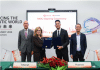
Speaking at the groundbreaking ceremony, Chief Executive Sanjay Mehrotra said Micron’s first HBM production wafer had already been manufactured in Hiroshima, adding that the new facility would enhance the company’s ability to supply next-generation memory products to customers worldwide.
The project also reflects Japan’s broader strategy to rebuild its semiconductor industry and strengthen supply chain resilience. Since 2021, the country has committed tens of billions of dollars to support domestic chip manufacturing and related technologies.
Last month, Prime Minister Sanae Takaichi unveiled a long-term strategy targeting approximately $630 billion in combined public and private investment in semiconductors and AI by 2041, underscoring Japan’s ambition to become a leading global hub for advanced chip production.