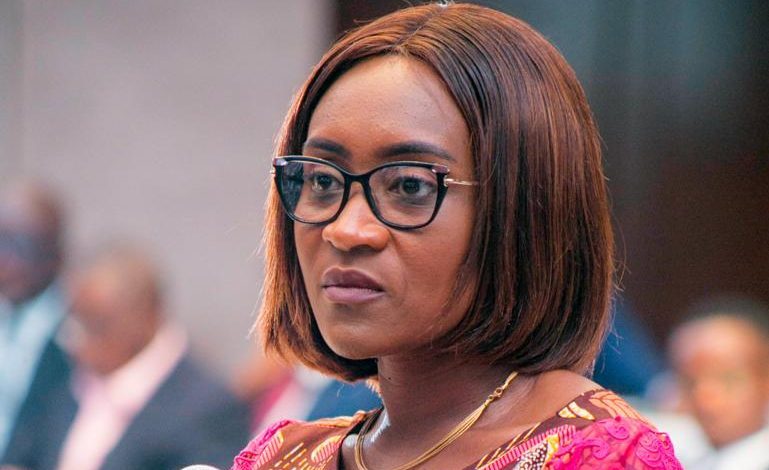
Mrs Abena Osei-Asare, MP for Atiwa East and former Deputy Minister for Finance, has called for a change in attitudes among Ghanaians, businesses and political actors, saying the country’s governance and institutional challenges cannot be blamed solely on politicians.
She said citizens must also examine their own conduct and demand accountability while fulfilling their obligations to the state.
Speaking at the Business Roundtable Extended on the theme “After the Corrections: Building Resilient Economic Pillars for the Next Decade”, Mrs Osei-Asare said politicians were a reflection of the society that produced them.
Merit over connections

She criticised the practice of using political and personal connections to secure university admissions, jobs and public appointments.
“It is very, very easy to point to politicians because you go to the queue and vote for them. But then in our own small way, what do we also do?” she asked.
She urged citizens to ask whether they were qualified for opportunities they sought instead of relying on who they knew or which political party they supported.
Businesses must pay the right taxes
Mrs Osei-Asare also challenged businesses that had benefited from government support to meet their tax obligations.
She said private businesses had received various forms of institutional support, including under the 1D1F initiative, but questioned whether all had fulfilled commitments made in return.
She criticised businesses that kept some employees off their payroll to reduce their tax obligations, saying such practices denied the state revenue it was entitled to collect.
Tax authorities must act fairly
She also called for greater fairness in the tax system, raising concerns about repeated audits of some businesses.
According to her, some companies could face several audits within a month and hundreds in a year.
Mrs Osei-Asare said public officials must be prepared to resist improper political pressure, warning that giving in could weaken institutions built over many years.
“If we want to see the political class doing what is right, then we who have been put in institutions must stand firm and say no when we have to say no,” she said.
Board appointments should be based on competence
Mrs Osei-Asare further called for stronger standards for appointments to boards, particularly those of state-owned institutions.
She criticised appointing people because of their political contributions or connections when they lacked the required qualifications.
She proposed legislation to ensure that people appointed to certain boards met defined competency standards. She also suggested training prospective board members for three or six months to prepare them for their responsibilities.
Long-term national development plan
Mrs Osei-Asare also advocated a national development blueprint that would outlive individual political parties and administrations.
She said Ghanaians should be able to vote for a long-term national vision that every government would be expected to continue implementing.
She said the National Development Planning Commission could help develop such a framework.
Change starts with citizens
Mrs Osei-Asare cited Singapore as an example of a system built around an attitude of working for what one receives rather than relying on political connections.
She acknowledged that changing Ghana’s system would take time but said progress could begin with small changes in individual attitudes and behaviour.
“We may not start it in a huge way, but then in the subtle, small, small ways, we can make that impact,” she said.
She stressed that building resilient institutions was a shared responsibility involving citizens, businesses, public officials and political leaders.