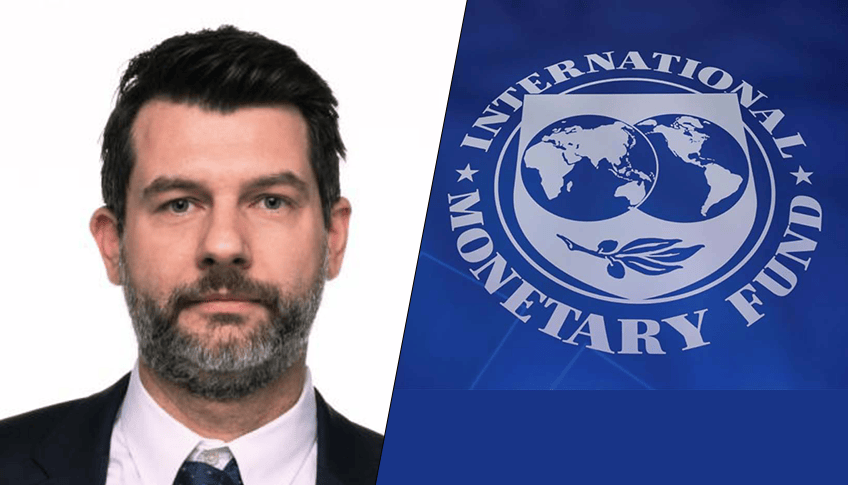
The International Monetary Fund (IMF) says Ghana’s new Policy Coordination Instrument (PCI) will build on reforms introduced under the previous Extended Credit Facility (ECF), with stronger fiscal oversight, institutional checks and greater accountability for state-owned enterprises (SOEs).
IMF Resident Representative and Head of Office in Ghana, Dr Adrian Alter, said the PCI would introduce more than 20 reform targets over the next 36 months, with a particular focus on addressing fiscal risks associated with SOEs and state-owned banks.
He made the remarks during a panel discussion at the Business Roundtable Extended, held under the theme “After the Corrections: Building Resilient Economic Pillars for the Next Decade.”
PCI to deepen ECF reforms

Dr Alter said the PCI would supplement several reforms implemented under the ECF, including stronger reporting requirements and the rollout of the Integrated Tax Administration System (ITAS).
He said the reforms introduced under the ECF had established important checks and balances, which would now be strengthened under the new programme.
“There were quite a few checks and balances … that were put in place” under the ECF, he said, adding that the PCI would build on those measures.
According to him, the next 36 months would involve more than 20 reform targets, several of which would focus on strengthening key institutions.
Fiscal Council expected to strengthen budget oversight
A key institutional reform under the PCI is the full operationalisation of the Fiscal Council.
Dr Alter said the Fiscal Council should be fully operational by the end of the year and expected to provide an opinion the following year on the 2027 budget and fiscal rules.
He described the institution as an important part of the checks and balances being developed under the PCI.
Another major reform is the establishment of a Value for Money Office, which he said should be operationalised by June 2027.
IMF shifts focus to fiscal risks from state-owned enterprises
Dr Alter identified fiscal risks from SOEs as a primary area of focus under the PCI, stressing the importance of improved reporting, governance and transparency.
He said the reporting standards of SOEs and state-owned banks would be particularly important in managing potential fiscal risks.
The IMF Resident Representative pointed to the recently released State Interests and Governance Authority (SIGA) report on state ownership as one component of the broader reform process.
He said a major objective under the PCI would be to increase the proportion of SOEs submitting audited financial statements, rather than relying on management accounts.
“What is key there is that we have, for instance, audited reports from all SOEs instead of management accounts,” he said.
Corporate governance and accountability remain central
Beyond financial reporting, Dr Alter said the PCI would also address corporate governance and accountability within state-owned enterprises.
The reforms would cover issues including the composition and appointment of boards and the selection of chief executive officers.
He said some of these governance questions were deeper and linked to Ghana’s ongoing constitutional review process.
Dr Alter therefore characterised the reform agenda as a multi-year objective, with institutional strengthening, fiscal oversight and improved SOE governance expected to remain central to Ghana’s efforts to build stronger economic pillars.