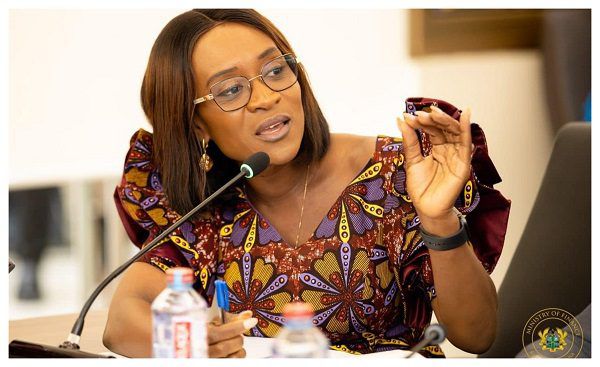
Member of Parliament for Atiwa East and former Deputy Minister for Finance, Abena Osei-Asare, has called for stronger preventive accountability across Ghana’s public institutions, warning that economic gains could be lost if existing systems and institutions are not made to work effectively.
She said macroeconomic stability should not be treated as an end in itself, but must translate into tangible improvements in the lives of Ghanaians.
Speaking during a panel discussion at the Business Roundtable Extended, under the theme “After the Corrections: Building Resilient Economic Pillars for the Next Decade”, Mrs Osei-Asare said economic indicators such as GDP growth were important, but their real value depended on whether they produced life-changing outcomes for citizens.
“Macroeconomic stability must produce certain results that renew the benefits of the citizens,” she said.

Budget allocations must reach institutions
Mrs Osei-Asare raised concerns about the gap between approved budget allocations and the funds eventually released to ministries, departments and agencies.
She said Parliament approves budgets based on allocations proposed by the Ministry of Finance, but in some instances, less than half of the approved amount reaches the relevant institution.
“When it happens that way, things don’t get done,” she said, adding that inadequate releases could also result in institutions making commitments that eventually contributed to the accumulation of arrears.
She therefore cautioned that efforts to improve fiscal discipline must take into account the consequences of withholding resources needed for critical projects and programmes.
Buffers should not come at the expense of development
The former Deputy Finance Minister also cautioned against building fiscal and financial buffers at an excessive cost to the economy.
She acknowledged the importance of strengthening reserves and building the sinking fund to support future debt repayments, but said such measures should be weighed against their wider economic costs.
Mrs Osei-Asare cited the increase in Ghana’s reserves from about US$8.98 billion at the end of December 2024 to US$13.9 billion at the end of December 2025, but argued that the cost of achieving that increase must also be considered.
“It is good, but then we should look at the cost and sometimes weigh the cost against the benefit,” she said.
She similarly warned that building the sinking fund should not result in the accumulation of more arrears, arguing that the cost of delaying infrastructure projects could ultimately exceed the original cost of completing them.
“A road left unattended to, an infrastructure project left unattended to will cost more than the initial cost of that project,” she said.
Strong institutions key to sustaining reforms
Mrs Osei-Asare identified institutions and systems as the most important foundations for sustaining Ghana’s economic reforms beyond the current five-year period discussed by the Finance Minister.
She said Ghana had laws and systems, including the Public Financial Management and procurement laws, designed to promote accountability and ensure that public resources were properly managed.
However, she expressed concern about the continued rise in infractions despite the existence of those frameworks.
According to her, Auditor-General figures cited during the discussion showed that infractions increased from GH¢2.08 billion in 2024 to GH¢5.26 billion in 2025, which she described as the highest level recorded in the last five years.
Parliament must move beyond post-enforcement accountability
Mrs Osei-Asare said Parliament and other accountability institutions must move beyond dealing with financial infractions after they have occurred and place greater emphasis on preventing them.
She said Parliament often receives reports of infractions after the transactions have already taken place, limiting its ability to prevent the breaches.
“What I believe we can do is not to just look at post-enforcement accountability, but then preventive accountability,” she said.
She identified Parliament, the Executive, civil society organisations, academia and relevant public institutions as key actors in advancing preventive accountability.
Sanctions needed to deter infractions
Mrs Osei-Asare further called for greater use of sanctions against institutions and officials who breach established procedures.
She noted that institutions and Parliament had mandates not only to report infractions but also to sanction wrongdoing, and questioned how frequently those sanctions were actually applied.
She said procurement processes were particularly vulnerable when institutions waited until the final quarter of a financial year to begin projects, creating pressure to bypass established procedures in order to complete them.
“If we want to make the institutions work, if we want to sustain what you have built, then we ought to pursue the sanctions, no matter how unpleasant they are,” she said.
Mrs Osei-Asare maintained that stronger preventive accountability would help reduce financial infractions and strengthen the institutions needed to preserve Ghana’s economic gains over the long term.