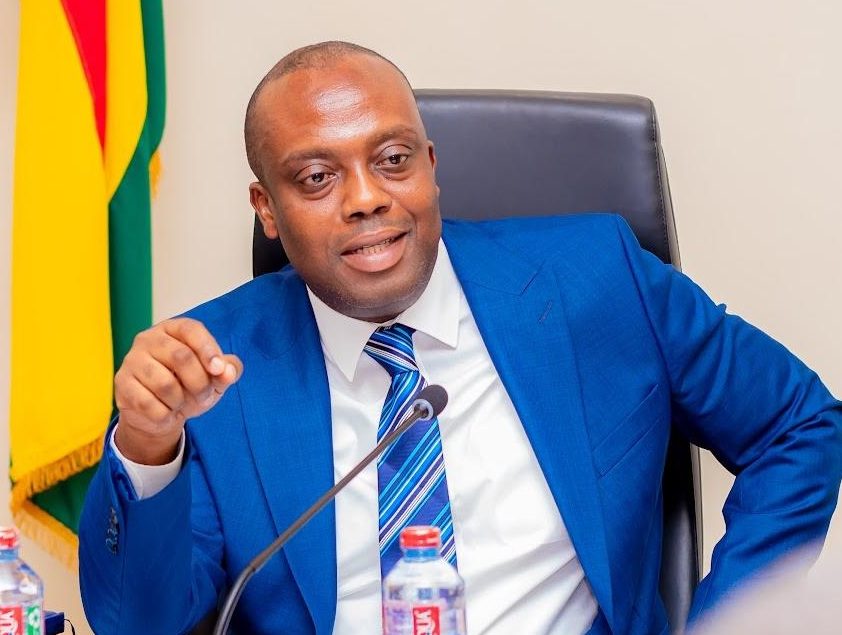
Deputy Minister for Finance, Thomas Ampem-Nyarko, has urged Ghana to use its improving economic conditions to build stronger buffers and a more productive economy, warning that the country must not return to the fiscal practices that triggered its recent economic crisis.
Mr Ampem-Nyarko said the significant improvement in key economic indicators provided Ghana with a critical window to strengthen its foundations before the next economic shock.
Speaking at the Business Roundtable Extended (BRT Extended) under the theme “After the Corrections: Building Resilient Economic Pillars for the Next Decade”, he said the next phase of economic management must move beyond stabilisation to ensure that growth translated into jobs, production and broad-based prosperity.
“Macroeconomic stability matters, but it is not enough,” he said, arguing that the gains must reach factories, farms, markets, small businesses and households.

He noted that Ghana had made significant progress from the period of severe economic distress, citing real GDP growth of 6 per cent in 2025 and 6.4 per cent in the first quarter of 2026, while inflation had fallen from 23.8 per cent in December 2024 to 4.6 per cent in July 2026.
Gross international reserves had also risen to about US$12.9 billion by June, providing five months of import cover, while the country’s risk of external and sovereign debt distress had moved from high to moderate.
Despite the gains, Mr Ampem-Nyarko cautioned against complacency, saying Ghana’s history of stabilising the economy only to lose those gains made it imperative to protect the current recovery.
He said the government was therefore resisting a return to fiscal indiscipline and unproductive borrowing, stressing that the priority now was to build an economy capable of absorbing future shocks without surrendering the progress already made.
He outlined stronger economic buffers, a productive economy and a private sector capable of investing among the pillars that would underpin Ghana’s economic strategy for the next decade.
Building stronger buffers
Mr Ampem-Nyarko identified stronger economic buffers as the first of five pillars proposed for the decade ahead.
He said the next economic shock was certain to come, although its timing and nature could not be predicted, making it necessary for Ghana to strengthen its resilience during the current period of relative stability.
He warned that resilience would require stronger reserves, sustainable debt, fiscal balance, energy security and food security.
As part of efforts to strengthen reserves, he said the government was implementing the Ghana Accelerator Platform Reserve Accumulation programme, with an objective of building enough reserves to cover 15 months of imports by 2028.
He added that debt-to-GDP had declined from 61.8 per cent in 2024 to 45 per cent in June 2026.
On energy security, Mr Ampem-Nyarko cited plans to build a 1,200-megawatt state-owned gas-fired thermal power plant, which he described as Ghana’s largest power plant since independence and larger than the 1,020-megawatt Akosombo hydroelectric power station.
“Our view is that we may not know when the next storm will come, or what form it will take, but we can make sure that when it comes, the roofs hold,” he said.
Shift towards a productive economy
The second pillar, he said, would focus on transforming what Ghana produces, the volume of production and the productivity with which goods and services are produced.
Mr Ampem-Nyarko said the country remained vulnerable because of its dependence on a limited number of commodities, arguing that a resilient economy must produce more of what it consumes while adding greater value to its exports.
He said agriculture must be linked to agribusiness, mining to domestic value chains, energy to industry, technology to enterprise and skills to jobs.
These priorities, he said, would form part of the new economy programme to be implemented from 2027 and beyond.
He said the programme would go beyond import substitution and seek to create a more productive, diversified and competitive economy capable of converting macroeconomic stability into jobs, increased production and broad-based prosperity.
The new economy blueprint, he said, would place job creation at the centre of economic policy and be built around seven transformational pillars: macroeconomic stability; commercial agriculture, agribusiness, industry and business; energy sector reforms and investment; critical minerals and value addition; cotton, textile and garment industries; tourism, culture and creative arts; and pharmaceutical manufacturing.
Mr Ampem-Nyarko said the Finance Minister would provide further details of the programme when presenting the 2027 Budget Statement to Parliament.
He said the ultimate objective was to ensure that Ghanaian businesses were not merely protected from competition but were equipped to compete successfully.
Private sector investment
The third pillar would focus on creating conditions for a private sector capable of investing and driving economic activity.
Mr Ampem-Nyarko said government had for too long been the most attractive customer of the financial system, drawing funds that could otherwise support private businesses.
“That must change, and that is changing,” he said.
He pointed to declining domestic borrowing costs as an encouraging sign, noting that the benchmark 91-day Treasury bill rate fell to 4.9 per cent in August 2026 from 26 per cent in December 2024.
The Ghana Reference Rate also declined from 29.3 per cent in December 2024 to 10.6 per cent in July 2026.
He said these developments were important as Ghana sought to create an environment in which businesses could access financing and invest in productive activity.
Mr Ampem-Nyarko said the broader objective of the post-correction agenda was therefore not simply to restore stability, but to use that stability to build economic resilience, productivity and competitiveness for the next decade.