Ghana has officially brought the Fish for Development (FFD) Programme to a close, marking the successful completion of a flagship initiative under the longstanding cooperation between Ghana and Norway aimed at promoting sustainable fisheries and aquaculture development.
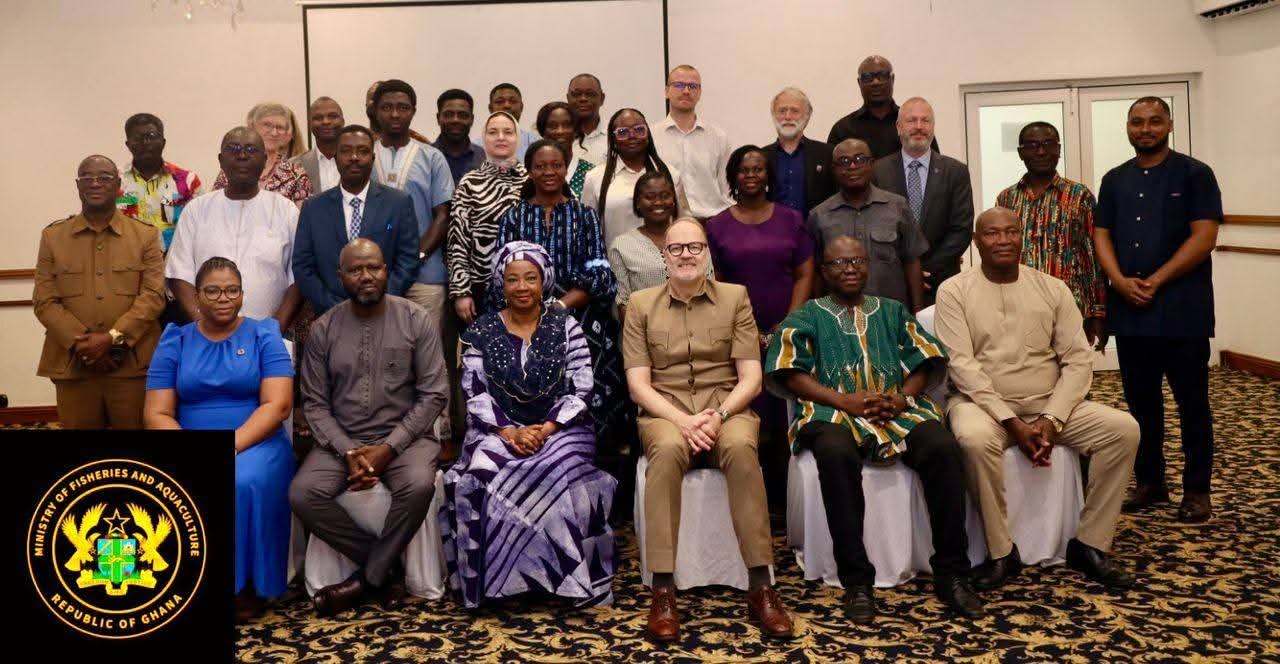
The programme’s closure was commemorated at a stakeholders’ workshop held in Accra, where participants reviewed key achievements and explored strategies to sustain the gains made over the past seven years.
Speaking on behalf of the Minister for Fisheries and Aquaculture Development, Emelia Arthur, the Chief Director of the Ministry, Dr Afisah Zakariah, described the programme as a significant milestone in the partnership between Ghana and Norway.
She praised the Government of Norway, the Norwegian Agency for Development Cooperation (NORAD), and local implementing institutions for their invaluable contributions towards strengthening evidence-based decision-making, advancing aquaculture innovation, and enhancing technical capacity within the fisheries sector.

Dr Zakariah noted that the programme had played a crucial role in supporting reforms and modernisation efforts across the fisheries and aquaculture value chain.
Among the notable achievements highlighted during the workshop was the development of Ghana’s Aquaculture Development Plan (2024–2028), the digitalisation of fish farm registration processes and improvements in aquatic animal health management systems.
The fisheries sector also recorded significant progress through the introduction of a new Fisheries Management Plan, enhanced fisheries data collection and management systems, and strengthened enforcement mechanisms supported by specialised Monitoring, Control and Surveillance (MCS) training.
The Executive Director of the Fisheries Commission, Prof Benjamin Campion, and Norway’s Ambassador to Ghana, His Excellency John Mikal Kvistad, commended the programme’s achievements and described the Ghana–Norway collaboration as a model for sustainable ocean governance and responsible fisheries management.
They emphasised the importance of maintaining momentum and building on the programme’s successes to address emerging challenges facing the fisheries sector.
As the Fish for Development Programme concludes, Ghana remains committed to sustaining its achievements through continued partnerships, innovation and policy reforms aimed at ensuring resilient fisheries, healthy fish stocks and improved livelihoods for coastal and fishing communities across the country.
The programme is widely regarded as a testament to the impact of international cooperation in supporting sustainable resource management and fostering economic opportunities within the fisheries sector.