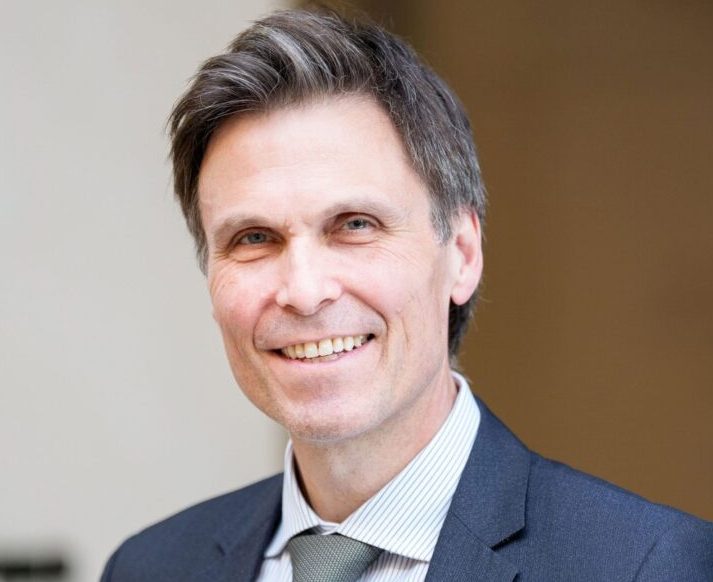
The International Monetary Fund’s (IMF) new Director of Strategy, Christian Mumssen, has urged governments to preserve the credibility of their fiscal and monetary policies to safeguard price stability as the global economy faces mounting uncertainty.
Speaking at an event hosted by the Atlantic Council on Wednesday, Mumssen said policymakers must remain focused on sound public finances, sustainable debt levels, inflation control, employment and economic growth as the world confronts multiple structural challenges.
He noted that the global economy has weathered an extraordinary series of shocks in recent years, including the COVID-19 pandemic, the cost-of-living crisis, trade tensions and the wars in Ukraine and the Middle East. However, he warned that the convergence of these developments has created an exceptionally uncertain economic environment.
”The global economy has proved remarkably resilient in the face of these forces. But the sheer scale of what is under way creates an exceptionally high degree of uncertainty – and we should expect the unexpected,” Mumssen said.

He warned that frequent supply disruptions are likely to continue threatening price stability, making it essential for governments to strengthen their resilience against supply shocks and rising geopolitical tensions.
Mumssen also highlighted the rapid pace of technological change, describing artificial intelligence (AI) and digital finance as transformative forces advancing faster than many had anticipated. He stressed that governments must ensure the AI revolution delivers broad-based economic benefits rather than widening existing inequalities.
”Technologically, artificial intelligence and digital finance are advancing at a speed few of us anticipated. And geopolitically, the post-war global order is giving way to a more fragmented, multipolar world,” he said.
According to Mumssen, the defining feature of the current global economic landscape is the simultaneous occurrence of several major transformations, ranging from technological disruption to geopolitical realignment.
He argued that these overlapping changes demand stronger international cooperation. Instead, he warned, the global governance system is becoming increasingly fragmented at a time when coordinated action is needed most.
”The problem is: just when massive structural challenges and a new technological revolution would call for greater international cooperation, the global governance system is fragmenting,” Mumssen said.
His remarks underscore the IMF’s growing concern that policymakers must balance economic resilience with technological progress while navigating an increasingly uncertain and divided global environment.