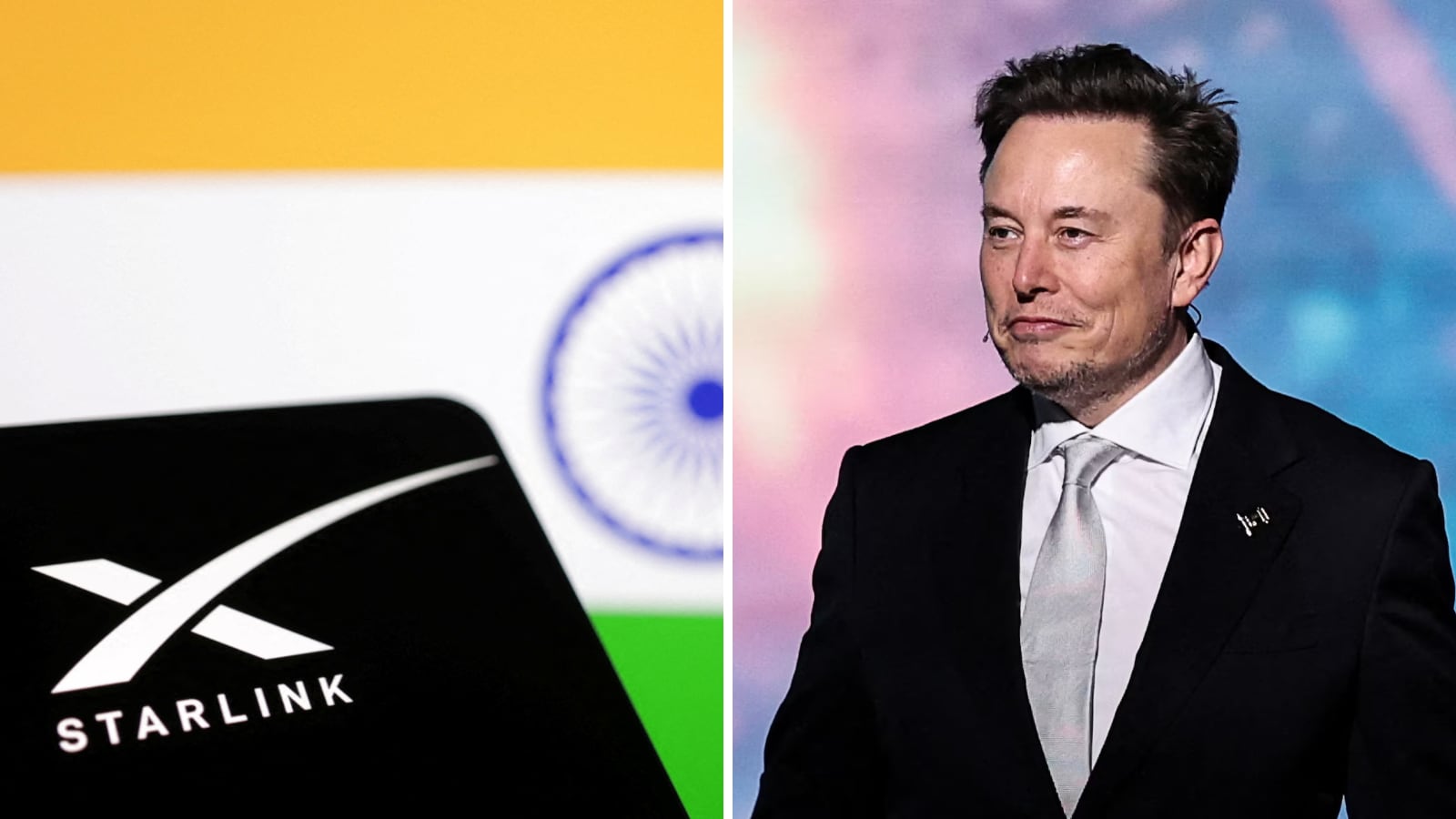
Indian authorities have rejected Elon Musk’s allegation that unnamed oligarchs are obstructing Starlink’s launch in the country, insisting that all three prospective satellite communications operators are at broadly the same stage of the regulatory process.
India’s Ministry of Communications described claims of discriminatory treatment as “baseless and misconceived”, stating that its satellite communications framework was fair and non-discriminatory.
The ministry said assessments were ongoing for all licensed operators, each of which must satisfy security requirements before seeking spectrum allocation.
“At present, all the three entities are at broadly the same regulatory stage,” it said.

Musk, in a post on X, accused “certain oligarchs” of attempting to maintain a “monopolistic chokehold on the Indian people”, without identifying those he believed were responsible.
“This is a crime against the people of India!” he wrote.
India’s telecommunications sector is dominated by Mukesh Ambani’s Reliance Jio and Sunil Mittal’s Bharti Airtel. Both companies, alongside Musk’s Starlink, have secured initial approvals to provide satellite services but are awaiting spectrum assignment and final regulatory clearances.
Starlink’s approval process has lasted more than four years, with security requirements and access to spectrum among the outstanding issues.
Musk has previously clashed with Ambani over the allocation of satellite spectrum in India. However, Reliance Jio and Bharti Airtel have since reached agreements with Starlink to distribute its services in the country.
The regulatory process has also faced scrutiny over security concerns following reports that authorities recovered illegal Starlink equipment during two separate operations in late 2024.
The reported incidents included a drug seizure in the Andaman and Nicobar Islands and an army search in Manipur, in north-eastern India.
This week, Musk disputed suggestions that the recovered equipment was connected to an active Starlink service in the country.
In a post on X, he said Starlink’s satellite beams were “turned off over India” and had “never been on in the first place”.