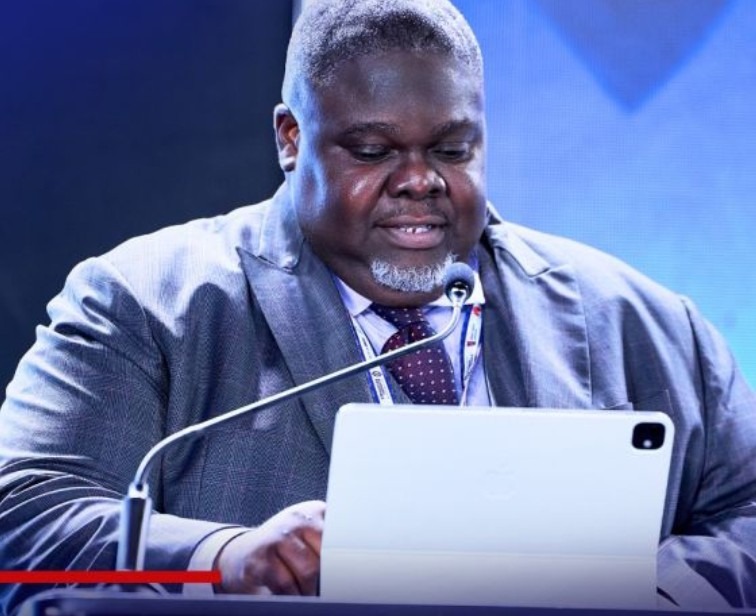
Ishmael Yamson Jnr, President and Chief Executive Officer of Ishmael Yamson and Associates, has warned that Ghana’s latest economic correction could suffer the same fate as previous stabilisation efforts unless the business community confronts its own role in the country’s recurring economic problems.
Delivering a welcome address at the Business Roundtable Extended under the theme “After the Corrections: Building Resilient Economic Pillars for the Next Decade”, Yamson said Ghana had stabilised its economy before, only to return to similar difficulties within a few years.
He cited corrections in 1983, 2001 and 2015, saying each had been followed by a period of stability before the country eventually found itself back where it started.
“The only question we’re asking this morning is, what will be different?” he said.

Yamson’s warning shifted the focus from the success of the latest correction to what government and businesses must do to prevent another reversal.
Business cannot blame government alone
Yamson said the private sector had to accept greater responsibility for Ghana’s economic difficulties instead of routinely attributing failed economic corrections to government.
He accused businesses of lobbying for exemptions that narrowed the tax base while subsequently complaining about tax rates.
“We have kept our capital in trading and property, where it turns over quickly, rather than in the productive assets that create jobs,” he said.
He also criticised businesses that wait for the state to remove every risk before committing capital, arguing that such behaviour limits productive investment and job creation.
Political connections versus productivity
The business leader further challenged firms that pursue commercial advantage through proximity to political power rather than productivity.
He acknowledged that he had himself been close enough to political power on several occasions to believe that commercial opportunities would follow, but said they never did.
He said the experience had given him a clear view of how easily businesses could be drawn towards a path based on political access.
Yamson said he and the chairman had deliberately established a record of not securing government contracts, describing it not as a virtue but as evidence that businesses could operate without relying on political connections.
Breaking the cycle
Yamson said the latest correction had produced positive numbers, with the Minister expected to present the figures, but stressed that improved indicators were not enough.
His concern was whether the country could sustain the gains after the immediate crisis had passed.
He therefore urged the business community to examine its own conduct and avoid selectively embracing only the parts of the discussion that were comfortable.
“Ask the hard question rather than the flattering one,” he said.
From discussion to commitment
The roundtable itself, Yamson said, had been redesigned to make that challenge possible.
The gathering had been reduced from 600 people to 250, from a full day to half a morning, and from five themes to one question.
“A large room is good for consensus. A small room is better for commitment,” he said.
He urged participants to leave the meeting with a concrete commitment rather than simply another opinion.
“When we leave, take away one commitment, not an opinion. A commitment,” Yamson said.
Consequently he then handed the floor to the Deputy Minister for Finance, saying the room would listen carefully to the government’s response to the question at the heart of the gathering: what will be different this time?