Apple’s 9 September event will be the first major test of John Ternus’ leadership as the company’s new chief executive, with a potential foldable iPhone, AI advances and new device categories set to reveal how Apple plans to navigate its next era.
Ternus takes over from Tim Cook after 15 years at the helm, inheriting a company at the top of the smartphone market but facing slower demand, longer upgrade cycles and intensifying pressure to make AI a bigger part of its products.
Analysts say the event could therefore be about more than a new iPhone. It may offer the clearest early signal of how Ternus intends to preserve Apple’s strengths while reshaping its product strategy for what comes next.
Ternus inherits a strong but changing Apple

Paolo Pescatore, chief analyst at PP Foresight, said Ternus inherits an Apple that “remains exceptionally strong but is entering a far more demanding phase”.
Cook established scale, operational discipline, services and platform strength. Ternus will need to preserve those advantages while showing where Apple’s next phase of innovation will come from.
His engineering background could bring hardware, silicon and product development closer together, particularly in AI and new form factors, Pescatore said.
Francisco Jeronimo, vice president at IDC, was more cautious about an immediate strategic shift, describing Ternus’ appointment as a deliberate choice to prioritise continuity and execution over radical change.
However, he said AI, the post-iPhone era and enterprise adoption would remain major challenges for the new chief executive.
“The AI era will demand a third kind of genius,” Jeronimo said, adding that whether Ternus possesses it would be the question that matters most over the next decade.
Foldable iPhone could be the showstopper
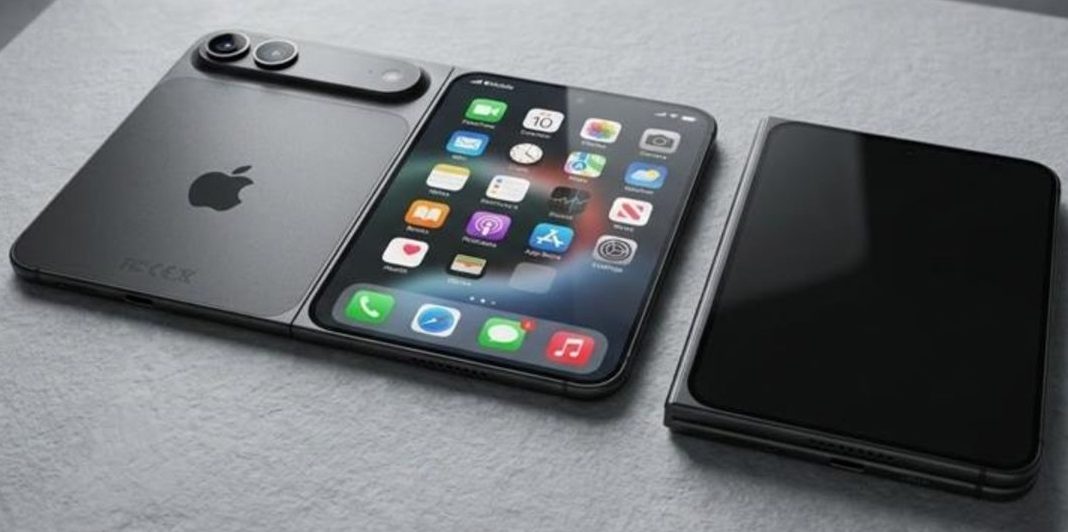
The long-rumoured foldable iPhone could provide the event’s biggest moment.
Pescatore described the device as the “obvious showstopper”, potentially representing the biggest change to the iPhone’s physical design since the iPhone X.
Previous reports cited in the communiqué suggest a passport-style device with an internal display roughly the size of an iPad mini and a side-mounted Touch ID sensor instead of Face ID.
Jeronimo said a foldable iPhone makes sense as smartphone demand slows and consumers keep their devices for longer. With fewer opportunities to persuade customers to upgrade annually, he argued Apple would need to increase its average selling price.
He expects the foldable to cost more than $2,000, with supply chain expectations potentially putting its price at about $2,500.

AI remains a critical test
Ternus’ approach to AI will be another major focus, particularly after Apple faced criticism over the pace of its generative AI rollout and delays to promised Apple Intelligence capabilities.
Apple unveiled a substantially upgraded Siri at its June developer conference, built around Google’s Gemini technology.
Jeronimo said Ternus needs to establish a “credible first party AI platform” and close the gap between what Apple promised through Apple Intelligence and what it has delivered.
He identified a Siri that works as expected and is powered mostly by Apple’s own technology as the most important deliverable of Ternus’ first two years.
However, Jeronimo said Apple does not necessarily need to compete directly with Google and Meta in building a frontier AI model.
Instead, he sees an opportunity for Apple to integrate AI across its ecosystem of iPhones, iPads and Macs, potentially through partnerships rather than an entirely Apple-built technology stack.
Beyond the iPhone
The longer-term challenge will be what comes after the iPhone.
Jeronimo argued that Cook did not deliver a new product category on the scale of the iPhone, leaving Ternus to address the question of what comes next.
Rather than replacing the iPhone outright, he expects Apple to develop a wider network of companion devices, including smart glasses, AirPods and other AI-enabled hardware.
Such products could diversify Apple’s relationship with users and increase revenue per user while reducing its reliance on the smartphone as its primary hardware engine.
The smart home, Jeronimo said, is another untapped opportunity.
Pescatore similarly sees scope for Apple to experiment with new form factors, price points and launch windows, but warned that the company must tread carefully because the iPhone remains the gateway to its wider ecosystem.
Split iPhone cycle could reshape launches
A foldable iPhone could also prompt Apple to reconsider how it structures its broader iPhone launch cycle.
Pescatore said a split iPhone launch would represent a major strategic shift, potentially giving premium models greater prominence in September while creating another significant upgrade opportunity later in the year.
Such a strategy could give Apple another way to stimulate demand as consumers extend the time between upgrades, while maintaining its core iPhone business.
Continuity meets a new era
The event therefore represents more than another product refresh. It will offer an early indication of how Ternus intends to balance continuity with the need to find new opportunities.
Apple enters the event with more than 2.5 billion active devices, a growing services business and a strong position in the premium smartphone market.
But the next phase will require decisions on AI, new form factors and products beyond the iPhone.
For Pescatore, those factors give the 9 September event “all the ingredients to be one of Apple’s most important events in years”, as the company seeks to balance the strengths of the Cook era with a sense of a new beginning.