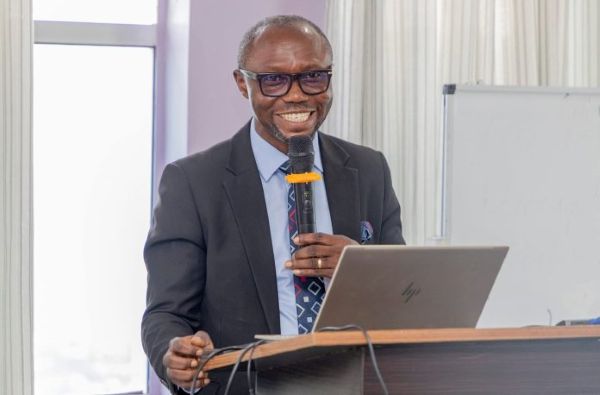
The Deputy Director at Ministry of Education, Stephen Owusu, has called for greater investment in human capital development, describing people as the nation’s most valuable resource in an increasingly technology-driven global economy.
Speaking at the Chartered Institute of Human Resource Management (CIHRM) 2026 Conference in Accra, Mr Owusu said Ghana’s development aspirations would depend largely on the quality of its workforce and the country’s ability to continuously educate, train and empower its citizens.
Addressing participants on the theme of leadership, technology and governance, he noted that rapid advancements in artificial intelligence, automation, robotics and other emerging technologies were transforming the future of work and reshaping labour market demands.
”Technology and governance are forward-looking themes that speak directly to the realities of a rapidly changing world, where people, knowledge, innovation and technology have become the most valuable drivers of economic growth and national competitiveness,” he said.

Mr Owusu stressed that while natural resources and infrastructure remained important, a nation’s greatest asset was its people.
He therefore underscored the need for sustained investment in education and skills development to prepare Ghanaians for emerging opportunities and challenges.
According to him, the government has placed education and skills development at the heart of its national transformation agenda through investments in foundational learning, Science, Technology, Engineering and Mathematics (STEM) education, Technical and Vocational Education and Training (TVET), teacher development, digital learning and lifelong learning initiatives.
He observed that employers increasingly seek workers who possess not only technical expertise but also critical twenty-first-century competencies such as critical thinking, creativity, collaboration, adaptability, communication and digital literacy.
To address this shift, Mr Owusu called for stronger collaboration between educational institutions, industry, policymakers and professional bodies to ensure that academic outcomes remain aligned with labour market requirements.
He referenced the recently concluded eLearning Africa 2026, hosted by the Ministry of Education, where stakeholders discussed the role of technology in advancing education, skills development and innovation across Africa.
”One key message that emerged from the conference was that the future belongs to nations that invest in their people and equip them with the skills needed to thrive in a digital world,” he noted.
The Director further highlighted the evolving role of human resource professionals, describing modern HR practitioners as strategic leaders rather than administrators of personnel records and processes.
He said HR leaders are now expected to attract and develop talent, manage organisational change, foster innovation and build productive workplace cultures. As a result, organisations must prioritise continuous learning, workforce reskilling, diversity, inclusion and ethical leadership.
Mr Owusu identified leadership, technology and governance as critical pillars for advancing human resource excellence in Ghana.
He said effective leadership provides vision and direction, technology enhances productivity and innovation, while strong governance promotes accountability, transparency, fairness and institutional resilience.
Calling for collective action, he urged government agencies, employers, educational institutions, professional associations, labour organisations and development partners to work together in building institutions that value people, reward innovation and uphold integrity.
Congratulating CIHRM for organising the conference, Mr Owusu expressed confidence that the deliberations would generate practical recommendations capable of strengthening leadership, promoting responsible technology adoption and improving governance frameworks to support Ghana’s human capital development agenda.
He concluded with a quote from American industrialist Henry Ford: “Coming together is a beginning; keeping together is progress; working together is success.”
Mr Owusu urged HR practitioners to facilitate collaboration, foster teamwork and model the behaviours required to build successful and resilient organisations.
”God bless the Chartered Institute of Human Resource Management. God bless Ghana,” he concluded.