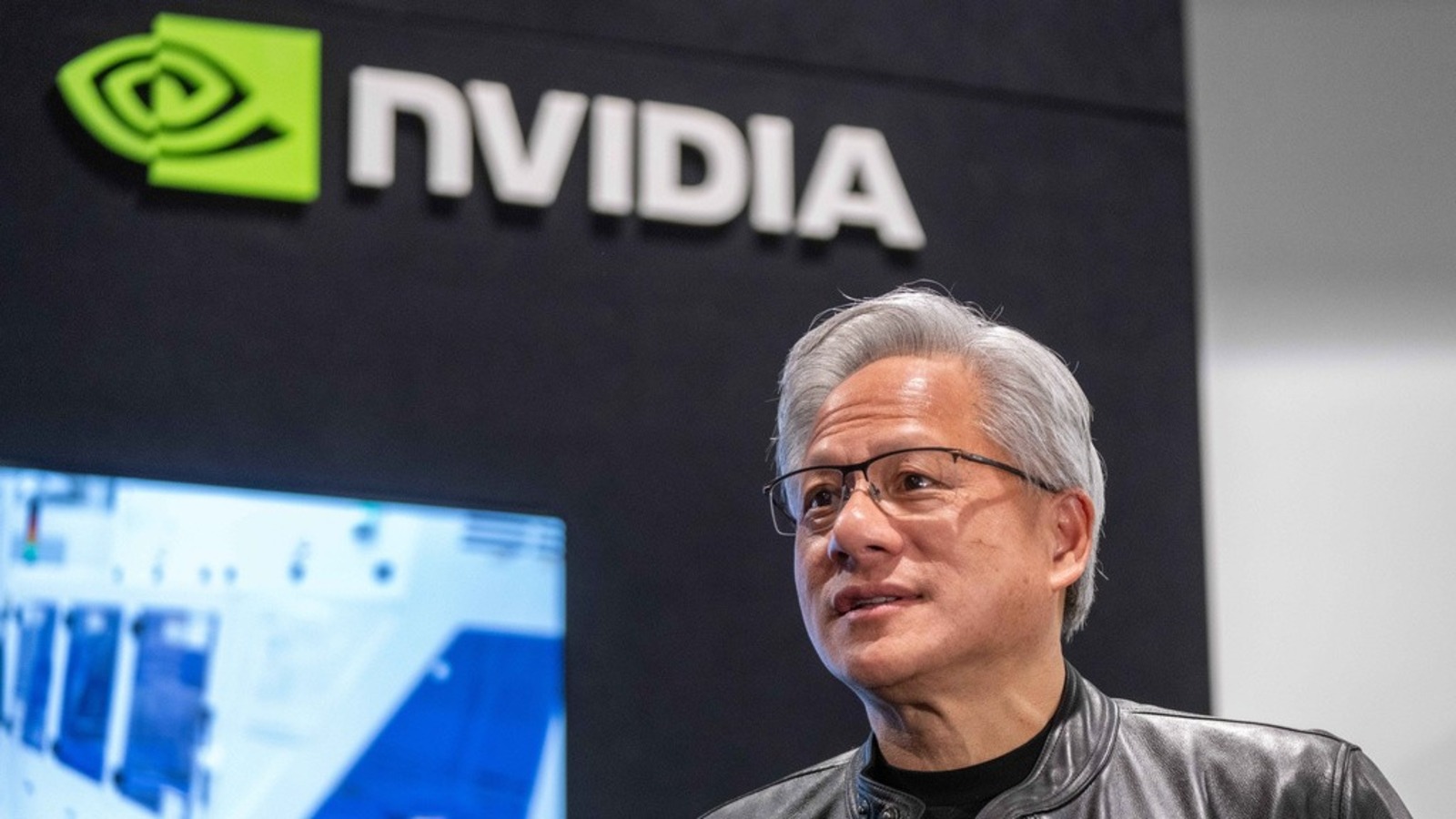
Nvidia chief executive Jensen Huang has expressed confidence in CoreWeave’s financial position, saying the artificial intelligence infrastructure provider does not need a financial backstop from the chipmaker despite growing concerns in credit markets over its ability to meet its debt obligations.
Speaking to Bloomberg at an event in Stockholm, Huang said CoreWeave’s financial strength was improving and its cost of capital was declining.
”CoreWeave’s strength is improving every day,” Huang said. “I’m optimistic. Their cost of capital is actually decreasing.”
His comments come as CoreWeave faces mounting market scrutiny over its debt-fuelled expansion, with the cost of insuring its debt against default reaching a record high.

According to ICE Data Services, the cost of five-year credit default swaps on CoreWeave surged by as much as 74.5 basis points to an intraday record of 1,194.5 basis points. The pricing implied a probability of default exceeding 60% over five years.
CoreWeave shares fell 3% on Thursday after plunging 15% in the previous session, having declined by more than 7% earlier in the day.
The contrasting signals from Huang and credit markets have intensified questions about the financial risks associated with the rapid expansion of artificial intelligence infrastructure.
CoreWeave has borrowed heavily to increase its computing capacity, with suppliers, including Nvidia, helping to finance its expansion. The arrangements have raised concerns about circular financing, whereby supplier support helps fund purchases of equipment sold by those same suppliers.
Nvidia owns approximately 10% of CoreWeave, making it the company’s second-largest shareholder, while also supplying the computing equipment required for its operations.
The relationship places Nvidia at the centre of investor scrutiny over the financial exposure of companies financing the expansion of AI infrastructure.
CoreWeave’s ability to secure funding and service its debt has become an important test of the financial sustainability of the AI boom. Although demand for computing power may continue to grow, infrastructure providers must generate sufficient cash flow to support their borrowing and justify continued investment.