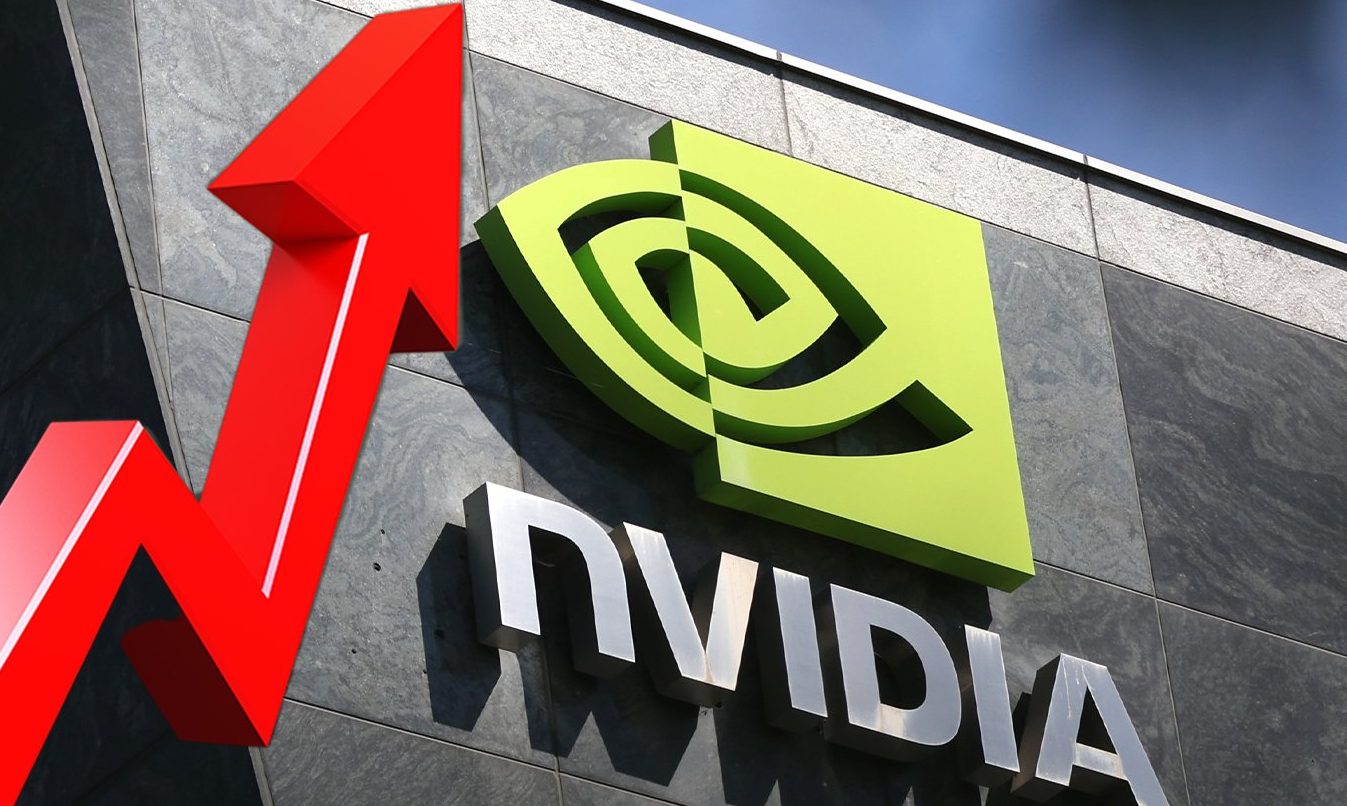
Nvidia has retained its position as the world’s most valuable publicly traded company after recovering from an early trading setback to fend off a renewed challenge from Apple.
The chipmaker ended Friday with a market capitalisation of approximately $4.9 trillion, comfortably ahead of Apple’s $4.6 trillion, extending a leadership position it has held for nearly a year.
Nvidia briefly came under pressure at the start of trading, raising the prospect of Apple reclaiming the top spot. However, the company’s shares rebounded strongly, underscoring continued investor confidence in its dominance of the artificial intelligence semiconductor market.
Apple’s rise reflects a notable shift in investor sentiment. After facing criticism for moving cautiously in the generative artificial intelligence race, the technology giant is increasingly being recognised for its ability to monetise AI through its extensive services business, tightly integrated ecosystem and recurring hardware upgrade cycle.

Analysts say Apple’s valuation is being driven less by speculative expectations and more by confidence in the company’s resilient earnings and loyal customer base.
The renewed competition comes as Apple undergoes significant leadership and product changes. Chief Executive Officer Tim Cook is expected to step down in September, with hardware chief John Ternus set to succeed him.
The company has also intensified its artificial intelligence strategy following the unveiling of a redesigned Siri assistant last month, signalling a stronger commitment to competing with established technology firms and emerging AI developers.
Despite concerns that recent price increases could weigh on consumer demand, investors remain optimistic about Apple’s pricing power and brand strength.
For Nvidia, Friday’s recovery reinforced its central role in the AI industry. The company continues to benefit from strong demand for its advanced graphics processing units, which power artificial intelligence training and deployment across the technology sector.
The broader semiconductor industry has also continued to attract investor interest. Memory chipmaker Micron surpassed a $1 trillion market valuation in May, while South Korea’s SK Hynix recently made its Nasdaq debut, highlighting sustained enthusiasm for AI-related hardware companies.
Although the Philadelphia Semiconductor Index has fallen nearly 19 per cent from its July peak, it continues to outperform the wider market on a year-to-date basis.
The latest market movements suggest that while investors are increasingly focused on companies capable of generating long-term consumer AI revenues, Nvidia remains the dominant force supplying the critical infrastructure underpinning the global artificial intelligence boom.