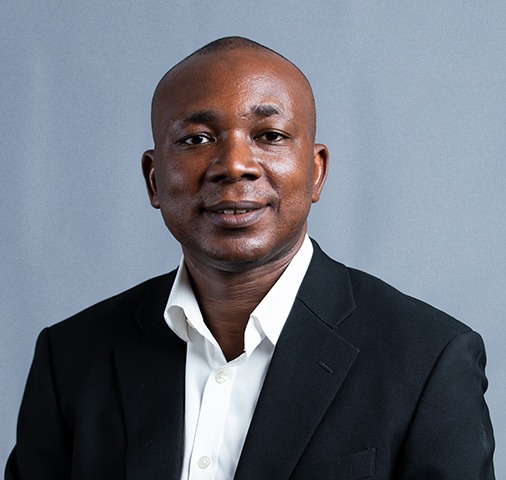
Professor Godfred Alufar Bokpin, Economist and Professor of Finance at the University of Ghana Business School, has called for an honest review of Ghana’s 45 per cent debt-to-GDP threshold to create room for infrastructure investment.
He said the country’s large infrastructure deficit required policymakers to look beyond the primary surplus and consider how fiscal space could be deliberately created for productive public investment.
Prof Bokpin made the call during a panel discussion at the Business Roundtable Extended, held under the theme, “After the Corrections: Building Resilient Economic Pillars for the Next Decade.”
He acknowledged that increased public spending could create inflationary pressures, particularly during the first eight months, but argued that inflation arising from productive investment would be more justifiable if it strengthened the economy’s capacity to generate income.

“Our debt-to-GDP ratio, 45%, is too binding, given the huge infrastructure deficit,” he said.
According to him, the effectiveness of such an approach would depend largely on the quality of public spending.
He argued that private-sector-led growth could not be achieved without a minimum level of efficient public investment, particularly in infrastructure and other areas that enable businesses to expand.
“The success of the private sector and its ability to lead economic growth requires on a minimum public sector investment and efficiency for them to be able to scale up,” Prof. Bokpin said.
He warned that borrowing would become problematic when resources were directed towards unproductive areas of the economy because such spending failed to increase the country’s cash-generating capacity.
He therefore urged policymakers to be deliberate about directing any additional fiscal space towards productive sectors capable of generating economic activity and improving the country’s ability to service debt.
Prof Bokpin also called for a deliberate effort to build a taxable economy, arguing that Ghana had historically failed to develop an economic structure broad enough to generate sufficient tax revenue.
He said about 41.56 per cent of the economy generated close to 86 per cent of tax revenue, leaving a significant portion of economic activity outside the tax net.
Agriculture, he noted, was a major example, contributing between 19 and 21 per cent of GDP over the past three decades while the entire agricultural value chain contributed less than one per cent of tax revenue.
He argued that transforming the structure of the economy was therefore necessary both to improve productivity and broaden the tax base.
“That is part of what we call structural transformation, as part of economic transformation,” he said.
Prof Bokpin further argued that Ghana needed to move towards an economic model capable of creating larger and more productive enterprises, while improving productivity across sectors.
He also identified inefficiency within the public sector as a cost to private businesses.
“An inefficient public sector represents cost to the private sector as they interact with the public sector in their business operations,” he said.
Public sector reform
Prof Bokpin said Ghana also needed institutional renewal, including a change in the mindset surrounding public service.
He pointed to the period before and immediately after independence as evidence that Ghana had previously maintained a more efficient civil service and public sector.
He said the country needed to attract its best human capital into public service so that the public sector could become a launchpad for private-sector development.
To achieve this, he called for a merit-based system in public-sector recruitment, arguing against politically motivated appointments.
“We need to move away from that. We want to have a meritorious system,” he said.
He said the country should encourage its brightest university graduates to consider public service as a meaningful career rather than creating conditions that make people believe entering politics is a better route to advancement.
Prof Bokpin’s proposals placed public investment, efficient spending, economic restructuring and institutional reform at the centre of Ghana’s efforts to turn economic stabilisation into sustainable transformation.