The Minister for Communication, Digital Technology and Innovations, Samuel Nartey George, has reaffirmed the government’s commitment to expanding telecommunications connectivity in underserved communities following an inspection of rural telephony projects in the Sekyere Afram Plains District of the Ashanti Region.
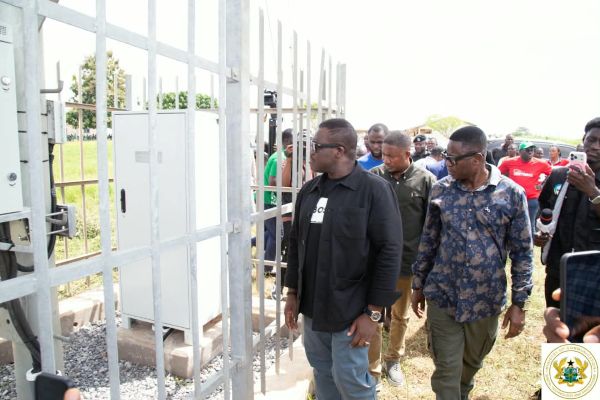
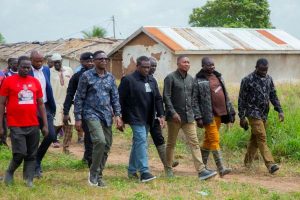
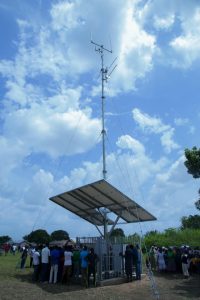
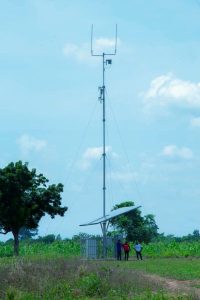
During the tour, the minister inspected four connectivity sites at Nyameama 1, Nyameama 2, Abenua and Dawia to assess progress on the projects and engage contractors and community members on challenges affecting their implementation.
Hon. Sam George said the Dawia site was expected to become operational by the close of the day, with the remaining three sites projected to be activated by the end of the week.
He explained that the visit formed part of efforts to monitor the implementation of rural connectivity projects inherited by the current administration and ensure that the infrastructure being installed translates into functioning network services for residents.

Working with the District Chief Executive, Hon. Abubakar Issaka, the minister said the team had also identified three additional communities where telecommunications equipment needed to be installed urgently. He disclosed that the administrator of the Ghana Investment Fund for Electronic Communications (GIFEC) had been tasked to expedite the process.
Sam George further announced plans to evaluate a contract covering 2016 rural telephony sites, with GIFEC authorised to conduct an audit to establish the status of the facilities.
The exercise is expected to determine which sites have been constructed, which are operational and what challenges may be preventing others from providing connectivity.
The minister identified battery theft, electricity supply challenges and technical faults as some of the factors affecting the performance of rural telecommunications facilities.
He appealed to traditional authorities, community leaders and young people to help protect the infrastructure, particularly batteries used to power solar-powered sites, warning that theft could result in network disruptions.
Sam George said the government’s rural connectivity strategy was intended to ensure that even small communities that might not attract commercial telecommunications investment could access network services.
He explained that the cost of constructing and operating conventional telecommunications masts could make some locations commercially unattractive to private operators, making GIFEC-supported infrastructure necessary to bridge the gap.
“Today across the country, electricity is important to people. Roads are important to people. Water is important to people. But a real challenge that people want is connectivity,” he said.
The minister also stressed the need to upgrade rural networks from third-generation (3G) to fourth-generation (4G) technology as Ghana moves towards wider deployment of fifth-generation (5G) services in major cities.
He warned that expanding advanced telecommunications services in urban areas without improving rural infrastructure could widen the digital divide between well-served communities and underserved populations.
On broader network expansion, Mr George disclosed that MTN Ghana was undertaking plans to establish 800 new physical sites, with Ayunofi in the Sekyere Afram Plains District among the communities earmarked for improved coverage.
He said the location was identified during a 13-hour engagement with Members of Parliament and MTN’s technical team in July 2026, when network challenges were examined by constituency.
According to the minister, the Ayunofi project was expected to be completed before the end of 2026, while additional communities in the district would be considered as telecommunications operators plan their investments for 2027.
Mr George acknowledged that the scale of the connectivity challenge meant the government might not complete every outstanding project by the end of the year. However, he expressed confidence that ongoing interventions would significantly improve network coverage across the district.
He said the Mahama administration remained committed to working with GIFEC, telecommunications operators, district authorities and local communities to extend digital connectivity across Ghana and ensure that residents in rural areas were not left behind in the country’s digital transformation.